2026-05-25
Content
The short answer: a typical street light produces anywhere from 2,500 to 30,000+ lumens, depending on road type, mounting height, and the technology used. There is no single universal number because street lighting requirements are defined by road classification, traffic volume, and illuminance standards — not a fixed lumen target. A quiet residential lane and a busy urban arterial are both served by "street lights," yet their lumen outputs can differ by a factor of ten or more.
Understanding the lumen range that applies to your specific situation — whether you are a municipal engineer, facility manager, or property developer — is what determines whether a street lighting installation will meet safety standards, pass photometric review, and avoid costly retrofits after the fact.
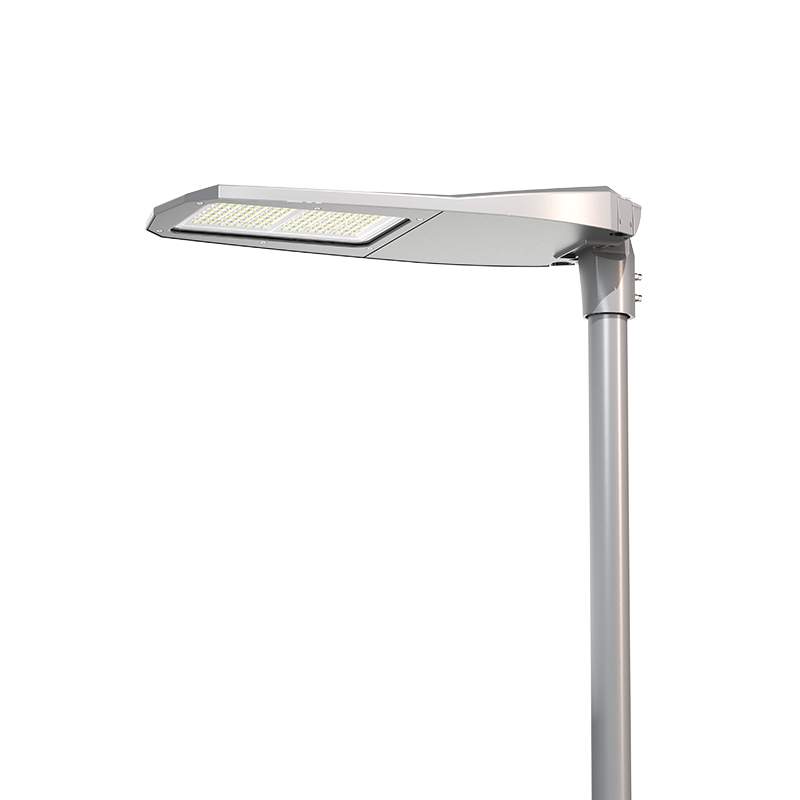
Street lighting lumen requirements are tied directly to road classification. The Illuminating Engineering Society's RP-8 standard (the primary American reference for roadway lighting) groups roads into Local, Collector, and Arterial categories, each carrying a target illuminance level measured in footcandles (fc). Lumen packages are selected to hit those targets given a specific mounting height and pole spacing.
| Road Classification | IES RP-8 Target (avg fc) | Typical Lumen Range | Typical Wattage (LED) |
|---|---|---|---|
| Residential / Local | 0.4 fc | 2,500 – 8,000 lm | 20W – 70W |
| Collector / Urban Road | 0.9 fc | 10,000 – 20,000 lm | 80W – 150W |
| Arterial / High-Traffic | 1.2 fc | 20,000 – 30,000 lm | 150W – 250W |
| Highway / High-Mast | Varies by jurisdiction | 25,000 – 100,000+ lm | 200W – 600W+ |
These ranges reflect modern LED technology. Older high-pressure sodium (HPS) fixtures required significantly higher wattage to produce equivalent or lower delivered light levels on the road surface — largely because of ballast losses and poor optical control that wasted a portion of the lamp's raw output into the sky or backwards from the road.
A common mistake when specifying street lighting is treating lumen output as the only variable that matters. In reality, lumens are just one element of a system where mounting height, pole spacing, beam distribution pattern, and surface reflectance all interact to determine whether the road actually meets illuminance targets.
Standard steel streetlight pole heights in North America run from 25 to 45 feet (approximately 7.6 to 13.7 meters). Decorative poles for pedestrian-scale street lighting are typically 14 or 16 feet. The higher the fixture is mounted, the more lumens are needed to deliver adequate illuminance at road level — the inverse-square law applies. A 20,000-lumen fixture at 25 feet will produce noticeably different road-surface illumination than the same fixture at 40 feet. Photometric modeling consistently shows that mounting height and pole spacing can shift the effective lumen requirement by as much as 40 percent for the same road section.
The IES TM-15 Luminaire Classification System defines five lateral light distribution types — Type I through Type V — and the right choice depends entirely on the application. Type II fixtures cast a wide, forward-throw oval pattern roughly 1.75 to 2.75 mounting heights wide, making them well suited for narrow residential streets, sidewalks, and bike paths. Type III distributions push more light toward the road side and are common on collector roads. Type V fixtures emit a circular, 360-degree pattern used for roundabouts and wide intersections.
Choosing the wrong distribution type can result in unacceptable uniformity ratios even when total lumens appear adequate. The RP-8 Local road category requires a maximum-to-minimum uniformity ratio of no worse than 6:1, while Arterials call for 3:1 — significantly tighter. An improperly aimed high-lumen fixture can simultaneously produce hot spots and dark zones on the same road section, failing both metrics at once.
Modern DLC Premium-qualified LED street light fixtures deliver between 140 and 170 lumens per watt at the fixture level. For context, legacy HPS sources — once the dominant technology in street lighting — typically managed 90 to 110 lm/W after accounting for ballast losses and optical inefficiencies. This means a 20,000-lumen output that once required a 200W-plus HPS system can now be achieved with a 120W to 145W LED fixture, cutting energy consumption nearly in half while maintaining equivalent or better road-surface illuminance.
Street lighting transitioned from incandescent and mercury vapor through high-pressure sodium and metal halide, and has now largely moved to LED. Each technology produced very different lumen outputs from the lamp itself, but actual delivered lumens to the road surface varied even more because of differing optical systems and directional control.
| Technology | Typical Raw Lamp Lumens | System Efficacy (lm/W) | Color Rendering (CRI) |
|---|---|---|---|
| High-Pressure Sodium (HPS) | 8,500 – 50,000 lm | 90 – 110 lm/W | ~22 |
| Metal Halide | 10,000 – 110,000 lm | 70 – 100 lm/W | 65 – 80 |
| LED (current generation) | 6,000 – 30,000+ lm | 140 – 170 lm/W | 70 – 80+ |
The CRI difference is especially relevant for road safety. HPS lamps emit a narrow, yellowish spectrum with a CRI of roughly 22. Objects on the road — pedestrians in dark clothing, road surface markings, debris — are far harder to distinguish under this light. LED street lighting at CRI 70 or above renders colors far more accurately, which research consistently links to improved hazard detection by drivers. White LED light also reflects differently off wet pavement, reducing the "black mirror" effect that makes rain-soaked roads extremely hazardous under HPS illumination.
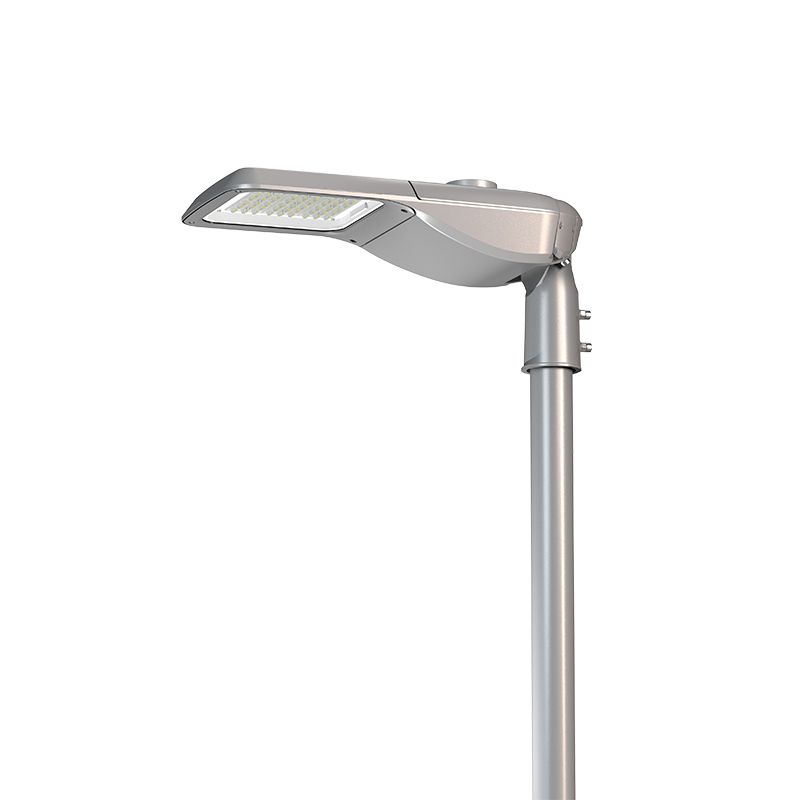
Beyond road classification, specific environments within street lighting projects carry their own lumen benchmarks. Knowing these prevents both under-lighting (which creates safety risks) and over-lighting (which wastes energy, causes glare, and can violate dark sky ordinances).
For residential street lighting in low-traffic neighborhoods, fixtures in the 2,500 to 5,000 lumen range at 20 to 40 watts are generally sufficient when poles are spaced at standard intervals. The IES RP-8 Local road target of 0.4 footcandles average is fairly modest — enough for pedestrians to see path hazards and for drivers to identify obstacles without the harsh brightness that disrupts nearby residents' sleep environments. Many municipalities have adopted 3,000K or 4,000K color temperature LED packages at this lumen level, replacing 100W HPS units that produced similar road-surface illumination at far higher energy cost.
Busier streets with multiple lanes, transit stops, and bicycle infrastructure typically require street lighting in the 10,000 to 20,000 lumen range. At this level, 80W to 150W LED fixtures on 30-foot poles with Type III distribution patterns can meet the 0.9 fc average target with a pole spacing ratio of approximately 4:1 (spacing to mounting height). A real-world example: a two-lane collector road at 30-foot mounting height with poles spaced 120 feet apart would typically call for a 14,000 to 16,000 lumen fixture to achieve consistent, uniform coverage without dark spots between poles.
Commercial parking lots often fall under street lighting design standards and typically require 20,000 to 30,000 lumens per fixture when poles are placed at the center of large open bays. However, perimeter poles covering narrower areas may function adequately at 8,000 to 12,000 lumens. The key metric for parking lot street lighting is minimum-to-average illuminance ratio — security camera performance is directly tied to minimum illuminance levels, which means even a high-average-lumen installation can fail if it creates deep shadows between fixtures.
High-mast poles — typically mounted at 40 to 70 feet and used on major highway interchanges, large intersections, and industrial zones — require fixtures in the 25,000 to 100,000+ lumen range. At this scale, multiple luminaires are often mounted on a single pole head, each covering a different sector. The Colorado Department of Transportation, for instance, uses mid-mast standards at 40 to 70 feet for large roadway projects, with pole spacing typically beginning at a 7:1 spacing-to-mounting-height ratio and adjusted based on photometric modeling.
Pedestrian-scale street lighting — decorative poles at 14 to 16 feet — operates at much lower lumen levels than vehicular street lighting. Fixtures delivering 2,500 to 6,000 lumens are common on dedicated pedestrian paths, with mounting heights and distributions chosen to minimize glare directly into the eyes of people on foot. Type II Short or Type II Medium distributions work well here, casting light forward along the path without excessive spillover into adjacent properties.
Many street lighting projects go wrong not because the wrong fixture was chosen, but because lumens were selected without accounting for the geometry of the installation. Two variables control how hard a fixture has to work: how high it is mounted and how far apart poles are spaced.
As a general principle, pole spacing is typically set at 3 to 4 times the mounting height for Type II and III distributions on standard roads. So a 30-foot pole would be spaced 90 to 120 feet from its neighbor. If the road's required uniformity ratio is tight (3:1 for an Arterial), the spacing must come down and/or the lumen output must go up to fill the gaps between fixtures. Conversely, if local dark sky regulations restrict maximum lumen output or uplight, the solution is often to reduce pole spacing rather than simply push more lumens through fewer fixtures.
The practical implication is that lumen selection cannot happen before photometric layout. Any street lighting specification that names a lumen package without a confirmed pole layout and mounting height is at best an educated estimate and at worst an expensive mistake. Several municipalities have had to retrofit entire street sections after discovering that installed fixtures — with lumen outputs that seemed adequate on paper — created unacceptable dark zones due to incorrect pole spacing assumptions.
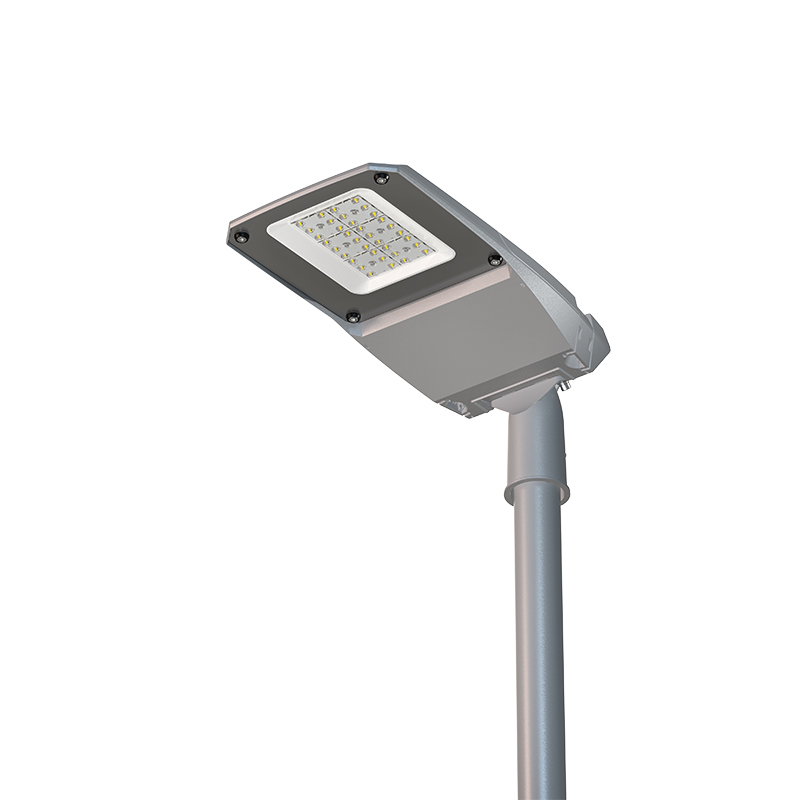
Street lighting specifications are governed by two primary frameworks depending on geography: ANSI/IES RP-8 in North America and EN13201 in Europe. Both define illuminance criteria and uniformity requirements by road type, but their classification systems use different terminology and metric systems. Projects in jurisdictions that have adopted specific municipal standards — such as the Montgomery County, Maryland streetlighting specifications or the Iowa DOT Design Manual Chapter 11 — must follow local adaptations that may be stricter than the base IES or EN standards.
Beyond illuminance, street lighting products used in North America are increasingly subject to DesignLights Consortium (DLC) qualification requirements, especially when utility rebates are involved. DLC Premium qualification requires a minimum efficacy threshold and sets maximum uplight levels — directly affecting which lumen packages are eligible. The BUG rating system (Backlight, Uplight, Glare) is the standard tool for communicating a fixture's light distribution characteristics, and most local authorities now require specific BUG ratings (typically B1–B2, U0–U1, G1–G2) for new street lighting installations to control spill light and sky glow.
Street lighting fixtures are not specified at their initial lumen output alone. Standards require that illuminance targets be met at the maintained (depreciated) lumen level — typically after 40% of rated lamp life in older standards, or at an L70 or L80 point for LED (the point where output drops to 70% or 80% of initial). This means a street light specified for 15,000 lumens initial may need to deliver 12,000+ lumens maintained over a 10-year design life. Over-specifying initial lumens to account for depreciation is a common practice, but modern LED fixtures with very flat lumen depreciation curves (many maintain L90 at 100,000 hours) have largely eliminated the excessive over-specification that was standard practice with HPS and metal halide sources.
There is a widespread assumption that brighter street lighting is inherently safer. The evidence on this is more nuanced than many people expect. Over-lighting — installing street lighting with significantly more lumens than the road classification requires — creates its own set of problems that can actually undermine the goals of a well-designed street lighting system.
The correct approach is to specify lumens that meet — but do not significantly exceed — the illuminance targets set by the applicable standard for the given road type, then verify through photometric software that the uniformity criteria are also met.
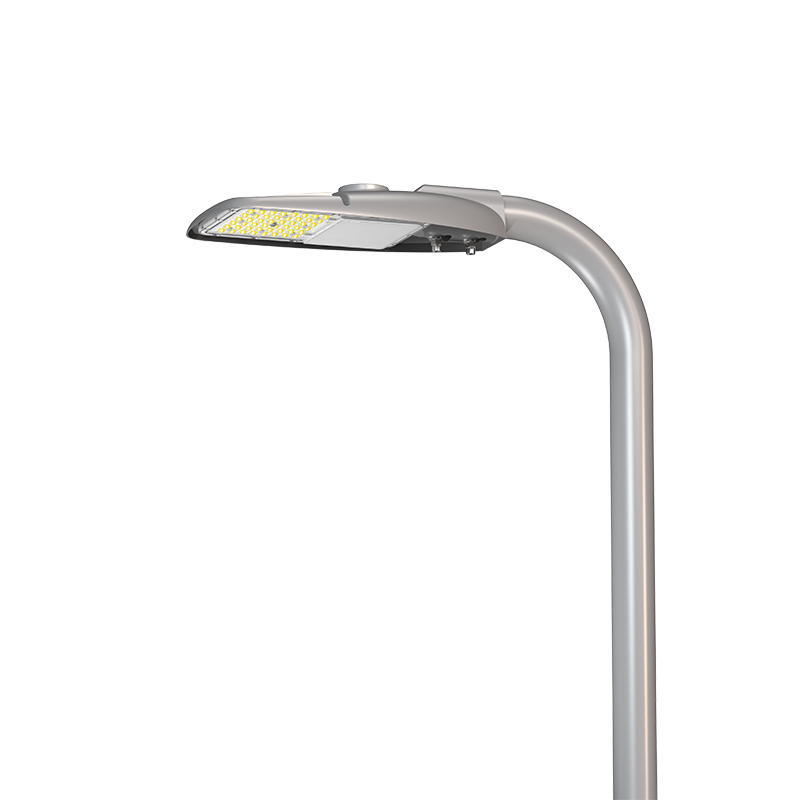
Many modern LED street lighting installations are specified with dimming capability — the ability to reduce lumen output during low-traffic periods, typically late night to early morning. A fixture specified at 16,000 lumens for peak evening hours might dim to 60% (9,600 lumens) or even 40% (6,400 lumens) between midnight and 5 a.m., when pedestrian and vehicle counts are minimal. This adaptive street lighting approach is increasingly required by energy codes and utility rebate programs.
The practical effect is that lumen specifications for adaptive street lighting projects must account for both peak and dimmed-down operating modes in the photometric analysis. A fixture that barely meets 0.9 fc at full output will fall below minimum maintained illuminance during dimmed operation, creating a compliance gap that is only caught during commissioning — or after a formal audit. Adaptive control is most effective when the initial lumen package is specified conservatively at full output, leaving headroom for dimming without dropping below minimum maintained thresholds.
For anyone working through a street lighting selection decision, the following sequence keeps the process grounded in the numbers rather than guesswork.
This process eliminates the single most common failure mode in street lighting projects: specifying a lumen package based on rule-of-thumb or product catalog defaults rather than the actual photometric requirements of the specific installation.
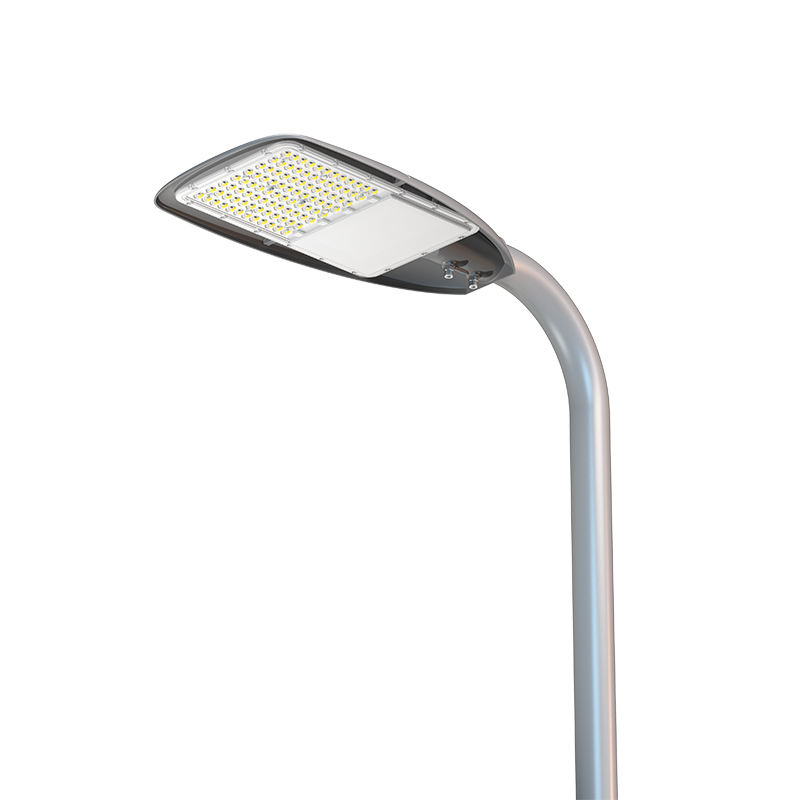
To tie the above into a working reference: residential and low-traffic street lighting generally falls in the 2,500 to 8,000 lumen range; collector and urban roads typically require 10,000 to 20,000 lumens; and high-traffic arterials and commercial zones demand 20,000 to 30,000 lumens or more. Highway and high-mast street lighting can reach well beyond 30,000 lumens per fixture, with multi-luminaire pole heads pushing total outputs into the six-figure range for major interchange lighting.
Modern LED technology has made it possible to deliver all of these lumen packages at significantly lower wattage than legacy sources, with better color rendering, longer service life, and built-in dimming capability. The lumens-per-watt advantage of current LED street lighting — 140 to 170 lm/W versus 90 to 110 lm/W for HPS — means that hitting even the highest lumen targets no longer requires the energy draw that older street lighting infrastructure demanded. For anyone planning a new installation or a retrofit, the headline number is less important than getting the photometric design right for the specific road type, mounting geometry, and applicable standard.

Contact Us for More Details
Contact Information
Add:
No. 8 Qingcang Road, Qiangjiao Town, 315612 Ninghai, Ningbo, China
Phone:
+86-574-83530320
Fax:
+86-574-83530330
E-mail:
Join our community and stay connected
 Custom Outdoor lighting Manufacturers

 English
 Français
 Español