2026-05-18
Content
Track lighting works by running electrical current through a continuous metal track mounted to a ceiling or wall, allowing multiple light fixtures — called heads or pendants — to be attached, repositioned, and aimed anywhere along that track. Each head draws power directly from the track's built-in conductors, which means you can add or remove fixtures without rewiring. The result is one of the most flexible lighting systems available for both residential and commercial spaces.
Whether you're illuminating a kitchen countertop, a gallery wall, a retail display, or a living room seating area, track lighting gives you directional control that recessed cans and pendant lights simply cannot match. Understanding the mechanics behind it helps you choose the right system, install it correctly, and get maximum performance from every fixture.
Inside every track lighting rail, there are two or three metal conductors running the full length of the track. These conductors are embedded in a plastic or ceramic housing that insulates them from each other and from the track's outer shell. When the track is connected to your home's electrical circuit, live current flows through one conductor and returns through the other — exactly like any standard circuit.
The light heads attach to the track via a rotating adapter called a connector or lamp holder. This adapter has contact points that press against the live conductors inside the track the moment you twist the head into the locked position. No additional wiring is needed at the point of attachment. Slide the head to any position along the track, twist to lock, and it powers on.
A standard single-circuit track carries 120V AC power in North America (230V in Europe and much of Asia), with a typical circuit capacity of 1,500 to 2,000 watts depending on the breaker. That capacity is shared among all the heads on that run of track. With modern LED track heads drawing as little as 7 to 15 watts each, a single circuit can comfortably power 20 or more fixtures — a dramatic improvement over the halogen era, when a single 50W MR16 bulb consumed the same power as three or four LED equivalents.
More advanced track systems offer two or three independent circuits within a single physical rail. A two-circuit track has three conductors (two live, one neutral/ground), and a three-circuit track has four or five. This allows different groups of heads to be controlled independently — for example, accent lights on one dimmer switch and task lights on another — without running separate tracks. Three-circuit systems are common in retail stores, museums, and high-end residential installations where layered lighting control is essential.
To use a multi-circuit track, the heads themselves must be compatible with the specific circuit number. Most manufacturers color-code the connectors or clearly label which circuit each head will engage when installed.
One of the most confusing aspects of buying track lighting is compatibility. There are three dominant track standards used in North America, each with a different conductor layout inside the rail. Heads designed for one standard will not work on another, even if they look nearly identical from the outside.
| Standard | Also Called | Conductor Position | Common Brands | Max Load (typical) |
|---|---|---|---|---|
| H-Type | Halo / Generic | Conductors at center | Halo, many imports | 1,500W |
| J-Type | Juno | Conductors offset left | Juno Lighting | 2,000W |
| L-Type | Lightolier | Conductors offset right | Lightolier, Philips | 2,000W |
Before purchasing any track heads or accessories, confirm which standard your existing track uses. Most manufacturers stamp the type directly on the track or include it in product documentation. Adapters that convert between standards do exist but add complexity and potential failure points — it's better to stick with a single system throughout an installation.
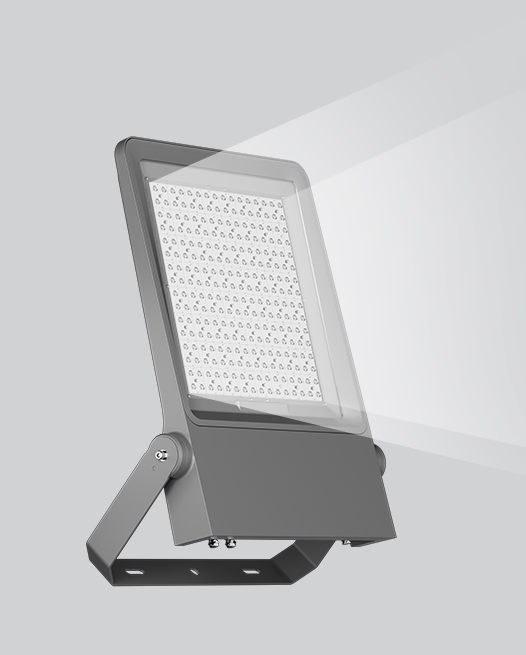
Track lighting has evolved far beyond the basic straight rail of the 1970s. Today's systems come in four main configurations, each suited to different installation scenarios.
The classic and most common form. Straight sections typically come in 2-foot, 4-foot, and 8-foot lengths and can be joined end-to-end with straight connectors, or turned with L-shaped, T-shaped, and X-shaped joiners to create more complex layouts. The track is mounted directly to the ceiling with screws through mounting holes, or suspended from the ceiling via stems or cables. It connects to the home's wiring through a feed at one end (a live end cap), though center-feed configurations are also available for long runs.
A single, narrow rail — usually 1/2 inch wide — that can be bent into curves, arcs, and custom shapes before installation. Monorail systems are low-voltage, typically running at 12V DC rather than 120V AC, which requires a remote transformer or driver. This low voltage enables very slim, elegant hardware and makes the system safer to handle. Monorail is a popular choice in modern and contemporary interiors where dramatic curving lines are desired, but the need for a separate transformer adds cost and complexity.
Two parallel cables — one positive, one negative — are tensioned between wall anchors, spanning a room horizontally or at an angle. Light heads clip onto both cables simultaneously to complete the circuit. Like monorail, cable systems are low-voltage (12V) and require a transformer. They create a strikingly minimal look since almost nothing is visible except thin stainless cables and the fixtures themselves. The downside is that long spans can sag without intermediate support points, and the installation requires careful tensioning.
Some systems are designed to be recessed into a slot in the ceiling, making the track itself invisible. Only the light head protrudes below the ceiling plane. These systems combine the flexibility of track lighting with the clean appearance of recessed lighting. They are more expensive to install but produce an exceptionally clean result in high-end residential and commercial projects.
The shift to LED has transformed track lighting performance across every metric that matters. Where halogen MR16 bulbs were the standard for two decades, LED track heads now dominate new installations — and for good reason. The difference in efficiency is not marginal. A 10W LED track head produces the same lumen output as a 50W halogen — an 80% reduction in energy consumption for identical light output.
Beyond energy savings, LED track heads operate at much lower temperatures. A halogen MR16 in a confined track housing can reach surface temperatures exceeding 200°C (392°F), making them a genuine fire risk if insulation comes into contact with the fixture. LED heads typically stay below 60°C (140°F) at the housing surface, even after hours of continuous operation.
LED lifespan ratings for track heads typically fall between 25,000 and 50,000 hours. At 8 hours of daily use, that's 8 to 17 years before a fixture needs replacement — compared to roughly 2,000 hours for a halogen bulb, or about 8 months at the same usage rate.
Two specifications matter most when selecting LED track heads for any application: Color Rendering Index (CRI) and correlated color temperature (CCT).
Some premium track heads offer tunable white technology, allowing the CCT to be adjusted from 2700K to 5000K via a dimmer or smart controller. This flexibility is particularly valuable in spaces that serve multiple purposes throughout the day.
Track lighting's primary advantage over general ambient lighting is its ability to direct light precisely. Beam angle — the cone of light emitted by a fixture — is a critical spec when selecting track heads for a specific task.
The relationship between beam angle, mounting height, and coverage area follows predictable geometry. A 30° beam from a fixture mounted at 10 feet will illuminate a roughly 5.4-foot diameter circle on the floor. The same fixture at 12 feet creates a 6.4-foot circle. Understanding this math lets you plan fixture placement before buying.
Most modern LED track heads are dimmable, but compatibility between the dimmer switch and the LED driver inside each fixture is not automatic. Getting smooth, flicker-free dimming down to 1% to 10% requires matching the right dimmer to the right fixtures.
Two dimming protocols are used in residential and commercial track lighting:
The most common method in residential installations. A TRIAC dimmer (also called a leading-edge or trailing-edge dimmer) reduces power by "chopping" the AC sine wave at the wall switch. The LED driver inside the fixture must be designed to interpret this chopped signal correctly. Not all LED drivers are compatible with all TRIAC dimmers, which is why ghosting (very faint light when switched off), flickering, or a limited dimming range are common complaints. Always verify that the fixture's driver is certified compatible with the specific dimmer brand and model you plan to install.
Commercial and advanced residential installations often use 0-10V or DALI (Digital Addressable Lighting Interface) dimming protocols. In a 0-10V system, a separate low-voltage control wire runs alongside the power circuit. A controller sends a signal between 0 and 10 volts to the driver; 10V means full brightness, 0V means minimum (or off, depending on the driver). DALI goes further by assigning each fixture a unique digital address, allowing individual heads or groups to be controlled independently even if they share the same power circuit. These systems are more complex and costly to install but offer extraordinary flexibility in large commercial spaces.
For smart home integration, many LED track heads now support Zigbee, Z-Wave, or Wi-Fi-based dimming without requiring a separate control wire. These fixtures communicate directly with smart home hubs or apps, enabling scene programming, scheduling, and remote control from a phone.
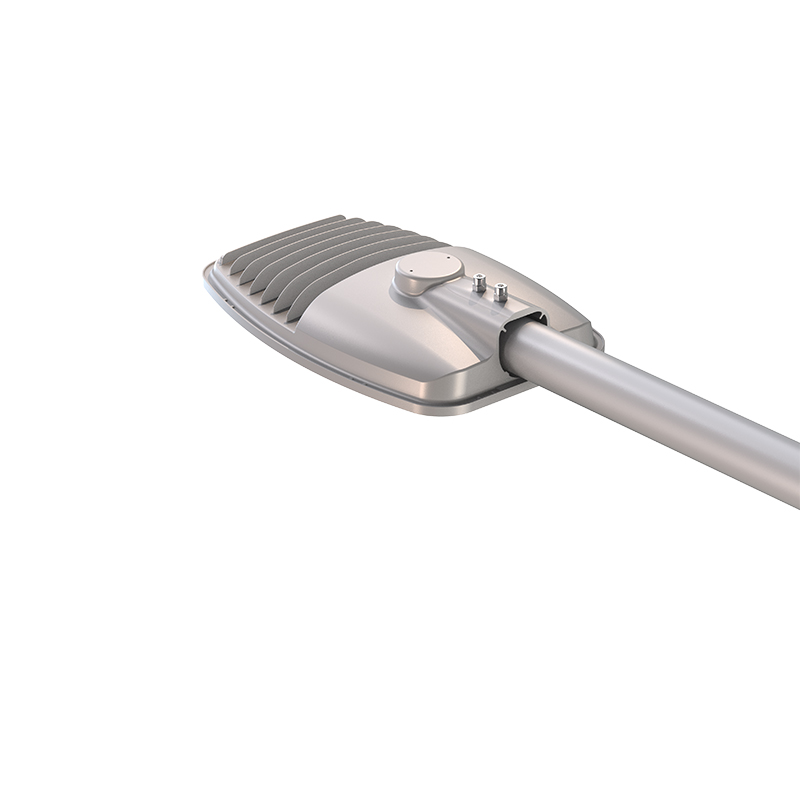
Track lighting is not limited to interior spaces. Outdoor LED lighting applications using track systems have grown significantly, driven by the durability and energy efficiency of LED technology. Covered porches, pergolas, exterior soffits, commercial building facades, and outdoor retail spaces all benefit from the directed, adjustable illumination that track systems provide.
The key distinction when moving track lighting outdoors is the IP (Ingress Protection) rating. Standard indoor track components carry no IP rating or an IP20 rating, meaning they are not protected against moisture. Outdoor track systems require a minimum of IP44 for covered areas protected from rain (splash-proof), and IP65 or IP66 for fully exposed locations subject to direct rain and wind-driven water.
Outdoor LED lighting fixtures used in track applications also need to be constructed from corrosion-resistant materials. Die-cast aluminum housings with powder-coat finishes are the standard for exterior-grade fixtures. Coastal environments require additional protection — marine-grade stainless steel hardware and specialized coatings that resist salt-air corrosion, which degrades standard aluminum finishes within a few years.
Outdoor LED lighting extends beyond simple porch fixtures. Some manufacturers produce fully outdoor-rated track systems designed for architectural facade lighting, where multiple track heads are mounted on a structural rail attached to a building's exterior. This approach allows individual fixtures to be aimed at specific architectural elements — columns, textured masonry, signage, or planters — with the same flexibility as an interior track system.
Color temperature choice matters even more outdoors. Warm 2700K to 3000K outdoor LED lighting creates an inviting, residential atmosphere and minimizes light pollution impact on nocturnal wildlife. Cooler 4000K to 5000K temperatures are used for security lighting or commercial applications where visibility and deterrence are priorities. Many municipalities now regulate the CCT of outdoor LED lighting installations to reduce sky glow — warm-white fixtures (below 3000K) are increasingly required in residential zones.
The efficiency of outdoor LED lighting also translates directly to operating cost savings. A commercial building that replaces 400W metal halide flood fixtures with 80W LED track heads achieves an 80% energy reduction while maintaining or improving lumen output, with a typical payback period of 2 to 4 years factoring in energy savings and reduced maintenance costs from longer LED lifespan.
Heat is LED's primary enemy. While LEDs produce far less heat than halogen or HID sources, managing the heat they do generate is critical to maintaining lumen output and lifespan. Outdoor environments present both challenges and advantages: ambient temperatures can be very high in summer (accelerating LED degradation), but air circulation outdoors is generally better than in enclosed ceiling cans, which helps dissipate heat more effectively.
Quality outdoor LED lighting fixtures incorporate finned aluminum heat sinks that conduct heat away from the LED chips and dissipate it into the surrounding air. The size and design of this heat sink is a reliable indicator of fixture quality — undersized heat sinks lead to thermal throttling (the driver reduces power to protect the LED from overheating), which causes the fixture to dim below its rated output within minutes of switching on.
Track lighting installation ranges from a straightforward DIY project to a task requiring a licensed electrician, depending on the complexity of the installation and local electrical codes.
The simplest track lighting installation replaces an existing ceiling fixture at a junction box. The track's live end connector attaches to the existing box, the track is secured to the ceiling, and the heads are added. No new wiring is required. This project is within the capability of most DIYers comfortable with basic electrical work: turn off the breaker, remove the old fixture, connect the live end to the existing wires (black to black, white to white, bare copper to ground), secure the track, add heads. Total time: under two hours for a single straight run.
Running a new circuit from the electrical panel to a track lighting installation requires pulling wire through walls and ceilings, installing a new breaker in the panel, and typically obtaining a permit in most jurisdictions. This work requires a licensed electrician in most regions. Costs vary considerably by market and project complexity, but a single new circuit installation in a finished space typically costs between $200 and $600 in labor, plus materials.
For renters or anyone who wants to avoid electrical work entirely, plug-in track systems are available. The track's live end terminates in a standard electrical plug rather than a hardwired connection. The track is mounted to the ceiling or wall with screws, and the cord runs down the wall to a nearby outlet. While less elegant than a hardwired installation, plug-in tracks offer full track lighting functionality with zero electrical work required. The primary limitation is proximity to an outlet and the visible cord — a cord cover or paintable raceway can minimize the aesthetic impact.
Effective track lighting requires planning before any installation begins. The position of the track relative to the surfaces being illuminated, the spacing between heads, and the aiming angle of each fixture all affect the quality of the result.
A widely used rule for accent lighting: position the track so fixtures are aimed at a 30° angle from vertical toward the target surface. At this angle, light falls naturally on the subject with minimal glare. If the track is mounted directly above the wall being illuminated, you would position it roughly 2 to 3 feet out from the wall (depending on ceiling height) so the fixture can tilt to the 30° angle. Too close to the wall and the beam hits at a steep angle, washing light upward and creating harsh shadows.
For general task lighting (over a kitchen island or work surface), center the track directly over the work area and use wide-flood heads. A 4-foot island typically needs two to three heads spaced evenly along a track section positioned directly above or slightly offset from center.
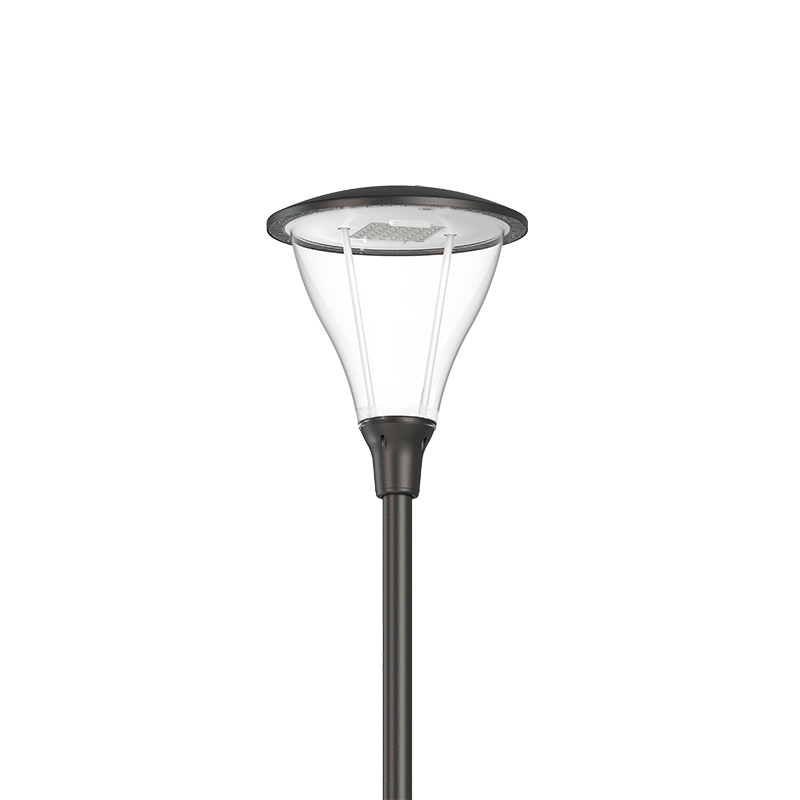
Understanding how track lighting compares to alternatives helps clarify when it's the right choice and when another system would serve better.
| Factor | Track Lighting | Recessed Cans | Pendant Lights | Surface Mounts |
|---|---|---|---|---|
| Directional control | Excellent | Limited | None | None |
| Repositionability | Excellent | None | None | None |
| Installation complexity | Low–Medium | Medium–High | Low | Low |
| Ceiling damage on removal | Minimal | High | Minimal | Minimal |
| Ambient light distribution | Medium | Good | Excellent | Excellent |
| Best for accent/display lighting | Yes | Possible | No | No |
Track lighting excels wherever the layout of a space changes, where artwork or merchandise needs to be highlighted precisely, or where a single electrical connection needs to serve multiple fixture positions. Recessed lighting beats track for clean-ceiling aesthetics but sacrifices flexibility and requires cutting into the ceiling structure. For most spaces, the two systems work best in combination: recessed fixtures for ambient fill light, and a track system for accent and task lighting.
Track lighting systems are generally low-maintenance, especially with LED heads. The most common issues are predictable and easy to address.
If an individual head fails to light, the most common cause is an incomplete twist into the locked position. Remove the head and reinstall, making sure the adapter rotates fully to the locked position. If that doesn't resolve it, check whether the contact points on the adapter are clean and making solid contact with the track conductors. Oxidation on the contacts — particularly in older or coastal installations — can interrupt the electrical connection. A light cleaning with fine sandpaper or a contact cleaner restores conductivity. If a head still won't light after confirming good contact, the LED driver inside the fixture may have failed.
Flickering is almost always a dimmer compatibility issue. The LED driver is receiving a power signal it cannot interpret cleanly, causing rapid on-off cycling at a frequency visible to the eye. Solutions: replace the dimmer with one that is explicitly rated for LED loads and listed as compatible with the specific fixture brand; ensure the minimum load rating of the dimmer is met (many LED dimmers require at least 25W of connected load to function correctly); or replace the fixtures with heads whose drivers are rated for phase-cut dimming.
Some warmth in a track rail is normal — the conductors carry current and there is always some resistive heating. However, if sections of track feel hot rather than warm, inspect for a loose junction between track sections. Poor contact at a joiner creates localized resistance, generating heat at that point. Tighten or replace the joiner. If warmth is uniform along the track, verify that the total wattage of connected heads does not exceed the track's rated circuit capacity.
Dust accumulation on track heads reduces lumen output and can affect heat dissipation in fixtures with exposed heat sinks. Turn off power, allow fixtures to cool, and wipe with a dry microfiber cloth. For heavy dust buildup on the track itself, a slightly damp cloth works well. Avoid liquid cleaners near the track's open slot, which is the entry point for the fixture connectors. Never use abrasive pads on track finishes, as these scratch powder-coat and anodized surfaces permanently.

Before committing to a track lighting purchase, working through these questions leads to a much better outcome.
Track lighting rewards careful upfront planning. The flexibility that makes it so useful also means there are many ways to install it suboptimally. Taking time to answer these questions before buying reduces the chance of needing to return or replace components after the installation is underway.

Contact Us for More Details
Contact Information
Add:
No. 8 Qingcang Road, Qiangjiao Town, 315612 Ninghai, Ningbo, China
Phone:
+86-574-83530320
Fax:
+86-574-83530330
E-mail:
Join our community and stay connected
 Custom Outdoor lighting Manufacturers

 English
 Français
 Español