2026-11-16
Content
Picture a corridor upgrade with a 4.5 m footway running beside a distributor road. The tender documents name one color temperature for the whole job, the contractor buys the cheaper option per lumen, and the fixtures go up. Six months later the complaints arrive from the footway side: the light feels harsh, the brick façades read grey, and the glare is worse than the old high pressure sodium lamps it replaced. The road itself is fine. Nothing was wrong with the hardware. The mistake was treating one color temperature as a universal answer.
Here is the short answer before the detail. 2700K gives a warm, amber-white light that suits residential streets, parks, garden lighting, heritage squares and any place where people walk, sit or eat after dark. 4000K gives a neutral white that reads crisper and cooler, and it is the workhorse for arterial roads, car parks, logistics yards, ports and sports facilities, mainly because it delivers more lumens per watt and performs better at the low light levels the eye actually works at on a road.
The rest of this guide explains where that split comes from, what the numbers behind each rating really measure, how the two choices change hardware cost and solar system sizing, and how to write a specification that survives a value-engineering review without turning into a nuisance complaint file.
The Kelvin figure on a luminaire label describes the color of the light, not the quantity of light and not the quality of color rendering. Correlated color temperature, usually shortened to CCT, compares the light to the color a heated black-body radiator would emit at that temperature. A 2700K source matches a very hot filament, which is why it looks familiar and slightly orange. A 4000K source matches a whiter, cooler appearance, closer to an overcast midday sky than to a candle.
The physical difference sits mostly in the blue part of the spectrum. A 4000K LED package pushes more energy into the 440 nm to 460 nm region, while a 2700K package shifts that energy toward the 600 nm and above region. Same chip technology, same phosphor family in many cases, different blend. That single shift changes appearance, perceived glare, mesopic performance and, to a smaller degree, luminaire efficacy.
The ANSI C78.377 standard groups solid-state lighting into named bins, and those bins are wider than most buyers assume. A fixture labeled 2700K can fall anywhere in roughly 2580K to 2870K. A fixture labeled 4000K can fall roughly between 3710K and 4260K. Two suppliers can both ship "2700K" and hand you noticeably different whites, and on a long street that difference is visible pole to pole.
Color rendering deserves its own line because it is the easiest thing to lose during cost reduction. The conventional CRI value, Ra, averages the first eight test colors and ignores saturated red almost entirely. That is why R9, and the TM-30 metrics Rf and Rg, matter more than Ra alone when the project involves stone, timber, terracotta or planting.
The table below compresses the comparison into the figures that most often decide a specification. Efficacy and S/P ranges reflect typical published performance across mainstream LED manufacturers rather than any single product, and they move with CRI, drive current and optic efficiency.
| Characteristic | 2700K | 4000K |
|---|---|---|
| Visual appearance | Warm, amber-white, close to incandescent | Neutral white with a slight cool edge |
| ANSI C78.377 bin coverage | Roughly 2580K to 2870K | Roughly 3710K to 4260K |
| Typical color rendering at specification | Ra 80 to 90 and above | Ra 70 to 80, higher grades available |
| Typical complete-luminaire efficacy | Around 120 to 150 lumens per watt | Around 140 to 170 lumens per watt |
| Typical S/P ratio | Approximately 1.1 to 1.4 | Approximately 1.5 to 1.9 |
| Mesopic performance at road luminance levels | Lower, so more delivered luminance is needed | Higher, often allowing lower wattage |
| Perceived glare at equal luminance | Generally lower and softer | Higher, especially with shallow shields |
| Common applications | Residential streets, parks, gardens, heritage squares, hospitality terraces | Arterial roads, car parks, industrial yards, ports, sports fields |
| Alignment with dark-sky guidance | Comfortably inside the 3000K or lower recommendation | Frequently outside it |
| Effect on off-grid system sizing | Larger panel and battery for the same delivered output | Smaller, lighter, lower-cost system |
Warm white is not a decorative nicety. On low-speed streets and pedestrian areas it changes how the whole space is read. Faces look natural rather than grey, planting keeps its green, and red brick stops looking muddy. That matters when the installation runs past front doors and bedroom windows, because the complaints that reach a maintenance department are almost never about lux values. They are about how the street feels at 9 pm.
One caution: warm light does not compensate for a poor optic. A 2700K lantern with a bare, poorly shielded module can still cause glare and light into windows. The Kelvin number sets the tone; the photometric design sets the behaviour.
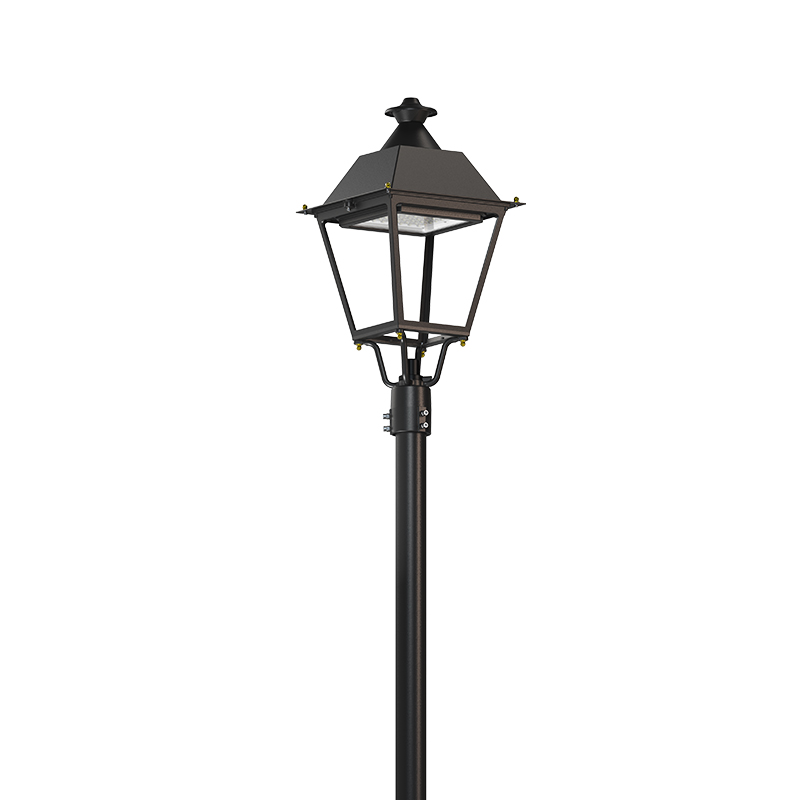 The most classic LED outdoor garden lightVILLA is a heritage luminaire for ambiance lighting, integrating with European architecture. Characteristic of traditional lanterns, it is mounted on a stirrup with 4 ...View Product →
Garden and park schemes are where this choice is most visible, because the light lands on planting and paving rather than on asphalt. A classic garden lantern body designed around a warm, high-rendering module will look correct at dusk, where a cool white module in the same housing will look like a security light in a flower bed.
At road luminance levels the eye is running in a mesopic state, somewhere between the cone-driven photopic vision you use reading a book and the rod-driven scotopic vision you use in near darkness. Rods respond strongly to blue-green light, so a source with more short-wavelength energy produces a stronger perceived brightness at the same measured luminance. This is the effect modelled in CIE 191:2010, and it is the technical reason a 4000K installation often looks brighter than a 2700K installation when both sit on the same photometric report.
That perceived brightness is worth real money. It lets a designer hit a target lighting class with lower delivered lumens, which means fewer poles, shorter poles, smaller drivers and lower connected load. On a 3 km arterial corridor, that difference compounds quickly across the bill of materials.
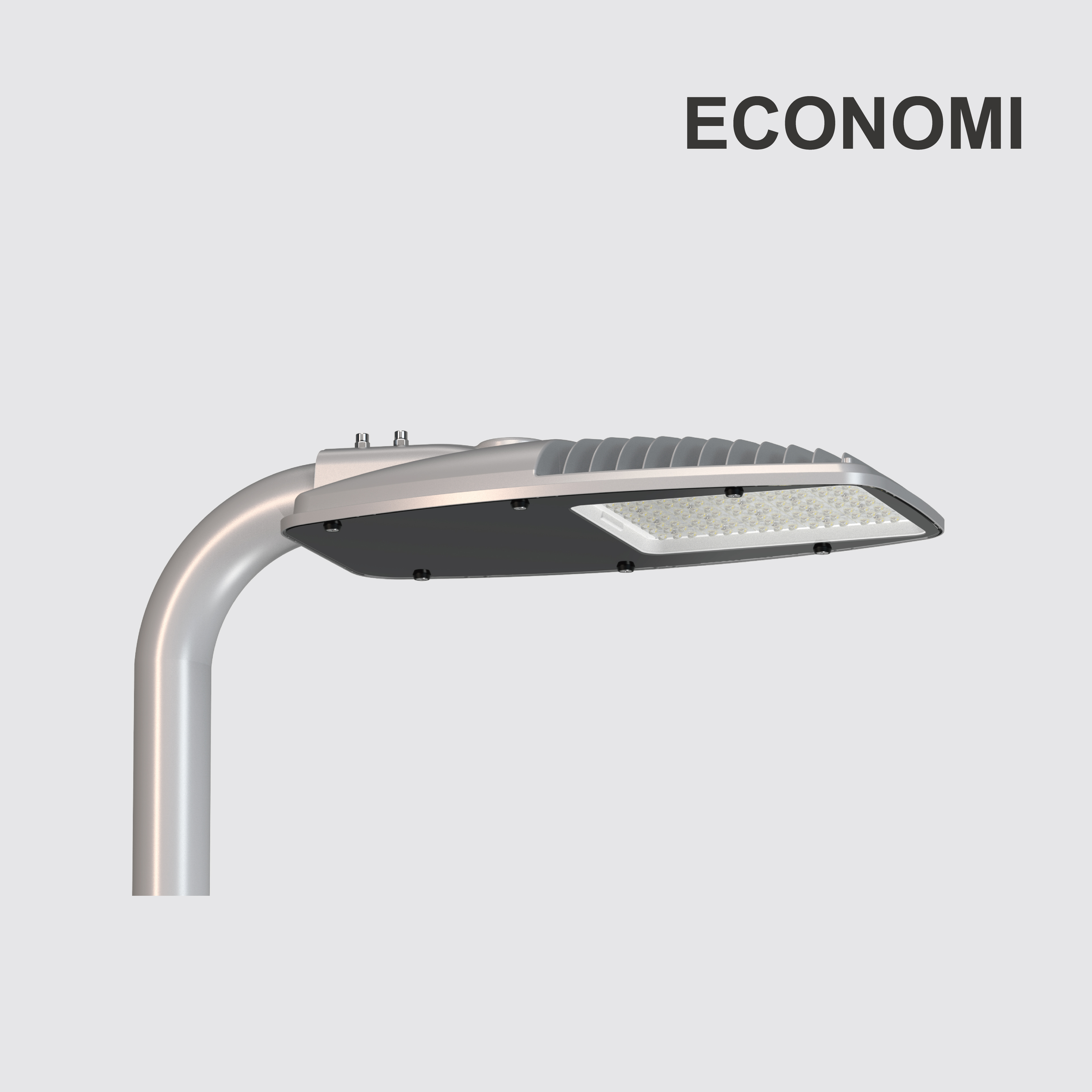
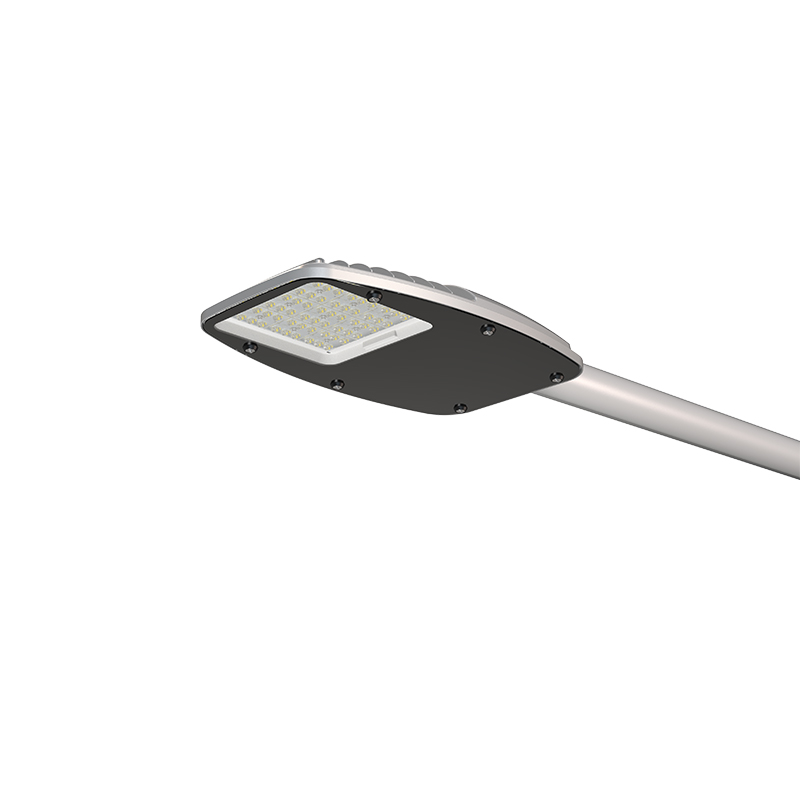 Outdoor roadway lighting LED street lightECONOMI SL11 is a high cost effective LED street light series, simplified structure with fins style radiator to achieve fast cooling, downward surface is flat by tempe...View Product →
Accessories and mounting details matter here too. A well-designed roadway luminaire should hold its light on the carriageway with a sharp backlight cutoff, which keeps light off adjacent bedrooms even at 4000K. If a project sits between the two camps, the usual compromise is a 3000K or 3500K specification for mixed corridors, never a mix of 2700K and 4000K on the same stretch.
The efficiency gap between the two is real but narrower than many buyers expect, and it depends heavily on the color rendering target. Moving from a 2700K module at Ra 80 to a 4000K module at Ra 70 is the cheapest way to gain output. Forcing the 4000K version up to Ra 90 to match a warm, high-rendering scheme gives most of that gain back.
Run the numbers before deciding. Take an illustrative example: a car park with 200 luminaires running 100 W each for 4,000 hours a year consumes 80,000 kWh annually. If a 4000K specification is 12 percent more efficacious than the 2700K alternative at the same delivered lumens, the saving is roughly 9,600 kWh a year. At an industrial tariff of 0.12 per kWh that is about 1,150 per year. Whether that justifies a colder-looking car park depends entirely on who is standing in it.
A specification that saves 1,150 a year in electricity but generates a year of complaints, a retrofit study and a re-lamping programme is not a saving. In residential environments, the second-order cost of getting CCT wrong usually dwarfs the first-order energy difference. In industrial and highway environments, the opposite is normally true.
Several studies on discomfort glare suggest that at the same luminance, a source with more short-wavelength content is judged harsher, particularly when it sits in the peripheral field of view. That is one reason a 4000K post-top on a narrow residential street can feel worse than a 2700K post-top with identical photometrics, even though the meters agree.
Regulation increasingly settles the argument. Guidance from dark-sky organisations recommends 3000K or lower for most outdoor lighting, and a growing number of municipalities and national parks write a CCT ceiling directly into the permit conditions. Check three documents before choosing: the local lighting bylaw or planning condition, the ecological assessment for the site, and the tender specification itself. If any of them caps CCT, the debate is over before it starts.
Where no cap exists, control the three variables that actually cause complaints: upward light ratio, backlight spill toward windows, and the luminance contrast between the luminaire aperture and its surroundings. Reducing mounting height rarely helps. Improving the shield almost always does.
Sports lighting is the clearest case where 2700K is simply not on the table. Camera sensors are balanced for daylight and most broadcast workflows expect a 4000K to 5700K white so that stadium light blends with daylight during late-afternoon kick-offs. Add high uniformity, minimal flicker from the driver, and color rendering good enough that team kits read correctly, and the warm end of the scale disappears from the conversation.
Where a venue has both a broadcast pitch and a community training area, splitting the specification is normal. Broadcast pitches sit at 4000K or above with tight uniformity ratios. Training areas and pedestrian concourses can step down to 3000K without affecting the televised product, and the lighting in the car park outside does not need to match the pitch at all.
One practical detail worth planning for: if the venue has a permanent camera position, confirm the source CCT and the flicker performance before the poles go up. Changing the module afterwards is expensive, and re-aiming a completed installation rarely fixes a color mismatch on camera.
In a grid-connected project, a lower-efficacy module costs a few more watts. In an off-grid solar project, the same difference propagates through the entire system: more watts means more daily energy, which means a larger photovoltaic array, a larger battery bank, and a heavier pole-top assembly. Buyers comparing an all-in-one solar street light at 2700K against the same platform at 4000K are usually comparing two different system sizes, not just two different colors.
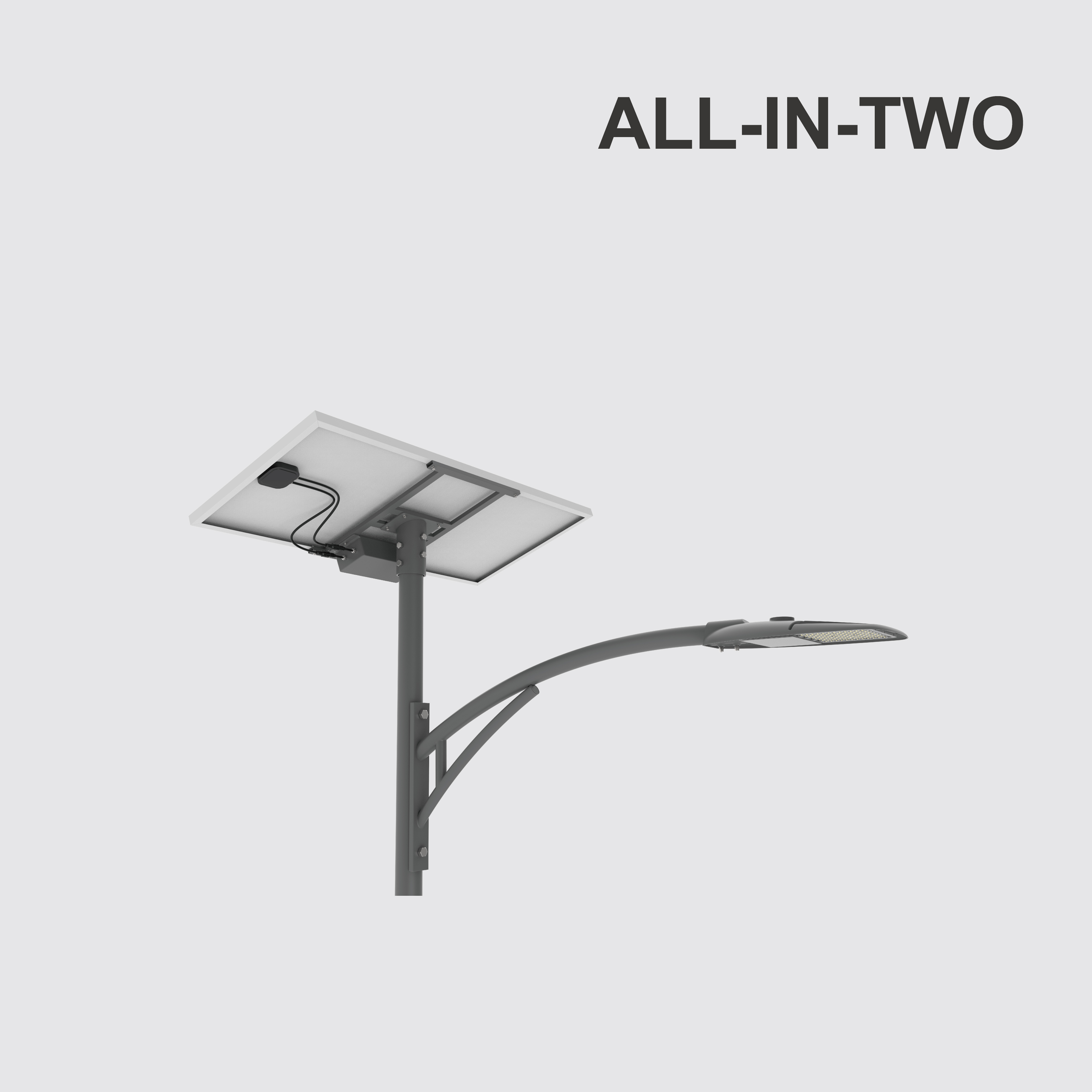
 All in one solar street lightThe SKY EYE Solar Street Light series is a smart innovation developed by the EVERLITE team. This advanced solar lighting system combines bifacial solar panels with hig...View Product →
A workable rule of thumb for early-stage sizing is to allow roughly 10 to 15 percent more generation and storage capacity when moving a design from 4000K to 2700K at the same delivered lumens and the same nightly runtime. That figure is a planning allowance, not a design calculation, and it should always be replaced with a proper energy balance using the local solar resource, the required autonomy days and the actual dimming profile.
Thermal behaviour also shifts with CCT in a subtle way. Warm modules typically run with a higher phosphor conversion load, and that heat has to leave the fixture. In hot-climate projects, the housing and heat sink design matters more than the CCT label, and a fixture engineered for high ambient temperatures will hold its output far better over a ten-year service life.
Dimming a white LED module at constant current usually shifts the CCT a little, and the direction depends on the phosphor and the drive design. On a dimmed-and-profiled street, that shift is normally invisible. On a façade or a sports venue where several fixtures are dimmed to different levels, it can become obvious as banding between adjacent luminaires.
Adaptive lighting schemes that reduce output in the small hours are compatible with either CCT, but they interact with the mesopic argument. If a 4000K installation is already relying on the spectral advantage to hit its class, dimming it further erodes that advantage at the exact time of night when the spectral effect is strongest. That is one reason many adaptive schemes pair a moderate dimming profile with a mid-range CCT rather than pushing to either extreme.
A single number in a tender document is an invitation to substitute. Write the requirement so a supplier can be measured against it, and so a value-engineering proposal can be assessed rather than argued about.
Ask for the paperwork early. A supplier that can produce its product certificates and third-party test reports on request is easier to work with than one that supplies them after the order, and the certification trail is often the fastest way to confirm that a claimed CCT bin and color rendering figure are actually what ships.
For teams newer to outdoor procurement, the practical sequence of testing, sampling and approval is worth reading up on before the first order is placed. A background read such as this street lighting buyer's knowledge guide covers the ordering and verification steps that sit around the CCT decision.
Neither is brighter by definition. Brightness comes from the lumen output and the optics. At equal measured luminance on a road surface, a 4000K source is usually perceived as brighter because of its higher S/P ratio and the way the eye behaves at low light levels. Measured values stay the same; perception does not.
You can, physically, but you should not. The difference is instantly visible from a distance, especially on wet asphalt, and it makes the installation look unfinished. If a corridor needs two lighting levels, keep the CCT constant and change the wattage or the dimming profile instead.
4000K is usually more efficient, which means a smaller panel and battery for the same nightly output. If the location is a village lane or a sensitive area where warm light is required, keep the 2700K but budget roughly 10 to 15 percent more generation and storage capacity during early sizing.
Not automatically. The advantage is widest when comparing a high-CRI warm option with a standard 70 CRI cool option. If both are specified at the same high color rendering level, the gap narrows considerably, and driver and optic losses can erase it entirely on some platforms.
Most sports installations sit between 4000K and 5700K, with broadcast venues at the higher end so the light matches daylight on camera. Community pitches and training areas sometimes use 3000K, but 2700K is uncommon outdoors in a sports environment.
It generally does, since most dark-sky guidance caps outdoor CCT at 3000K or lower. Meeting the CCT cap is only part of the requirement though. Shielding, upward light ratio and light trespass limits are equally important and are often enforced separately.
Almost never at street level. The photometric measurement will be identical, but the perceived brightness will favour the cooler source, particularly on dark asphalt and at the low luminance levels typical of a residential road.
Specify a MacAdam ellipse of 3 steps or tighter, and keep the order to a single production batch where possible. Beyond 3 steps, matching between adjacent poles becomes visible, and field replacements from a different batch will stand out.
Usually slightly, and the direction depends on the module and the driver. At low dimming levels the shift is normally too small to notice on a street, but on a façade or a stadium with several fixtures dimmed to different levels, it can produce visible color banding between adjacent units.
Treat 2700K and 4000K as two different design tools rather than two versions of the same product. Warm white belongs where people live, walk and linger, and where a bylaw or an ecological assessment limits short-wavelength output. Neutral white belongs where the task is detection, distance and cost per delivered lumen across a large area. On a mixed corridor, keep one CCT per street and vary the wattage, the optic and the dimming profile instead.
Decide with data that can be verified: a defined CCT bin, a stated R9 or TM-30 figure, a MacAdam step, an LM-79 report for the complete luminaire, and an upward light ratio that keeps the light on the task. Those five items settle almost every argument that colour temperature alone cannot.

Contact Us for More Details
Contact Information
Add:
No. 8 Qingcang Road, Qiangjiao Town, 315612 Ninghai, Ningbo, China
Phone:
+86-574-83530320
Fax:
+86-574-83530330
E-mail:
Join our community and stay connected
 Custom Outdoor lighting Manufacturers

 English
 Français
 Español