2026-11-09
Content
Put the same pole, the same die-cast housing and the same lumen package in front of a driver twice, once with a 3000K light engine and once with a 4000K engine, and most people will swear the 4000K version is brighter. A calibrated illuminance meter placed on the asphalt will show nearly identical readings. That gap between what is measured and what is seen is the whole 3000K versus 4000K discussion compressed into one sentence, and it is the reason two projects with identical lux levels can produce completely different opinions from the public.
The choice also lands on the desk of people who have to defend it later: a municipal engineer signing off on a tender document, a contractor who will be called back if residents complain about light in their bedrooms, a distributor who has to keep one consistent SKU in stock for three years. Color temperature affects peripheral vision at speed, how much light spills through a window, how a stone facade reads at night, and how easy it is to match a replacement luminaire to a five-year-old installation.
Here is the conclusion first, with the reasoning behind it in the sections that follow: 4000K is the better default for vehicle-dominated roads, intersections, freight yards and perimeter security, while 3000K is the better default for residential streets, parks, promenades, heritage areas and ecologically sensitive sites. Everything else is about tolerance bands, spectrum quality and how carefully the specification is written.
The dividing line is rarely the wattage of the fixture. It is who uses the space after dark and how fast they move through it. Vehicles travelling above roughly 40 km/h depend heavily on peripheral detection, and a spectrum with more short-wavelength content supports that detection at the same measured illuminance. Pedestrians sitting on a bench, or sleeping 12 metres behind the pole, experience the same spectrum as glare and as a bluish wash on the bedroom ceiling.
The table below collects the differences that matter most during specification, at equal lumen output from the same luminaire platform.
| Parameter | 3000K | 4000K |
|---|---|---|
| Visual appearance | Warm white, slight amber cast | Neutral white, crisp and clean |
| ANSI C78.377 nominal band | 2870K to 3220K | 3710K to 4260K |
| Scotopic to photopic ratio | Roughly 1.2 to 1.4 | Roughly 1.5 to 1.8 |
| Subjective brightness at equal lux | Baseline | Often judged 5 to 10 percent brighter |
| Efficacy on the same platform | Typically 3 to 6 percent lower | Higher, less phosphor conversion loss |
| Discomfort glare at equal luminance | Lower, easier on the eye | Higher, especially with shallow optics |
| Ecological and skyglow impact | Lower short-wavelength content | Higher short-wavelength content |
| Typical best fit | Residential streets, parks, heritage, coastal sites | Arterials, highways, junctions, yards, security |
Read that as a starting position rather than a rule. A 3000K specification on a rural road with poor uniformity will perform worse than a well-engineered 4000K layout, because uniformity and glare control dominate visual performance far more than a 1000K shift in nominal color temperature.
Correlated color temperature describes where a white light spectrum sits relative to a heated black body, expressed on the Kelvin scale. It says nothing about how many lumens the fixture produces, how efficiently it converts electricity, how long it lasts, or how well it renders color. Two luminaires both labelled 4000K can look noticeably different from each other if one sits at the top of the ANSI band with a green tint and the other sits near the middle with a clean neutral tone.
ANSI C78.377 sets a nominal 4000K band from 3710K to 4260K, and a nominal 3000K band from 2870K to 3220K. That is a spread of roughly 550K inside a single catalogue label. If one supplier ships near 3700K and another ships near 4250K, the two installations will not match even though both are "4000K". On top of that, the distance from the Planckian locus, usually described as Duv, controls whether the light looks slightly pink or slightly green.
Buyers who are new to outdoor procurement tend to focus on the headline wattage and the Kelvin number, then discover that consistency across phases is the harder problem. Our street lighting buyer's knowledge guide walks through the specification items that are worth locking down before a purchase order is issued.
Roadway lighting operates in the mesopic range, where both cone and rod photoreceptors contribute to vision. Rods are most sensitive to short wavelengths around 500 nanometres, which is why a spectrum with a stronger blue component produces more effective peripheral detection at the same photopic illuminance. CIE 191:2010 formalised mesopic photometry for exactly this purpose, and IES TM-12 examined how spectral power distribution influences visual performance at low light levels.
In practical terms, a 4000K luminaire with a scotopic to photopic ratio in the 1.5 to 1.8 range delivers more peripheral information per lux than a 3000K luminaire in the 1.2 to 1.4 range. At junction approaches and on high-speed carriageways, that translates into earlier detection of pedestrians, cyclists and debris at the edge of the road. Design standards such as IES RP-8 and EN 13201 set illuminance and luminance classes but deliberately leave color temperature open, which is why the decision usually lands in local specifications and tender documents.
There are secondary reasons 4000K dominates municipal road standards. Road markings and signage read more sharply, wet asphalt gains a little more contrast, and the higher CCT is easier to combine with high efficacy engines because less phosphor conversion is needed to shift the spectrum.
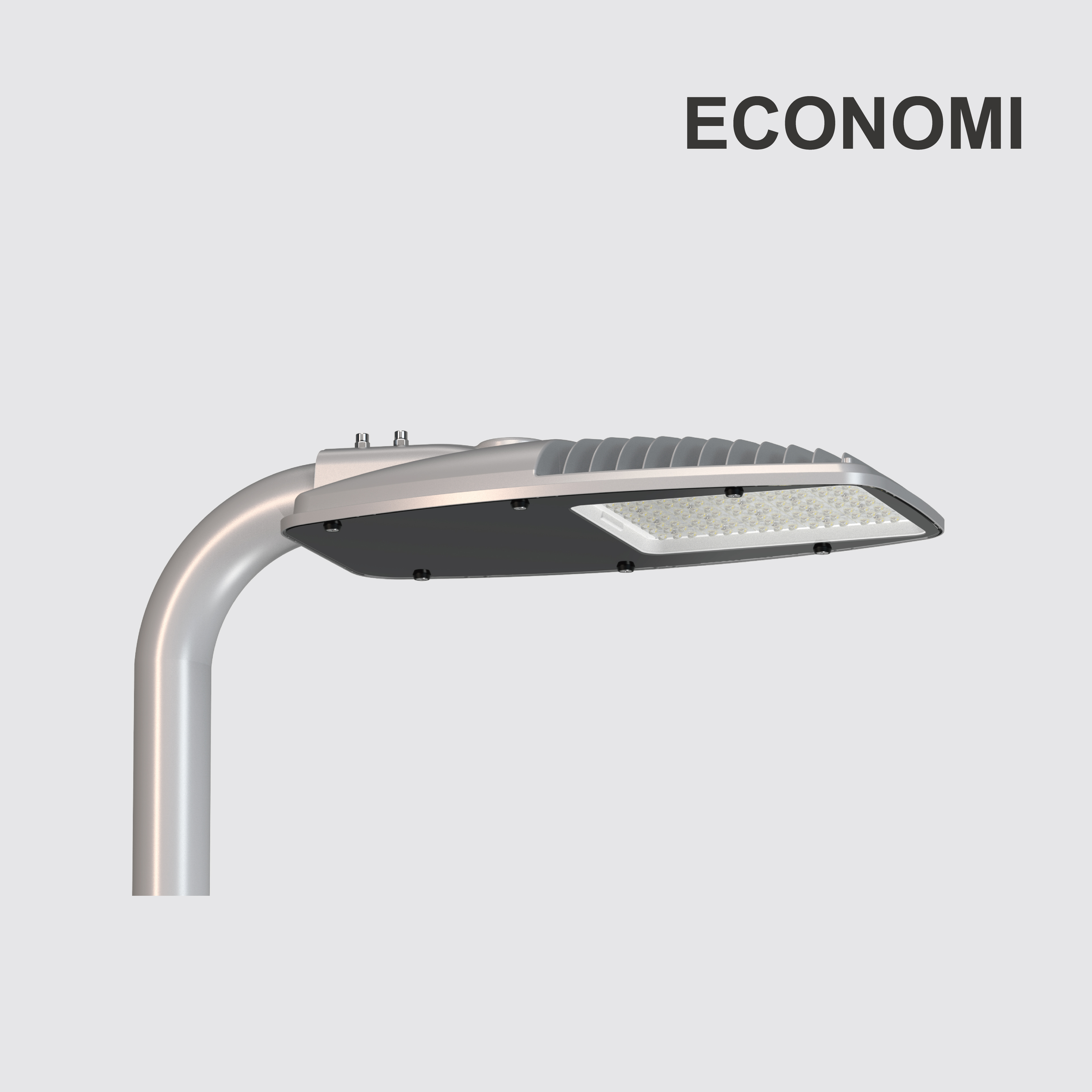
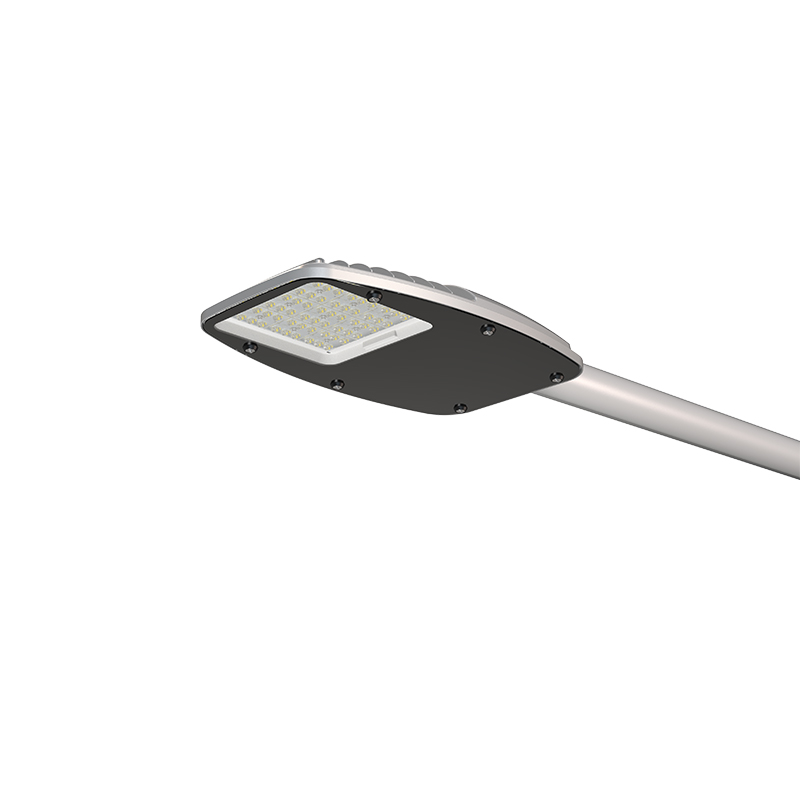 Outdoor roadway lighting LED street lightECONOMI SL11 is a high cost effective LED street light series, simplified structure with fins style radiator to achieve fast cooling, downward surface is flat by tempe...View Product →
For arterial and highway platforms, a roadway luminaire specified at 4000K with a three-step color bin will hold a consistent appearance along the whole corridor, which matters more than most buyers expect. If a single pole in a hundred-pole run arrives from a different kit, drivers notice it instantly, and so do reviewers taking night-time photographs for the handover file.
Residential streets are the classic case. When a luminaire sits 6 metres from a bedroom window, the amount of light entering the room matters more than the visual performance of a driver who is not there. Warmer spectra contain proportionally less short-wavelength energy, and published melanopic metrics used under CIE S 026 place a typical phosphor-converted 3000K white at roughly 0.5 on the melanopic equivalent daylight illuminance ratio, against roughly 0.7 for 4000K. That difference shows up as a calmer light in the room and fewer complaints at the next council meeting.
DarkSky guidance for outdoor lighting in sensitive areas recommends 3000K or lower, and coastal nesting beach rules in several jurisdictions are stricter still. The Florida Fish and Wildlife Conservation Commission, for example, caps lighting on sea turtle nesting beaches at 3000K and requires long-wavelength options in some locations. Skyglow, insect attraction and disruption of nocturnal species activity all scale with short-wavelength output, so a 4000K specification in those locations can fail review regardless of how good the photometrics look on paper.
Warm light flatters stone, brick, timber and foliage. In parks, plazas, promenades and historic quarters, 3000K and even 2700K read as welcoming, while 4000K can look clinical against the same material. Post-top and lantern-style urban luminaires are frequently specified in this range for that reason, and a warm-white engine behind a well-shielded optical system still delivers the uniformity the landscape architect wants.
 Modern style PC bowl Led outdoor park lightEAGER is a new concept for garden area illumination, featuring a well-proportioned design combined with the advanced lighting control technology. It is compatible with...View Product →
One caution: do not fix a lower color temperature by adding more light. Over-lighting a park to compensate for the perceived softness of 3000K raises glare, wastes energy and increases light trespass. The right response is an optical design with good backlight control and a uniformity ratio that stays within the intended class.
A 3000K engine on the same platform as a 4000K engine typically gives up 3 to 6 percent in efficacy, because more phosphor is doing more work on the blue pump output. On a 150 lumens per watt platform, expect something like 142 to 145 lumens per watt at 3000K. Over a 100-watt fixture running 4000 hours a year, that difference is small in absolute energy terms but visible when spread across 500 poles.
The bigger financial exposure is not the watt, it is the color drift. Rated life is measured under IES LM-80 and projected with IES TM-21, and most reputable outdoor engines today publish L90 figures beyond 60,000 hours with color shift held under 0.007 in Delta u prime v prime over the same period. Two things determine whether a specific luminaire achieves that: the quality of the LED kit and the thermal path from the emitter to the die-cast body.
 High temperature applicable outdoor led street lightingECOSUPER is a high end LED street light series with unique appearance design in the world, its upper surface is cut like a diamond, meeting the individual needs of cus...View Product →
This is where manufacturing control pays off. An in-house process that covers die-casting, surface treatment and assembly, backed by a thermal and optical test laboratory, is what keeps a 3000K batch and a 4000K batch of the same model behaving predictably after five summers on a pole.
Use the table below as a first filter, then confirm against the local standard or planning condition that applies to the site.
| Application | Recommended CCT | Main Reason |
|---|---|---|
| Highway mainline | 4000K | Mesopic benefit at high speed and long spacing |
| Urban arterial with mixed traffic | 4000K | Balance of detection and glare control |
| Residential and local streets | 3000K | Reduced light intrusion into homes |
| Parks, plazas and promenades | 2200K to 3000K | Ambience and lower skyglow |
| Heritage and facade lighting | 2700K to 3000K | Material colour appearance |
| Sports grounds and stadiums | 4000K to 5700K | Camera colour rendering and uniformity |
| Security and perimeter lighting | 4000K to 5000K | Perceived brightness and camera contrast |
| Wildlife and coastal nesting areas | 3000K or lower | Ecological and planning requirements |
Where sports lighting is intended for broadcast, color rendering and flicker behaviour matter as much as the Kelvin figure. A flat 4000K with poor colour fidelity will fail camera tests that a well-tuned 5000K or 5700K system passes comfortably, so treat the CCT value as one input among several.
Most 3000K versus 4000K problems are not optical problems. They are documentation problems that surface months later, usually during a night inspection or when a resident files a complaint.
The fix is a specification that carries numbers, not adjectives. Write the CCT with a tolerance, the Duv limit, the MacAdam step, the luminaire efficacy at the rated condition and the test report reference. Detailed photometric files, IES and LDT data and the current product catalogue download make it straightforward to check all of these before a tender goes out.
A side-by-side test on a real street settles more arguments than a photometric report, provided it is set up honestly. Equal lumen output, equal mounting height and equal spacing are the non-negotiables, because a 10 percent spacing difference will distort the comparison more than the color temperature does.
A trial that follows those steps gives the project team something defensible. It also gives the manufacturer a clear brief, which shortens the sample loop and reduces the risk of a late change order.
Not in measured photopic lumens. At the same lumen output and the same distribution, the two produce the same lux values on the ground. The 4000K version is usually perceived as brighter because the spectrum drives more rod response, and this effect is strongest at the low light levels found on roads at night.
Yes, when the zones are physically separate and the change is intentional, for example 4000K along the arterial road and 3000K along the residential loop behind it. What causes complaints is mixing both temperatures along one continuous corridor or within one visual field.
The 4000K engine usually wins by 3 to 6 percent in efficacy on the same platform, which is a small share of total energy compared with optical efficiency, dimming profiles and operating hours. Choose the colour temperature for the application first, then optimise efficiency inside that choice.
Color temperature itself does not set service life. Drive current, junction temperature and the quality of the thermal path decide that. What can differ is the rate of colour shift, which is why a colour-shift limit in the specification matters more than the Kelvin figure alone.
Lower blue content generally reduces ecological impact, and many sensitive-area guidelines cap outdoor lighting at 3000K. Some coastal and habitat rules go further and require long-wavelength amber sources, so check the site condition before assuming 3000K is sufficient.
It sits between the two and can work well in mixed-use districts, but availability is narrower than either 3000K or 4000K. Fewer kits means a longer lead time and a higher risk of a colour mismatch when a replacement is needed later.
State the CCT with a tolerance, for example 4000K within 200K, add a Duv limit of plus or minus 0.003, require a three-step MacAdam kit, and include the minimum efficacy at the rated drive condition. That single sentence prevents most of the mismatch problems described in this article.
Use 4000K wherever vehicles and rapid peripheral detection drive the design, and use 3000K wherever people live, sit or sleep beside the light, or where ecological rules apply. Then control what actually causes trouble on site: the tolerance band, the Duv value, the MacAdam step, the thermal design and the supply consistency across project phases.
Color temperature is a design decision, not a marketing label. Treat it with the same rigour as beam distribution and uniformity, and the argument between 3000K and 4000K usually ends before the first pole is installed.

Contact Us for More Details
Contact Information
Add:
No. 8 Qingcang Road, Qiangjiao Town, 315612 Ninghai, Ningbo, China
Phone:
+86-574-83530320
Fax:
+86-574-83530330
E-mail:
Join our community and stay connected
 Custom Outdoor lighting Manufacturers

 English
 Français
 Español