2026-11-23
Content
If you are comparing 2700K with 3000K, here is the short answer first: choose 2700K when warmth, low blue content and a calm night-time atmosphere matter most, and choose 3000K when you want a cleaner warm white that reads brighter and separates colors more easily at the same light level. The two are only about 300 kelvin apart, but that small step changes how a street, a plaza, a car park or a driveway feels after dark.
People often describe the gap between 2700K and 3000K as dramatic, and then struggle to explain why. On paper, 2700K sits in the amber end of warm white with a visible orange undertone, while 3000K keeps the warmth but strips out most of the yellow, so white surfaces and painted walls look cleaner. Stand two poles side by side at night and nearly everyone can pick which is which. Visit the same two streets a week apart and almost nobody could tell you which one used which.
For outdoor projects, the decision is rarely about taste alone. Road class, pedestrian activity, local rules on light color, wildlife guidance, camera and identification requirements, plus the CCT tolerance your supplier can genuinely hold, all push the choice one way or the other. What follows covers the numbers, the trade-offs, and the specification details that keep a scheme consistent from the first delivery to the fifth.
One table covers most of the differences that matter, from chromatic appearance to the applications each color temperature suits.
| Characteristic | 2700K | 3000K |
|---|---|---|
| Appearance to the eye | Amber, cozy warm white | Warm white, less yellow, cleaner |
| Nominal bin center and range (ANSI C78.377) | 2725K, plus or minus 145K, roughly 2580K to 2870K | 3045K, plus or minus 175K, roughly 2870K to 3220K |
| Short-wavelength blue below 500 nm | Lower | Modestly higher at the same CRI |
| Typical efficacy at the same CRI | About 3 to 8 percent fewer lumens per watt | Slightly higher lumens per watt |
| Perceived brightness at low light levels | Lower scotopic output, S/P ratio near 1.0 | Higher scotopic output, S/P ratio near 1.2 |
| Sky glow contribution | Lower, less short-wavelength scattering | Higher |
| Typical indoor rooms | Bedrooms, lounges, restaurants, hotel lobbies | Kitchens, bathrooms, offices, retail floors |
| Typical outdoor use | Heritage quarters, residential streets, parks, terraces, coastal zones | Arterial roads, car parks, amenity sports fields, CCTV zones |
| Fit with dark-sky and wildlife guidance | Preferred or required in sensitive areas | Accepted where rules cap light at 3000K |
Read the rows together and a pattern appears. The nominal 300 kelvin gap is the least important number in the table. The bigger practical differences are blue content, perceived brightness at low light levels, and how each temperature behaves once a driver starts dimming the fixture down to 30 or 20 percent in the middle of the night.
Color temperature is not a single fixed value, it is a range, and the width of that range decides whether two "3000K" fixtures actually match. The ANSI C78.377 standard defines nominal bins, which is why a 3000K product can legally measure anywhere from roughly 2870K to 3220K.
Think about what that means. One fixture labeled 3000K can measure 2900K while another measures 3200K, and both stay inside the standard. That 300K spread between two products sold under the same label is exactly the same size as the entire difference between 2700K and 3000K. This is the real reason some buyers say the two temperatures look identical and others say they look nothing alike.
Third-party test reports on loosely binned fixtures regularly show measured CCT drifting 200K to 400K away from the nominal label, which is why a replacement pole added three years later often looks out of place next to the original installation. If a scheme is expected to grow in phases, specify the bin and ask the supplier to keep it on file for repeat orders.
A living room is lit to a comfortable level and then judged. A street is lit to a low level and then judged by how quickly a driver spots a pedestrian in dark clothing. That shift in task changes how much a 300K step matters.
Under road lighting, the human eye works in the mesopic range, where both cones and rods contribute. Rods respond strongly to light around 500 nm, in the blue-green region, so a 3000K source delivers more useful scotopic light than a 2700K source at the same photopic illuminance. As a rule of thumb, the scotopic to photopic ratio sits near 1.0 for 2700K and near 1.2 for 3000K. On paper the difference is small, but field studies within the Illuminating Engineering Society literature show that it can be perceived as a real visibility gain at low adaptation levels.
Shorter wavelengths scatter more in the atmosphere, so a 3000K installation sends more light upward as sky glow than a 2700K installation producing the same lumens. The International Dark-Sky Association recommends outdoor CCT at or below 3000K and prefers 2700K or warmer in sensitive locations. Near coastlines, sea turtle lighting guidance from the Florida Fish and Wildlife Conservation Commission pushes further, capping CCT around 2700K and in some cases requiring amber or narrowband sources.
Cameras and the human eye both need contrast, not just illuminance. For face and plate recognition on CCTV or automatic number plate systems, 3000K generally renders detail and color distinctions more cleanly than 2700K, while 2700K can make skin tones and red vehicle paint look heavier. Where a security function matters, that single factor usually outweighs the aesthetic preference for warmth.
The most expensive mistake is choosing a temperature for the wrong reason and then paying for it twice. Selecting 2700K for a busy arterial road and then raising the lumen output to recover the lost visibility can consume far more energy than simply using 3000K at the correct illuminance from the start.
Warm light has a long history outside, and several project types still depend on it.
One often overlooked advantage appears when fixtures are dimmed. A 2700K source dimmed to 20 percent at midnight keeps its warm character, while a cooler source dimmed to the same level can look grey and flat against dark surroundings. For post-top and side-entry urban luminaires, that behavior is a genuine design benefit rather than a marketing line.
Everlite builds post-top and side-entry urban luminaires in IP66-rated die-cast housings that are offered in warm white configurations for exactly these settings.
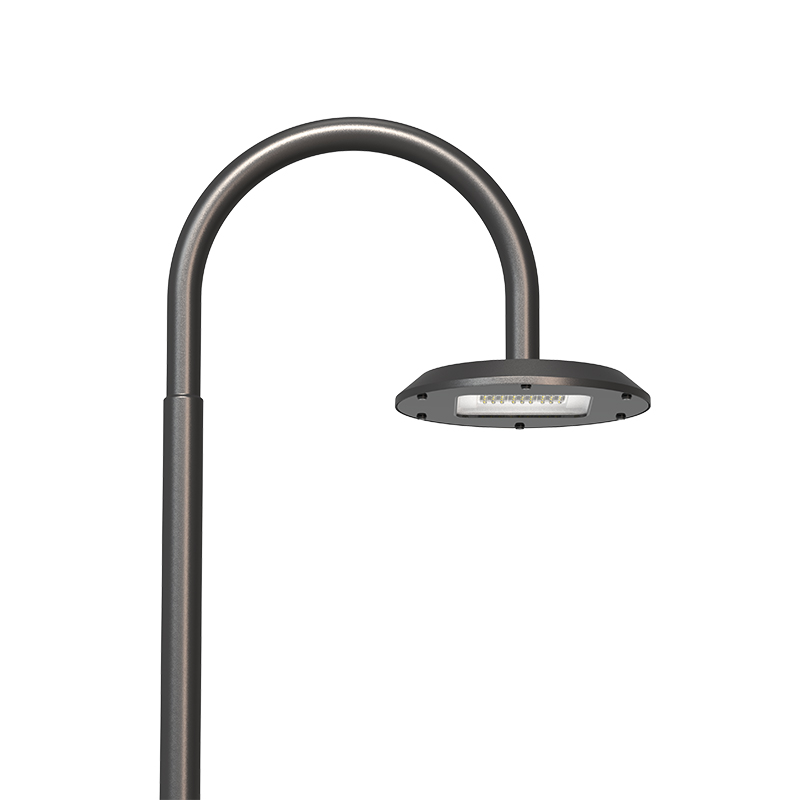 IP66 post top outdoor Led urban lightingAmong many similar shapes, we sought new and innovative ideas. Using the simplicity of circles and straight lines, combined in a harmonious way, we created the DIAMOND...View Product →
3000K has quietly become the default municipal specification across much of Europe, North America and Southeast Asia, and there are practical reasons for that.
There is also a commercial argument that tends to surface during tendering. Because 3000K typically produces slightly more lumens per watt than 2700K at the same CRI, it is easier to meet an efficiency threshold without adding cost, and it keeps the door open if a specification is later revised upward to 4000K for a higher road class.
For road schemes that need a stable, verifiable 3000K output across large batches, the CB and ENEC certified street lighting range was developed around that requirement, with consistent binning across repeat orders.
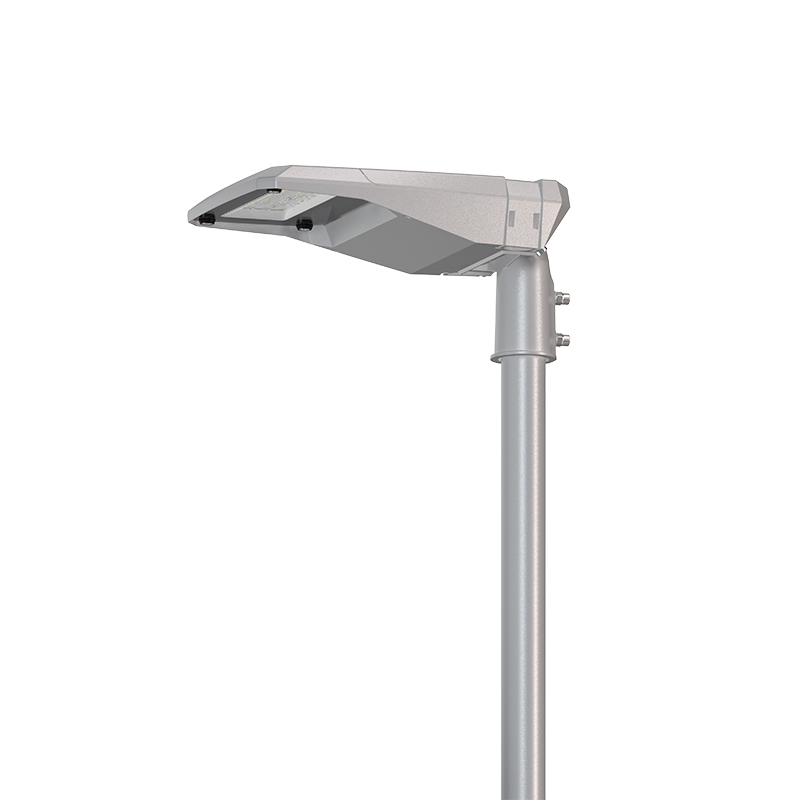 CB ENEC ENEC+ LED street lightELUXPRO is a professional street light series for public lighting tenders, it was designed with a user-centric approach which can really achieve tool-free opening and ...View Product →
Off-grid lighting changes the 2700K versus 3000K question, because every lumen has to be paid for twice, once in panel area and once in battery capacity. If a 2700K fixture delivers 3 to 8 percent fewer lumens per watt than its 3000K equivalent, that gap shows up as either a slightly larger panel and battery, or a slightly lower night-time output.
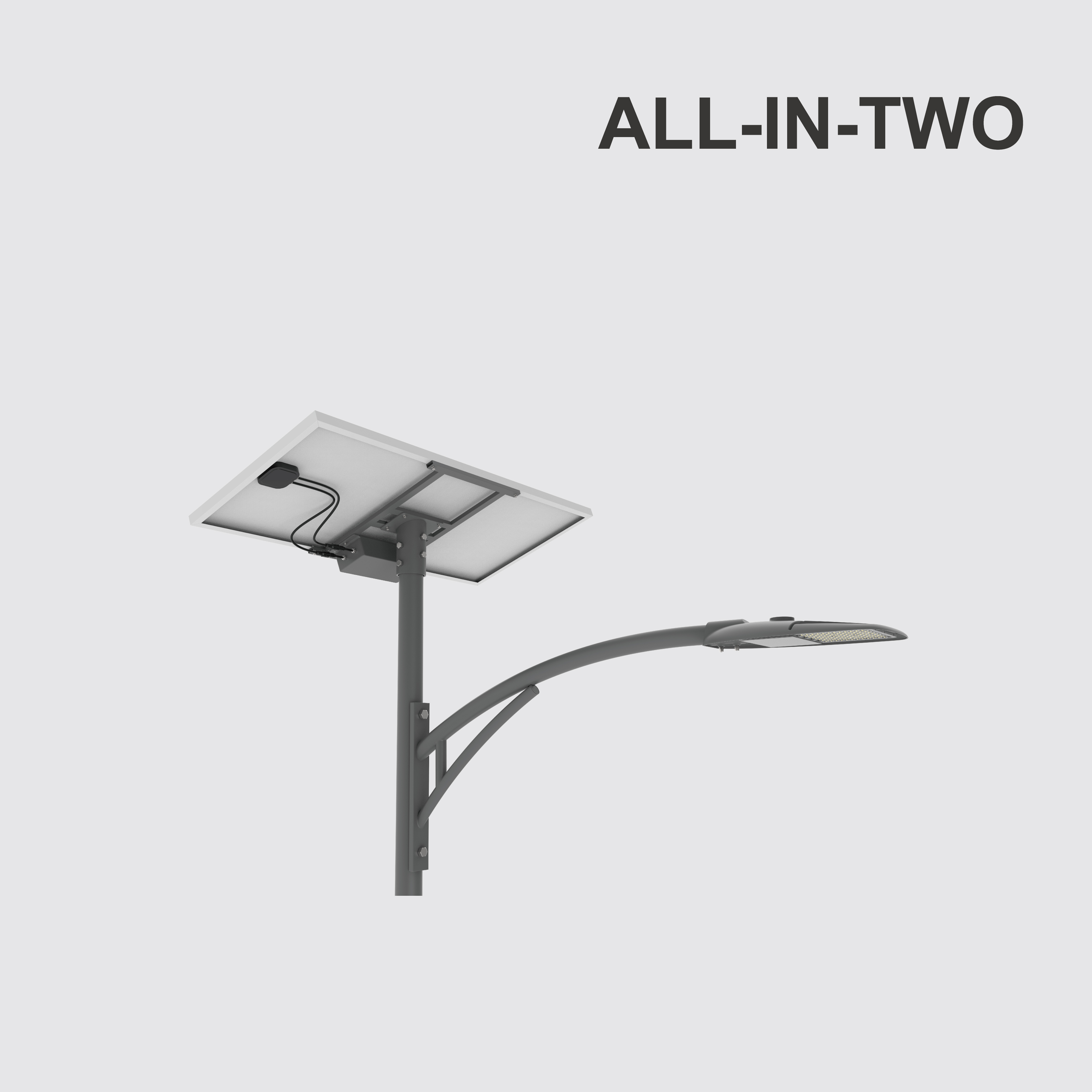
On a 60W all-in-one solar street light, the practical difference is usually in the range of 2 to 5 watts of load, which is modest but not irrelevant over a five-year battery cycle. The bigger risk in solar systems is color shift during dimming or when battery voltage sags, which is why CCT stability under part-load conditions deserves as much attention as the nominal kelvin value.
A useful rule for solar projects: decide the light distribution and the dimming profile first, then choose between 2700K and 3000K on site character and local rules, and only then size the panel and battery around the chosen configuration.
 All in one solar street lightThe SKY EYE Solar Street Light series is a smart innovation developed by the EVERLITE team. This advanced solar lighting system combines bifacial solar panels with hig...View Product →
Whether the final decision lands on 2700K or 3000K, the same list of details decides whether the installation still matches itself in year five.
The current product catalog, including CCT options per family and available test documentation, can be pulled from our download page. For background on how road lighting specifications are normally structured, our street lighting buyer knowledge guide walks through the same criteria from a procurement angle.
Most color temperature complaints arrive weeks after commissioning, not during the sample review. These are the causes that appear again and again.
Side by side at night, yes, most people notice it immediately. In separate rooms or separate streets, the difference is subtle. The 300K gap is comparable to the binning spread that a single "3000K" label can legally cover, which is why the visual difference sometimes disappears entirely.
For comfort in the hours before sleep, 2700K emits less short-wavelength blue than 3000K at the same CRI, so it is the gentler choice for bedrooms, hotel rooms and late-evening living spaces. For seeing detail outdoors at very low light levels, 3000K has the visibility advantage because of its higher scotopic output.
It is warm white. Compared with daylight at 5000K or more, 3000K looks yellow. Compared with 2700K, it looks noticeably whiter and cleaner. Most people standing under a 3000K street light describe it as warm rather than yellow, until they are shown a 4000K source next to it.
You can, and many interiors deliberately use 3000K for general and task lighting with 2700K for accents. The rule that keeps it from looking accidental is simple: never mix the two within the same field of view at the same moment. Keep them in separate rooms, or on separate pole runs, so the eye never makes a direct comparison.
At the same light output, generally yes, by a modest margin. Typical LED packages deliver roughly 3 to 8 percent fewer lumens per watt at 2700K than at 3000K with the same color rendering. On a single fixture that is negligible; across a city-wide street lighting program it is measurable in both energy and battery sizing for solar products.
3000K is usually the better compromise. It keeps the scene within dark-sky friendly limits in most jurisdictions while rendering faces, clothing and vehicle details more cleanly than 2700K. Where identification is the primary purpose and local rules permit it, some sites step up to 4000K, but that choice should be justified by the security requirement rather than by brightness preference.
On constrained off-grid systems, 3000K reduces the load slightly and helps keep the panel and battery within budget. On residential and heritage paths where atmosphere carries the design, 2700K remains workable as long as the dimming profile and battery capacity are sized for it. In both cases, verify that CCT does not shift when the system dims or runs at low battery voltage.
They answer different questions. CCT describes how warm or cool the light appears, while CRI and the newer TM-30 metrics describe how faithfully colors are rendered under it. A high-CRI 2700K source and a low-CRI 3000K source will look like different problems: one pleasant but limited in clarity, the other clear but flat and slightly grey.
If you take one thing from this comparison, make it this: the choice between 2700K and 3000K is a decision about the site, not about the Kelvin number. Use 2700K where warmth, low blue content and light-sensitive surroundings set the tone, and use 3000K where visibility, consistency and efficiency targets carry the project. Then defend that choice with a tight bin, a Duv window and a documented reference sample, so the installation in year five still matches the one you commissioned.

Contact Us for More Details
Contact Information
Add:
No. 8 Qingcang Road, Qiangjiao Town, 315612 Ninghai, Ningbo, China
Phone:
+86-574-83530320
Fax:
+86-574-83530330
E-mail:
Join our community and stay connected
 Custom Outdoor lighting Manufacturers

 English
 Français
 Español