2026-06-08
Whiter color and more bluish light often make people feel “cooler.”
Does that mean cooler-color lighting naturally suits hotter places better?
That assumption seems common — but perhaps also a little stereotypical and empirical.
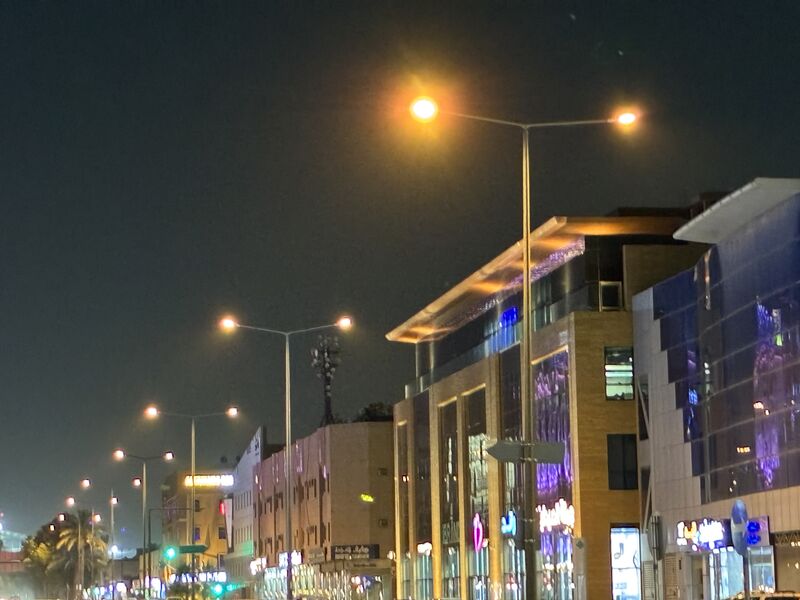
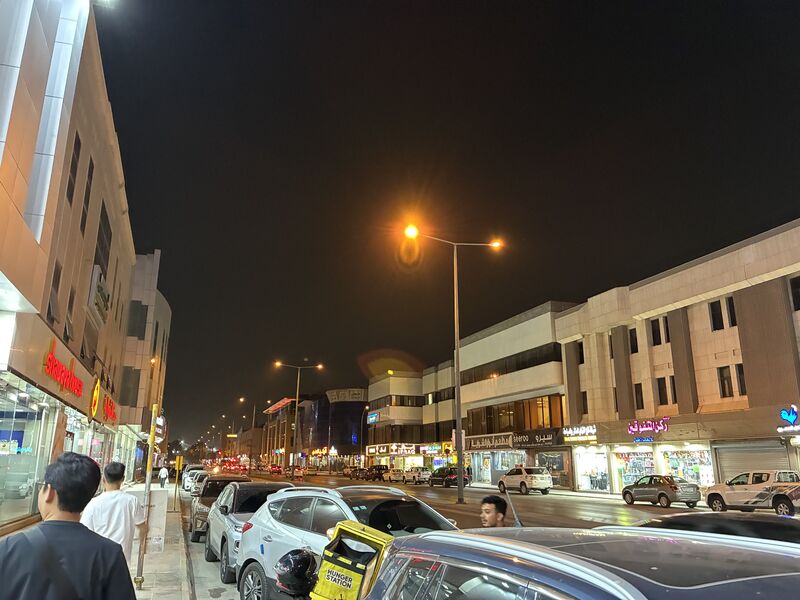
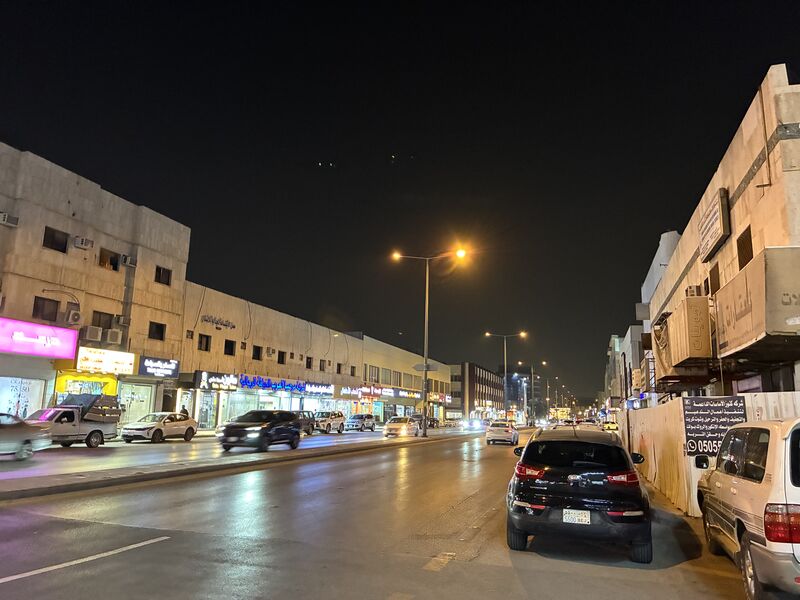
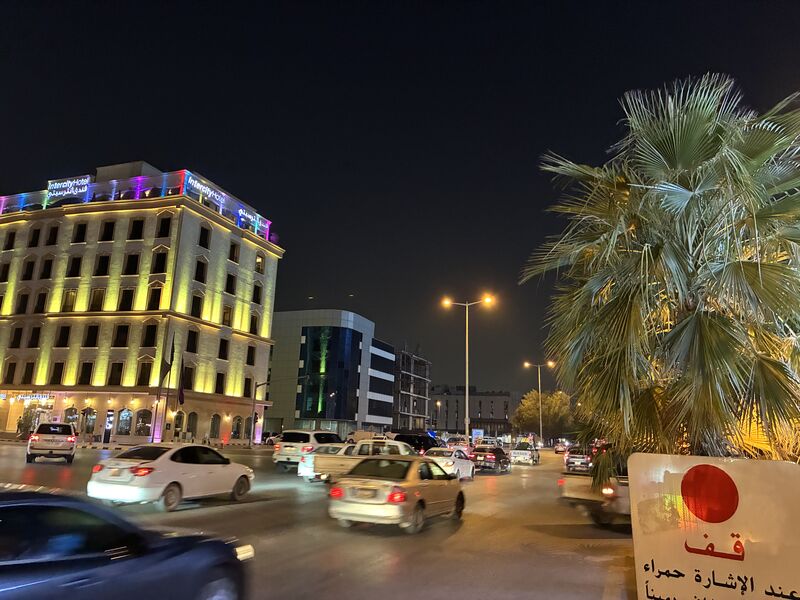
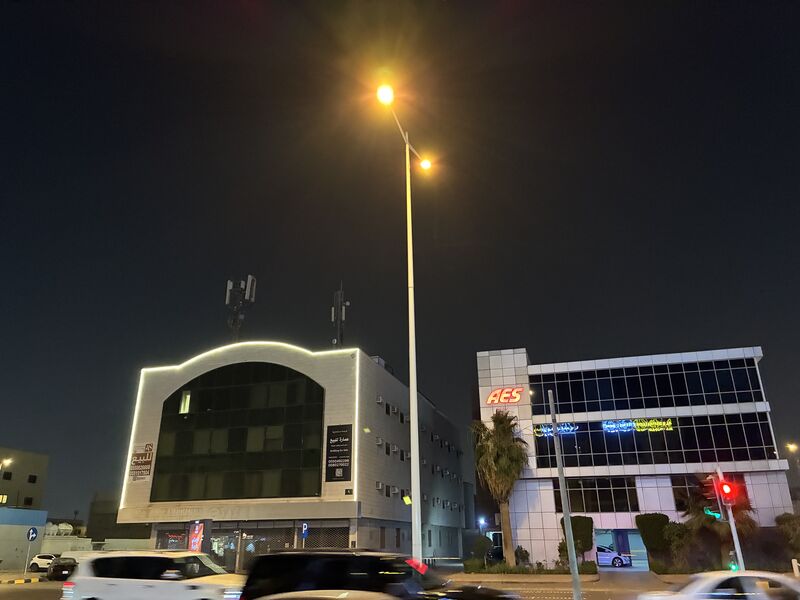
As we walked out from the hotel seeking a place for dinner, we noticed something interesting again:
Around many streets and public areas, warm lighting around roughly 2200K CCT appeared to be commonplace.
And honestly, this lower color temperature certainly did not make the streets feel physically cooler — the heatwave in the evening air was still grilling us.
So what drives this choice?
Consistency with the traditional nighttime atmosphere?
A more comfortable visual feeling?
Better penetration during sandy or stormy weather?
Reduced glare and softer urban ambience?
Perhaps all of the above.
And this is exactly why field study matters.
Because real-world lighting applications are rarely decided by only one factor.
Seeing.
Thinking.
Checking.
Again and again.
Technology, climate, culture, aesthetics, maintenance, local preference — they all intersect together in real applications.
And only by walking into the field itself can we truly understand why cities make the choices they make.
Jade from another mountain can be used to polish the stones of this one.
The jade from other hills, always shining on our stones.
Keep moving.
Keep thinking.
Keep evolving.
System backs Product.
Product delivers Promise.e

Contact Us for More Details
Contact Information
Add:
No. 8 Qingcang Road, Qiangjiao Town, 315612 Ninghai, Ningbo, China
Phone:
+86-574-83530320
Fax:
+86-574-83530330
E-mail:
Join our community and stay connected
 Custom Outdoor lighting Manufacturers

 English
 Français
 Español