2026-07-13
Content
IP65 LED lighting is fully protected against dust ingress and can withstand low-pressure water jets from any direction, which makes it the baseline rating for outdoor and washdown-prone LED fixtures. The number 6 covers dust tightness and the number 5 covers water resistance, and together they describe a sealed housing rather than any single component. An IP65 LED fixture is not the same as a submersible one, and confusing the two is the most common buying mistake in outdoor lighting projects.
The rating comes from IEC 60529, the international standard that assigns two digits to describe how well an enclosure keeps out solids and liquids. For LED lighting specifically, IP65 sits in the middle of a practical range that runs from IP44 (splash resistant) up to IP68 (long-term submersion), and it is the point at which a fixture stops needing a sheltered mounting location.
LED technology raised the stakes around ingress protection in a way older lighting technologies never faced. A high-pressure sodium or metal halide fixture tolerated a certain amount of internal moisture because the arc tube ran hot enough to evaporate condensation on its own. LED drivers and chip boards do not have that self-drying behavior, so a small leak that would have been harmless in an old HID fixture can corrode a driver board or short a chip array within a single wet season. That shift is a large part of why IP65 became a default specification line rather than an optional upgrade on outdoor LED purchase orders.
Below, this guide breaks down what each digit actually tests, how IP65 compares with the ratings people frequently mix it up with, where it fits into real lighting projects, what drives its price, how it stacks up against older fixture technology, and what to check before a purchase order goes out.
Every IP rating is written as two digits after the letters IP, and each digit is tested independently in a lab environment rather than inferred from housing design. Reading the digits separately explains why two fixtures can share an IP65 rating yet perform very differently once installed.
The first digit runs from 0 to 6. A rating of 6 means the enclosure is dust-tight, tested by placing the fixture in a chamber with talc powder under a partial vacuum for eight hours. No measurable dust is allowed to reach live parts or the LED chip cavity. This matters for LED lighting because dust accumulation on a driver board is one of the leading causes of premature thermal failure, since a thin layer of dust across a heat sink can raise junction temperature enough to cut chip lifespan by thousands of hours.
The second digit for IP65 is 5, meaning the fixture is sprayed with water from a 6.3mm nozzle at roughly 12.5 liters per minute, from every angle, at a distance of 2.5 to 3 meters, for at least three minutes. This simulates rain, hose spray, and wind-driven moisture, but it does not simulate immersion, standing water, or pressure washing at close range.
Because both digits move independently, it helps to see the entire scale rather than just the two values that make up IP65. A fixture rated IP20, for example, is only protected against fingers and small tools touching live parts and has no water resistance at all, which is why that rating is reserved strictly for indoor use.
| Digit | Value | What It Confirms | Test Method |
|---|---|---|---|
| First | 0 | No protection | Not tested |
| First | 4 | Protected from tools and wires over 1mm | Wire probe test |
| First | 6 | Complete dust tightness | 8-hour talc chamber, vacuum-assisted |
| Second | 0 | No protection | Not tested |
| Second | 3 | Protected from spraying water up to 60 degrees from vertical | Spray nozzle test |
| Second | 5 | Resistance to low-pressure jets from any direction | 6.3mm nozzle, 12.5 L/min, 2.5-3m distance |
| Second | 9 | Withstands close-range, high-temperature washdown | 80 degrees C water, 80-100 bar pressure |
Once a project moves past basic outdoor exposure, the rating conversation usually turns into a choice between IP65, IP66, IP67, and IP68. Each step up changes the second digit and, in practice, changes the gasket design, the housing wall thickness, and often the price of the fixture.
In practice, choosing between these four ratings comes down to how the fixture will actually be cleaned and where water can realistically collect, rather than picking the highest number available. Over-specifying a rating usually means paying for thicker die-cast housings and heavier gaskets that add weight and mounting hardware requirements without adding any real benefit for a fixture that only ever sees rain.
| Rating | Typical Exposure | Example Placement |
|---|---|---|
| IP65 | Rain, humidity, blown dust | Building facades, canopies, parking lots |
| IP66 | High-pressure washdown | Food plants, poultry housing, car washes |
| IP67 | Occasional flooding | Low walkway lights, tunnel bases |
| IP68 | Constant submersion | Fountain lighting, inground uplights, pool coves |
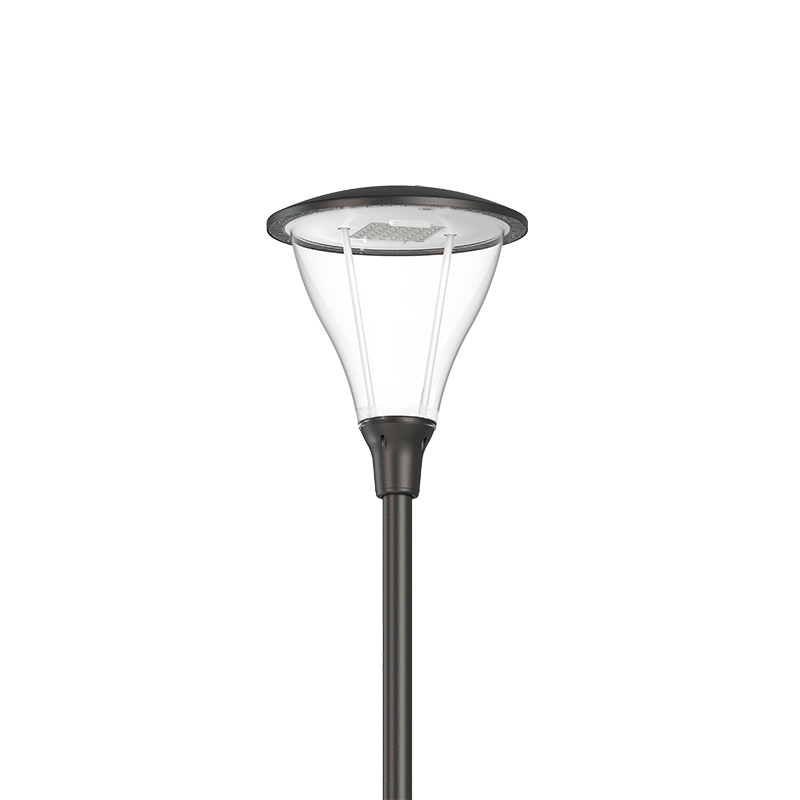
Testing happens on a finished fixture, not just the housing shell, because the seams around the lens, the cable entry gland, and the driver compartment are usually where a fixture actually fails. A lab first runs the dust chamber portion, then inspects the internal cavity and driver board for particle traces. The water portion follows, spraying the assembled fixture from multiple angles while it is powered, since thermal expansion during operation can shift gasket seating just enough to open a leak path that would not show up on a cold sample.
Manufacturers that build to IP65 consistently tend to over-spec the gasket compression and the cable gland torque rather than relying on the housing geometry alone, since a housing can be dust-tight on paper while a poorly seated gland still lets moisture track in along the wire.
A single passing sample does not tell a buyer much on its own, since manufacturing tolerances mean gasket seating can vary slightly from unit to unit. Reputable production lines pull samples across a run rather than testing only the first unit off the line, and they repeat the water spray test after a thermal cycling step that heats and cools the fixture several times to mimic a year of seasonal swings compressed into a lab schedule.
The lab test simulates rain and spray but not everything a fixture sees on site. Salt-laden coastal air, prolonged UV exposure that can embrittle gaskets, and vibration from nearby traffic or machinery are not part of the standard IP65 procedure. Fixtures destined for coastal or high-vibration sites often benefit from an additional salt spray or vibration data sheet from the manufacturer alongside the IP rating itself.
IP65 sits in a practical middle ground, which is why it shows up across such a wide range of settings rather than being reserved for one niche.
Parking lot pole lights, building canopies, loading dock areas, and gas station forecourts are almost always specified at IP65 or above, since they face rain and wind but rarely standing water. Street lighting under overhangs and covered walkway fixtures fall into the same category.
Greenhouses, livestock housing, and cold storage anterooms combine humidity, condensation, and periodic hose-down cleaning, which makes IP65 the minimum starting point before a facility manager considers stepping up to IP66 for the wash-heavy zones.
High bay fixtures over manufacturing floors, tunnel-adjacent work areas, and dusty processing lines rely on the dust-tight side of IP65 as much as the water resistance, since airborne particulates from grinding, milling, or packaging operations are what actually shorten driver life indoors.
Looking at individual industries makes the specification decision more concrete than general categories like indoor or outdoor.
| Industry | Typical Fixture | Why IP65 Fits |
|---|---|---|
| Retail signage and canopies | Backlit panels, soffit lighting | Exposed to weather but rarely direct spray |
| Marina and dock lighting | Post-mounted flood lights | Handles spray from waves and rain above the waterline |
| Sports facilities | Court and field high bay units | Withstands rain during play without interrupting output |
| Cold storage and logistics | Vapor-tight linear fixtures | Resists condensation cycling between cold rooms and loading bays |
| Greenhouse horticulture | Grow light bars, supplemental fixtures | Tolerates constant humidity and irrigation overspray |
The rating is a result of several construction choices working together rather than one waterproof coating layer.
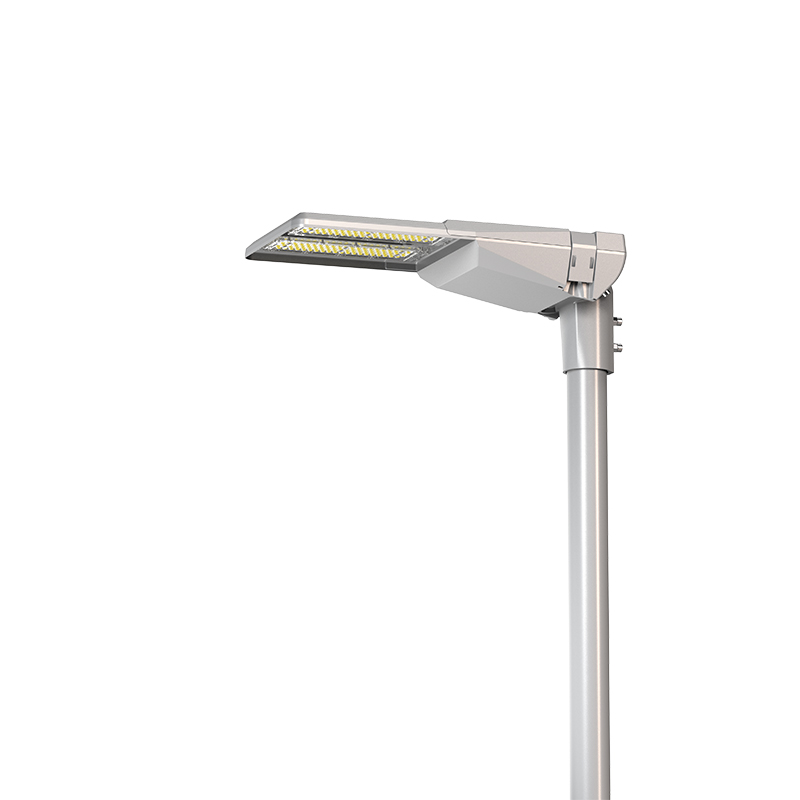
Sealing a fixture against dust and water also seals in heat, which makes thermal design just as important as gasket quality for an IP65 LED product. A fully enclosed housing cannot rely on open-air convection the way a vented indoor fixture can, so the heat sink fins, the thermal paste between the chip board and the housing, and the driver's own efficiency all carry more weight than they would on a non-rated fixture.
Two driver placement approaches are common. An integrated driver sits inside the same sealed housing as the LED chips, which keeps the fixture compact but concentrates heat in one chamber. A remote driver sits in its own smaller IP65 enclosure connected by a short cable, separating the heat sources and often extending the driver's working life since it runs several degrees cooler away from the optical chamber. Remote driver designs typically add 20,000 to 30,000 hours to the driver's rated life compared with an integrated design running at the same ambient temperature, based on manufacturer thermal derating charts commonly published for high bay and flood products.
IP65 does not limit how bright a fixture can be or what color temperature it ships in, but sealed thermal conditions do influence which efficacy figures are realistic for a given wattage.
| Fixture Category | Typical Efficacy | Common CCT Options |
|---|---|---|
| Tri-proof batten | 120 to 140 lm/W | 4000K, 5000K, 6500K |
| High bay | 130 to 160 lm/W | 5000K, 6500K |
| Flood light | 120 to 150 lm/W | 3000K, 4000K, 5000K |
| Wall pack | 110 to 135 lm/W | 3000K, 4000K, 5000K |
Most IP65 fixtures for commercial and industrial buyers ship with an 80 CRI as standard, with 90 CRI available on request for retail-facing canopy and signage lighting where color accuracy on displayed merchandise matters more than raw efficacy.
IP65 is available across nearly every fixture form factor, which makes it possible to keep a consistent protection level across a full facility rather than mixing indoor and outdoor rated products.
| Fixture Type | Common Wattage | Typical Mounting |
|---|---|---|
| Tri-proof linear batten | 20W to 60W | Ceiling-suspended, surface |
| High bay | 100W to 240W | Hook or pendant, 6m and above |
| Flood light | 50W to 400W | Wall or yoke bracket |
| Wall pack | 30W to 150W | Exterior wall, entryway |
| Flexible LED strip with silicone sleeve | 4.8W to 14.4W per meter | Channel-mounted, edge lighting |
| Vapor-tight fixture | 40W to 110W | Surface or chain in cold storage and food areas |
| Canopy fixture | 40W to 200W | Recessed under gas station and drive-through canopies |
Facilities upgrading from metal halide, high-pressure sodium, or fluorescent tubes are often replacing fixtures that never carried a formal IP rating in the first place, so the comparison is as much about ingress protection as it is about lighting quality.
| Factor | IP65 LED | Metal Halide / HPS | Fluorescent |
|---|---|---|---|
| Typical rated life | 50,000 to 100,000 hours | 10,000 to 24,000 hours | 10,000 to 20,000 hours |
| Cold weather startup | Instant, full output | Slow warm-up, several minutes | Dimmer in cold temperatures |
| Sealed IP65 availability | Standard across most product lines | Available but adds bulk | Limited, tubes degrade with moisture |
| Dimmable | Yes, with compatible driver | No | Limited |
Because IP65 LED fixtures run cooler and more efficiently than the technology they replace, the energy and maintenance savings compound over a multi-year period rather than showing up as a one-time reduction.
A 150W IP65 LED high bay replacing a 400W metal halide fixture running 12 hours a day saves roughly 1,095 kilowatt-hours per year on the wattage difference alone, before accounting for the metal halide's lumen depreciation, which typically drops output by 30 to 40 percent well before the lamp actually burns out. Over a five-year period across a facility with 40 fixtures, that swap commonly works out to several hundred fewer lamp change visits, since LED fixtures rated for 50,000 hours or more rarely need attention within a normal five-year window while metal halide lamps are usually replaced two to three times in the same span.
An IP65 fixture only keeps its rating if it is installed the way it was tested, and a surprising number of field failures trace back to installation shortcuts rather than a product defect.
When an IP65 fixture does fail early, the failure almost always traces back to one of a handful of recurring points rather than a random defect.
Fogging on the inside of the lens after a temperature drop usually points to a compromised gasket rather than a manufacturing flaw in the lens itself, since a properly sealed IP65 fixture keeps humid air out entirely rather than trapping it inside.
Intermittent flicker on an otherwise sealed fixture often traces back to moisture at the driver connector rather than the LED chips themselves, since driver connectors are a lower-pressure seal point than the main housing gasket.
Output that drops well ahead of the rated lifespan is frequently a thermal issue rather than a water ingress issue, tracing back to a heat sink that was undersized for the ambient temperature at the installation site.
A rating earned at the factory can degrade in the field if gaskets harden, screws loosen, or a lens gets scratched deeply enough to trap grit against the seal. A yearly visual check of the gasket line for cracking, combined with re-torquing lens screws after the first heavy temperature swing of a new installation, keeps most fixtures performing at their original rating for well beyond a typical warranty period. Replacing a degraded gasket costs a fraction of replacing an entire fixture, which makes this one of the more overlooked maintenance line items in outdoor lighting budgets.
A simple maintenance routine that catches most issues early includes wiping down the lens quarterly to prevent grit buildup along the gasket line, checking cable glands annually for any sign of the rubber grommet hardening or cracking, and keeping a spare gasket kit on hand for high-value fixtures so a small leak can be fixed the same day it is spotted rather than waiting for a replacement part to ship.
Price varies more by housing material, driver placement, and warranty length than by the IP rating alone, since IP65 is now the standard baseline across most outdoor product lines rather than a premium add-on.
| Fixture Type | Key Price Driver | Budget Range Factor |
|---|---|---|
| Tri-proof batten | Housing length and lumen package | Entry-level to mid-range |
| High bay | Driver placement and heat sink design | Mid-range to premium |
| Flood light | Wattage tier and beam angle options | Mid-range |
| Vapor-tight fixture | Gasket material and housing thickness | Mid-range to premium |
Before placing an order, a few checks separate a fixture that will hold its rating for years from one that will fail at the first wet season.
No. IP65 resists spray and rain from any direction but is not designed for immersion. Fixtures that need to sit in standing water or below a waterline should be rated IP67 or IP68 instead.
Yes, in climates with normal rain and humidity. In regions with heavy monsoon flooding or frequent standing water near the mounting point, an IP67 fixture is the safer choice.
Yes. The first digit, 6, is the highest level of dust protection defined in the standard, so an IP65 fixture is dust-tight regardless of what the second digit covers.
IP54 allows limited dust ingress and only protects against splashing water, while IP65 is fully dust-tight and holds up to direct low-pressure jets. IP54 fixtures suit sheltered semi-outdoor spots, while IP65 suits open exposure.
Yes. Cutting a sealed strip breaks the factory seal at that point, so the cut end needs to be resealed with an end cap or silicone sealant rated for the same exposure to keep the IP65 protection intact.
The rating itself does not expire, but real-world sealing performance depends on gasket condition. Most silicone gaskets hold up for 8 to 10 years of normal outdoor exposure before hardening enough to warrant replacement.
Yes, as long as the gasket is reseated correctly and the fasteners are retorqued to the original specification after the fixture is closed. Reusing a gasket that has taken a permanent compression set instead of replacing it is the most common way a fixture loses its rating after a repair.
It can be, but salt air accelerates corrosion faster than the standard IP65 water test accounts for, so fixtures for coastal sites benefit from marine-grade coatings or stainless hardware in addition to the base IP65 rating.
The IP rating confirms a pass on a specific lab test, not the long-term durability of the gasket material, the fastener corrosion resistance, or the driver's thermal design, all of which vary between manufacturers even when the printed rating is identical.
Generally yes, since the sealed housing, gasket material, and rated cable glands add manufacturing cost. The difference is usually modest for common formats like tri-proof battens and larger for premium high bay units with remote drivers.

Contact Us for More Details
Contact Information
Add:
No. 8 Qingcang Road, Qiangjiao Town, 315612 Ninghai, Ningbo, China
Phone:
+86-574-83530320
Fax:
+86-574-83530330
E-mail:
Join our community and stay connected
 Custom Outdoor lighting Manufacturers

 English
 Français
 Español