2026-07-20
Content
Light color temperature describes the visual warmth or coolness of the light produced by a bulb or fixture, measured in Kelvin (K). For most residential LED lighting, 2700K to 3000K delivers a warm, relaxing glow, 3500K to 4500K provides a balanced neutral white suited to kitchens and offices, and 5000K to 6500K produces a bright, daylight-like tone used in workshops, garages, and task-heavy commercial spaces. The lower the Kelvin number, the more amber and orange the light appears; the higher the number, the closer it moves toward blue-white daylight. Getting this number right before ordering LED lighting matters more than almost any other spec on the datasheet, because a mismatched color temperature cannot be fixed after installation without replacing the fixture or the bulb.
Manufacturers and buyers frequently treat color temperature as an afterthought behind lumens and wattage, yet it shapes how a space feels far more than raw brightness does. Two fixtures with identical lumen output but different Kelvin ratings will read as completely different environments the moment they are switched on.
The reason this single spec carries so much weight comes down to how the human eye and brain process light. Brightness tells the eye how much light is present, but color temperature tells the brain what kind of light it is, and the brain treats that signal as information about time of day, activity level, and even safety. A living room lit at 2700K reads as evening and rest. The same room lit at 5000K reads as a clinic or a loading dock, regardless of how many lumens are on the ceiling. This is why color temperature deserves the same level of planning as layout and fixture placement rather than being chosen at checkout because it happened to be the cheapest option in stock.
For anyone specifying LED lighting for a renovation, a new build, or a commercial fit-out, the practical takeaway is straightforward: decide on the mood and function of each space first, translate that decision into a Kelvin target using the ranges below, and only then compare products on price, lumen output, and wattage. Skipping this order is the single most common reason lighting projects require costly rework after installation.
The Kelvin scale originates from the physics of heating a theoretical black-body radiator. As the radiator is heated, it glows first red, then orange, then yellow-white, then blue-white, and finally blue as temperature rises. Lighting manufacturers borrowed this scale because it gives a consistent numeric reference for describing the visual tone of a light source, even though LED chips do not actually work by heating a filament.
A rating printed as 3000K, 4000K, or 5000K refers to correlated color temperature, abbreviated CCT. The word "correlated" matters because LED light is produced through phosphor conversion or color mixing rather than incandescence, so the Kelvin figure is a close approximation of how the emitted light compares to a black-body radiator at that temperature, not a literal measurement of heat.
Many buyers assume a higher Kelvin number means a "hotter," more orange light, since higher numbers usually signal more intensity elsewhere in engineering. Color temperature works in reverse: low Kelvin numbers produce warm amber tones and high Kelvin numbers produce cool blue-white tones. Keeping this reversal in mind avoids a common ordering mistake when specifying LED lighting for a project.
The scale is named after the physicist who formalized it in the nineteenth century, and it borrows the same unit used elsewhere in thermodynamics. A black-body radiator heated to roughly 1800K glows like a candle flame. Heated further to around 3000K, it resembles an incandescent filament. Continue heating past 5000K and the glow shifts toward the blue-white appearance of an overcast sky, and past 10000K it approaches the deep blue of a clear north-facing sky. Lighting manufacturers adopted this physical reference because it gives every product on the market a shared, testable number rather than a marketing description like "warm" or "bright," which can mean different things from one brand to the next.
Rather than printing an exact figure such as 2953K, most LED lighting packaging rounds to a small set of standardized nominal values: 2700K, 3000K, 3500K, 4000K, 5000K, and 6500K. This rounding exists so that fixtures from different manufacturers can be mixed within a tolerance band and still look reasonably consistent. A product tested at 2760K will typically be labeled and sold as 2700K, since it falls within the accepted tolerance for that nominal bin.
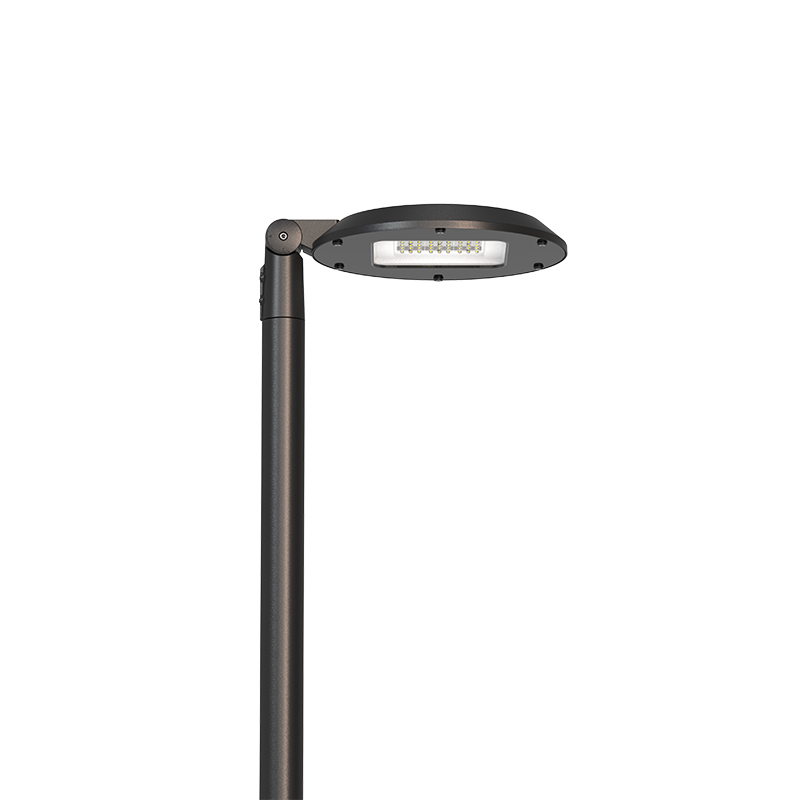
LED lighting is typically sold in a handful of standardized Kelvin bands. Choosing among them depends on the function of the room, the mood a designer wants to create, and how the space is used at different times of day.
| Kelvin Range | Common Label | Visual Character | Typical Applications |
|---|---|---|---|
| 2200K - 2700K | Warm White / Soft White | Amber, candle-like glow | Bedrooms, living rooms, restaurants, hospitality lobbies |
| 3000K - 3500K | Soft White / Warm Neutral | Gentle white with a slight yellow cast | Dining areas, hallways, boutique retail |
| 3500K - 4500K | Neutral White / Cool White | Balanced, minimal color cast | Kitchens, bathrooms, offices, classrooms |
| 5000K - 6000K | Daylight | Crisp, bright, blue-white | Garages, workshops, warehouses, security lighting |
| 6500K and above | Cool Daylight | Vivid blue-white, high alertness cue | Medical facilities, inspection lines, cold storage, signage |
These bands are not rigid boundaries. A fixture rated at 2700K and one rated at 3000K can look nearly identical to the eye, while a jump from 3000K to 5000K within the same room is immediately noticeable and often jarring if fixtures are mixed without planning.
It also helps to think of these bands as a spectrum rather than five isolated categories. Moving from 2200K toward 6500K is a continuous gradient, and many professional lighting plans blend adjacent bands within a single project. A hotel lobby, for example, might use 2700K in seating nooks, 3000K in the main circulation path, and 3500K near the reception desk, creating layered warmth rather than a single flat tone across the entire floor. Industrial buyers sourcing LED lighting in bulk should request sample fixtures across the range they are considering before committing to a full order, since photographs and datasheet numbers rarely convey how a Kelvin value will actually read against the specific wall colors, flooring, and ambient daylight of the finished space.
Color temperature is a psychological cue as much as a physical measurement. Warmer light is generally associated with rest, comfort, and slower-paced activity, which is why it dominates hospitality and residential lighting. Cooler light is associated with alertness, precision, and task performance, which explains its prevalence in factories, laboratories, and retail spaces that want to project cleanliness and efficiency.
Lighting designers commonly reserve 2700K to 3000K for spaces meant for winding down, since amber-heavy light suppresses the visual cues the brain associates with daytime activity. This is one reason bedroom fixtures and reading lamps are rarely sold above 3000K in the residential market.
Spaces built around sustained visual tasks, such as inspection lines, surgical suites, and detailed assembly work, generally use 5000K or higher because higher color temperatures increase perceived contrast and make fine details easier to distinguish. Retailers selling electronics or hardware frequently choose 4000K to 5000K LED lighting to make products look sharp and accurately colored under close inspection.
Cooler white light tends to make a room feel larger and cleaner, while warm light makes the same room feel smaller and cozier. Commercial kitchens, hospitals, and clean-room manufacturing environments lean toward 4500K to 5000K partly for this perceptual effect, independent of the practical need for high-contrast visibility.
Human comfort with a given color temperature is not fixed year-round. During shorter winter days, occupants often report that the same 4000K office lighting feels harsher than it does in summer, simply because there is less warm daylight arriving from outside to balance it. Buildings in northern latitudes sometimes compensate by shifting general lighting slightly warmer, toward 3500K, during winter months, or by installing tunable fixtures that can be adjusted seasonally without a full retrofit.
Light exposure in the hours before bedtime influences how quickly the body prepares for sleep, and blue-heavy light in the cool end of the Kelvin scale is more disruptive to that process than amber-heavy warm light. This is the practical reasoning behind dimmable, warm-toned bedroom and bathroom fixtures in the 2200K to 2700K range, and it is also why many smart LED lighting systems now include an automatic evening shift toward warmer tones as part of their default programming.
Selecting the right Kelvin rating starts with the function of the space rather than personal taste alone. The following breakdown covers the most frequently specified environments in both residential and industrial LED lighting projects.
None of these ranges are absolute rules. Regional taste, brand identity, and the specific finishes used in a space all shift the ideal Kelvin value slightly. A Scandinavian-inspired retail brand might deliberately choose 4000K where a similar boutique would default to 3000K, because the cooler tone reinforces a minimalist visual identity. The ranges above are best treated as a well-tested starting point rather than a fixed rulebook, and sample testing on site remains the most reliable way to confirm a final choice before large-scale LED lighting procurement.
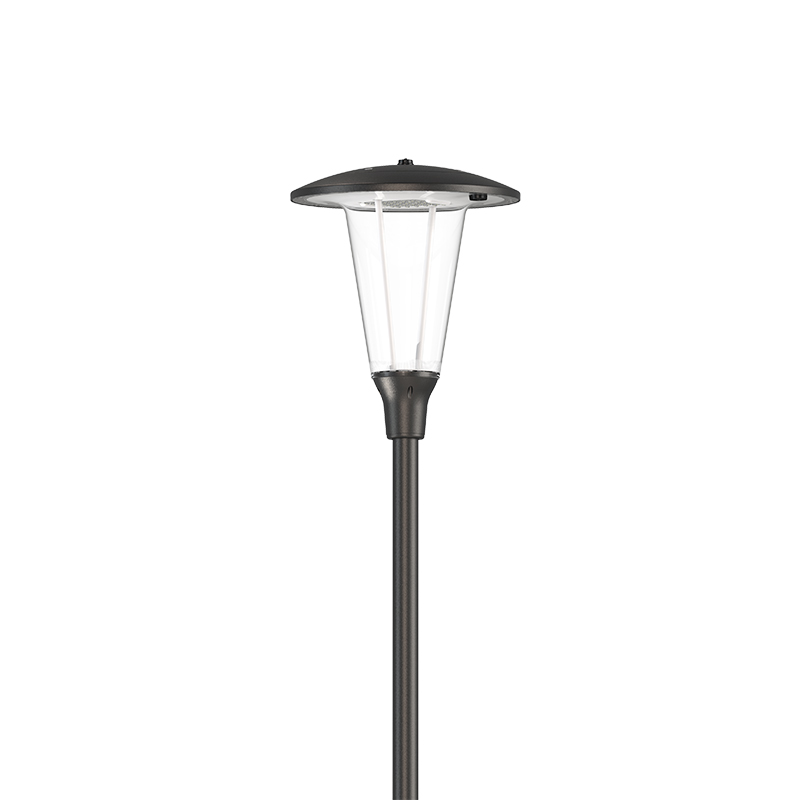
Unlike incandescent bulbs, which change color naturally as the filament heats, LED lighting achieves a specific Kelvin rating through engineering choices made at the chip and phosphor level. Understanding this process helps explain why LED color temperature can drift over a product's lifespan if lower-quality components are used.
The majority of white LED lighting uses a blue LED chip coated with a yellow phosphor layer. The ratio and composition of the phosphor coating determines whether the resulting white light reads as warm or cool. Thicker or differently formulated phosphor layers shift the output toward lower Kelvin values, while thinner coatings allow more blue light through, raising the Kelvin value.
LED manufacturers sort finished chips into groups called bins based on measured color output, since even chips built on the same production line vary slightly. Buyers sourcing LED lighting at scale should request tight binning tolerances, because loose binning is the most common reason a batch of "identical" fixtures shows visible color mismatch once installed side by side.
Phosphor materials can degrade gradually under heat and continuous operation, which is why lower-cost LED lighting sometimes shifts a few hundred Kelvin warmer or cooler after extended use. Fixtures with better thermal management, including adequate heat sinking and driver quality, tend to hold their rated Kelvin value more consistently over a multi-year service life.
Color temperature and CRI are frequently confused, but they measure entirely different properties of the same light source. Color temperature describes the tone of the light itself, while CRI describes how accurately that light reveals the true colors of objects it illuminates.
| Aspect | Color Temperature (CCT) | Color Rendering Index (CRI) |
|---|---|---|
| What it measures | Warmth or coolness of the light | Accuracy of color rendering on surfaces |
| Unit | Kelvin (K) | Index from 0 to 100 |
| Typical range for quality LED lighting | 2700K to 6500K depending on use | 80 to 98, with 90+ preferred for detail work |
| Effect on space | Sets mood and visual temperature | Sets how true colors appear under the light |
A fixture can carry a flattering 3000K rating and still render colors poorly if its CRI is low, which is why photography studios, art galleries, and food retail specify both numbers rather than relying on Kelvin alone.
Tunable white, sometimes called CCT-adjustable LED lighting, combines warm and cool LED chips within the same fixture and allows the ratio between them to be shifted electronically. This lets a single installation move across a range such as 2700K to 6500K instead of being locked into one fixed value.
Offices increasingly adopt tunable white LED lighting to shift toward cooler tones during working hours and warmer tones later in the day, following circadian-supportive lighting principles. Healthcare facilities use the same approach to support patient rest at night while maintaining bright, task-ready lighting during clinical hours.
Tunable systems are typically controlled through wall-mounted dimmer and CCT selectors, app-based smart controls, or automated scheduling tied to a building management system. Buyers should confirm whether a fixture supports 0-10V, DALI, or wireless control before specifying it for a project, since not every tunable driver is compatible with every control protocol.
A separate but related feature is warm-dim, sometimes labeled warm-glow or dim-to-warm. Rather than blending two fixed white LEDs like tunable white systems, warm-dim fixtures automatically shift toward a lower Kelvin value as the dimmer is lowered, replicating the way an old incandescent bulb would drift from white toward amber as it dims.
Standard LED lighting without warm-dim holds a fixed Kelvin value at every brightness level, which can feel unnatural to anyone accustomed to the warm, cozy dimming behavior of incandescent or halogen bulbs. Warm-dim fixtures address this by pairing a standard driver with dual-channel LED arrays, one warmer and one cooler, that are cross-faded automatically as the dimming level changes.
Hospitality venues, residential dining rooms, and boutique retail spaces are the most common adopters of warm-dim LED lighting, since these environments frequently dim fixtures in the evening and benefit from the psychological cue of a shifting, candle-like warmth rather than a static color that simply gets dimmer.
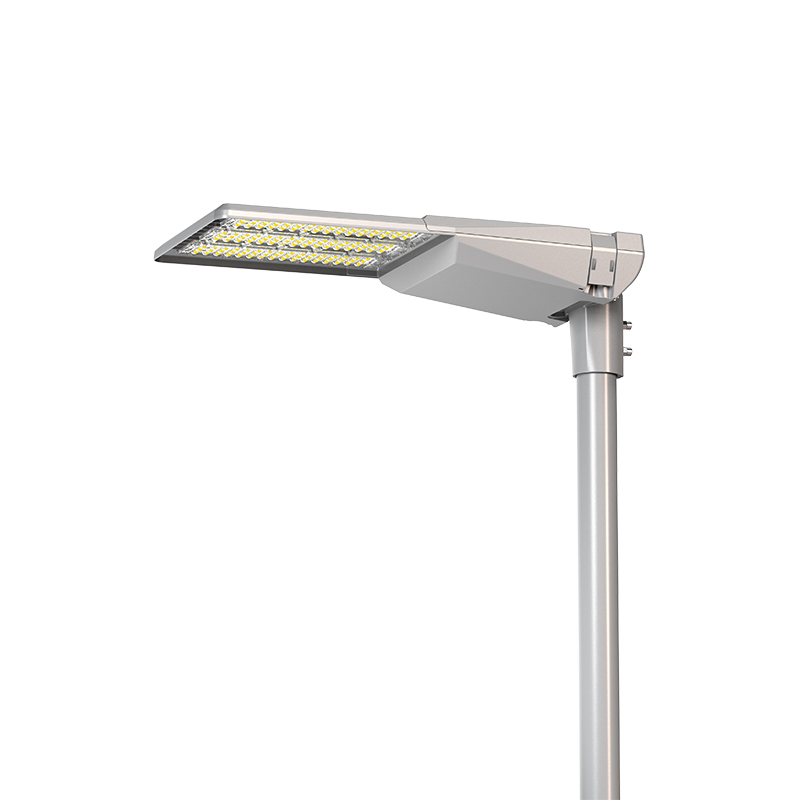
Buyers ordering LED lighting in volume, whether for a single large facility or a multi-site rollout, face a different challenge than a homeowner picking one bulb: consistency across hundreds or thousands of units. The following checklist reduces the risk of visible color mismatch once fixtures are installed side by side.
Color temperature and energy efficiency are frequently discussed together, but the relationship is indirect rather than causal. The Kelvin rating itself does not consume more or less electricity. What actually determines efficiency is the underlying LED chip design, driver quality, and thermal management of the fixture, all of which happen to vary somewhat by production line and price tier rather than by the chosen color temperature.
In practice, some buyers notice that cooler-rated LED lighting appears to deliver more visible brightness per watt than warmer-rated products from the same manufacturer. This is partly a genuine efficiency difference, since thinner phosphor coatings used to achieve higher Kelvin values can allow slightly more light to escape the chip, and partly a perceptual effect, since cooler light is processed by the eye as brighter even at an identical lumen output. Buyers comparing efficiency across color temperatures should rely on the lumens-per-watt figure on the datasheet rather than judging by eye alone.
Midday daylight typically falls between 5000K and 6500K, which is why LED lighting labeled "daylight" is set within this range to mimic outdoor light conditions.
Mixing is possible for layered lighting design, such as combining warm ambient light with cooler task lighting, but it requires deliberate zoning. Random mixing without planning usually produces a visually inconsistent result.
No. Kelvin measures color tone, not brightness. Brightness is measured separately in lumens, so a 3000K bulb and a 5000K bulb can share the same lumen output while looking very different in tone.
Slight batch variation, phosphor inconsistency, and packaging photography that does not always match real output are the most common reasons. Requesting tighter binning tolerances from a supplier reduces this variation across large orders.
Neutral to cool white in the 4000K to 5000K range is commonly preferred for desk work, since it more closely matches the brightness and tone of daytime daylight that the eyes are naturally adapted to during active hours.
Color temperature itself does not directly change energy use. Efficiency depends primarily on the LED driver design and lumens-per-watt rating of the chip, which can vary independently of the Kelvin value selected.
A common approach is to keep private, restful spaces such as bedrooms at 2700K to 3000K, transitional spaces such as hallways and kitchens at 3000K to 4000K, and utility spaces such as garages or laundry rooms at 4000K to 5000K, creating a natural gradient through the home.
They are related but distinct. Tunable white lets a user manually select a Kelvin value across a range, while warm-dim automatically shifts toward warmer tones as the fixture is dimmed, without requiring a separate color control.
This usually comes down to binning tolerance and phosphor consistency between production batches. Two fixtures can carry the same nominal Kelvin label while sitting at different points within the manufacturer's accepted tolerance range, producing a visible but technically compliant difference.
Most landscape and facade lighting uses 2700K to 3000K, since this range complements natural materials such as stone, wood, and brick, and avoids the stark, institutional look that higher Kelvin values can create outdoors.
Yes. Preferences for warmer or cooler LED lighting can differ by region and by building type, with some commercial and hospitality markets favoring cooler tones for a modern look while others favor warmer tones associated with traditional interiors. Manufacturers selling internationally often stock both ranges to accommodate this variation.

Contact Us for More Details
Contact Information
Add:
No. 8 Qingcang Road, Qiangjiao Town, 315612 Ninghai, Ningbo, China
Phone:
+86-574-83530320
Fax:
+86-574-83530330
E-mail:
Join our community and stay connected
 Custom Outdoor lighting Manufacturers

 English
 Français
 Español