2026-06-15
Content
If you are weighing LED lighting against fluorescent lighting for your home, office, warehouse, or facility, the answer is clear: LED lighting is the superior choice across energy efficiency, operational cost, lifespan, light quality, and environmental safety. Modern LED technology converts up to 95% of electrical energy directly into light, losing only 5% as heat, whereas fluorescent lamps waste a significant portion of power on ballast losses, heat generation, and ultraviolet light conversion. A University of Michigan study found that LED products were between 18% and 44% more efficient than T8 fluorescent tubes in commercial linear recessed systems — a finding consistent with the U.S. Department of Energy's estimate that LED systems are 25% more energy-efficient than fluorescents overall. For businesses and households alike, this efficiency gap translates into meaningful, compounding savings on electricity bills over time.
That said, understanding the precise differences between LED lighting and fluorescent lighting helps you make the most informed decision for your specific situation. Whether you are retrofitting an entire commercial space, upgrading a garage, or planning new construction, the comparison goes well beyond watts and lumens. Below, we examine each critical dimension in detail — with real numbers, application examples, and practical guidance.
LED stands for Light Emitting Diode. An LED produces light through a process called electroluminescence: when electrical current passes through a semiconductor material, electrons recombine with electron holes and release energy in the form of photons — visible light. This process involves no filaments, no gas, no mercury, and no ballast. LED drivers regulate the current supplied to the diodes, and modern LED drivers are significantly more efficient and longer-lasting than fluorescent ballasts. Because light is generated directly from a semiconductor reaction, the process is inherently efficient, with minimal energy converted to waste heat.
LEDs emit light directionally — in a specific direction rather than in all directions simultaneously. This means less light is lost to reflectors and diffusers, making fixtures more effective at delivering usable illumination to the target area. LED lighting products are available in a wide range of color temperatures, from warm white (2700K) to daylight (6500K), and most are natively dimmable and compatible with smart lighting control systems.
Fluorescent lights operate by passing electrical current through a sealed glass tube filled with low-pressure mercury vapor. The electrical discharge excites the mercury atoms, which produce ultraviolet (UV) light. This UV radiation then strikes a phosphor coating on the inside of the tube, causing it to fluoresce and emit visible light. This multi-step conversion process introduces inherent energy losses at each stage. Additionally, fluorescent lamps require a ballast — either magnetic or electronic — to regulate the current. Magnetic ballasts are older, less efficient, and generate more heat and audible hum; electronic ballasts are more efficient but still add system complexity and failure points.
Fluorescent lighting is omnidirectional: it emits light in all directions simultaneously. While this produces diffuse, spread-out illumination useful in some industrial settings, it also means that a larger proportion of the light produced must be redirected via reflectors to reach the intended work surface — meaning more wasted light compared to directional LED technology.
Energy efficiency is the most compelling reason organizations worldwide are switching from fluorescent to LED lighting. The difference is measurable, consistent, and significant enough to affect operational budgets at scale.
LEDs typically achieve luminous efficacies of 80 to over 150 lumens per watt, depending on fixture quality and design. Fluorescent lamps, including modern T8 and T5 tubes with electronic ballasts, typically fall within the 50 to 100 lumens per watt range. In straightforward practical terms, a 15-watt LED tube can produce the same quantity of light as a 32-watt fluorescent tube — cutting energy consumption by more than half for equivalent brightness.
A study published by the University of Michigan examined more than 160 LED replacement options for linear recessed lighting systems and confirmed that LED products were 18% to 44% more efficient than T8 fluorescent lamps (Source: University of Michigan News, December 2023). The U.S. Department of Energy has stated that LED systems are approximately 25% more energy-efficient than fluorescents as a category-level estimate, though in many real-world applications the gap is wider.
| Metric | LED Lighting | Fluorescent Lighting |
|---|---|---|
| Luminous Efficacy (lm/W) | 80 – 150+ lm/W | 50 – 100 lm/W |
| Energy Converted to Light | Up to 95% | Approx. 30 – 40% |
| Equivalent Wattage (800 lm output) | ~8 – 10 W | ~15 – 18 W |
| Efficiency vs Fluorescent (DoE) | ~25% more efficient (avg.) | Baseline |
| Heat Loss | ~5% wasted as heat | Significant (ballast + tube heat) |
| Directional Light Output | Yes — minimal reflector loss | Omnidirectional — reflector losses |
For commercial operations where lighting runs eight to fourteen hours per day, this efficiency difference is not trivial. According to the American Council for an Energy-Efficient Economy (ACEEE), a typical school replacing all fluorescent bulbs with LED lighting could see more than $5,000 in annual utility bill savings (Source: ACEEE, "Farewell to Fluorescents," 2022). In large office complexes, warehouses, or retail chains, the savings multiply substantially across hundreds or thousands of fixtures.
One of the most financially impactful differences between LED lighting and fluorescent lighting is lifespan. Replacing lamps, ballasts, and fixtures is not just a materials cost — it involves labor downtime, procurement logistics, and in facilities with high ceilings or specialized fixtures, significant safety planning.
Quality LED lighting products routinely achieve rated lifespans of 25,000 to 50,000 hours, with some premium industrial-grade fixtures rated beyond 100,000 hours. At 8 hours of daily operation, a 50,000-hour LED fixture would last approximately 17 years before requiring replacement. LEDs do not burn out abruptly; they undergo gradual lumen depreciation, and most are rated to L70 — meaning they maintain at least 70% of their original brightness at end of rated life. This predictable degradation allows facility managers to plan maintenance schedules proactively rather than respond to sudden failures.
LED lighting does not contain a ballast, which is one of the most common failure points in fluorescent systems. Without this component, LED systems have fewer parts to degrade or malfunction, reducing both the frequency and cost of unplanned maintenance interventions.
Standard fluorescent tubes have rated lifespans between 7,000 and 15,000 hours, with T8 lamps commonly rated at around 10,000 to 12,000 hours. At 8 hours per day of operation, a fluorescent tube would need replacement roughly every 3 to 5 years. While this seems manageable for a single fixture, facilities with hundreds of fixtures face significant ongoing lamp procurement and replacement costs.
Furthermore, frequent switching on and off reduces fluorescent lamp lifespan, as each start cycle stresses the cathodes within the tube. In spaces where occupancy sensors or manual switching creates high start-stop cycles — hallways, restrooms, conference rooms — fluorescent lamps degrade considerably faster than their rated life suggests. Ballasts also fail independently of the lamps themselves, requiring additional separate replacements that add to total maintenance cost.
Industry estimates suggest that facilities can save more than $200 per fixture in maintenance labor and materials over the lifetime of an LED driver when compared to the equivalent period of fluorescent lamp replacement cycles (Source: LED Lighting Supply, January 2026). In a facility with 500 fixtures, that translates to over $100,000 in avoided maintenance expenditure.
Fluorescent fixtures and tubes have a lower initial purchase price compared to LED equivalents, and this upfront cost difference is often the reason some facilities delay making the switch. However, when total cost of ownership is calculated across the operational life of the system — including energy consumption, lamp replacements, ballast replacements, and disposal costs — LED lighting consistently delivers better financial performance.
Fluorescent T8 tubes can be purchased for $2 to $5 each at wholesale prices, with fixture housings adding modest additional cost. LED tube replacements compatible with fluorescent fixtures typically range from $5 to $20 per tube, and dedicated LED luminaires cost more upfront but eliminate ballast replacement entirely. The LED cost premium has narrowed substantially over the past decade as manufacturing volumes increased and technology matured, and prices continue to decline.
This is where LED lighting recaptures the upfront cost premium rapidly. LED lighting uses up to 75% less energy than fluorescent counterparts in some high-output applications, according to OEO Energy Solutions (July 2024). Even in moderate efficiency scenarios, the 25% to 44% reduction in power consumption documented by academic and government research translates to meaningful reductions in monthly electricity bills. For a facility paying $0.12 per kWh with 500 fixtures running 10 hours per day, reducing fixture wattage from 32W to 18W would save approximately $30,660 annually — enough to offset the entire LED retrofit investment within two to three years in many commercial scenarios.
Fluorescent systems require ballasts to operate, and ballasts fail independently of lamps. Electronic ballasts typically last 10 to 15 years, while magnetic ballasts may fail sooner. When a ballast fails, it must be replaced even if the lamps themselves are still functional — adding labor and parts costs not present in LED systems. Commercial recycling programs charge $0.50 to $2.00 per linear foot for fluorescent tube disposal, with additional transportation costs for collection (Source: LED Lighting Supply). For facilities with hundreds of long tubes, annual disposal fees add up to a recurring operating expense that LED lighting eliminates entirely.
| Cost Category | LED Lighting | Fluorescent Lighting |
|---|---|---|
| Upfront Product Cost | Higher initial purchase | Lower initial purchase |
| Annual Energy Cost | 25% – 75% lower | Baseline / higher |
| Lamp Replacement Frequency | Once per 17 – 20+ years | Every 3 – 5 years |
| Ballast Replacement | None required | Every 10 – 15 years |
| Disposal Costs | Minimal — no hazardous materials | $0.50 – $2.00/linear ft + transport |
| Typical Payback Period | 2 – 4 years | N/A (ongoing higher costs) |
Beyond raw energy numbers, the quality of light produced matters enormously in work environments, retail spaces, healthcare facilities, and residential settings. LED lighting and fluorescent lighting differ in several dimensions of light quality, with LED holding a consistent advantage in most metrics.
CRI measures how accurately a light source renders the true colors of objects compared to natural daylight, on a scale of 0 to 100. High-quality LED lighting products routinely achieve CRI values of 90 or above, making colors appear vibrant, accurate, and natural. This is critical in retail environments where product color perception influences purchasing decisions, in healthcare where accurate skin tone reading matters for diagnosis, and in graphic design studios where color fidelity is a core requirement. Fluorescent lamps typically achieve CRI values of 70 to 85, which is acceptable for general-purpose illumination but results in a somewhat washed-out or distorted color rendering compared to LED alternatives.
Fluorescent lamps are well-known for flickering, particularly as they age or when operating at low temperatures. This flicker occurs because the lamp's light output cycles at twice the electrical supply frequency — in a 60Hz system, this means 120 flicker cycles per second. While this is above the human visual flicker fusion threshold at full brightness, failing lamps produce low-frequency flicker that is highly visible and a known cause of headaches, eye strain, and reduced productivity in office workers. LED lighting produces light continuously without the alternating discharge cycle, and quality LED drivers eliminate the visible flicker that affects fluorescent systems.
Fluorescent lamps require a warm-up period to reach full lumen output, especially in cold environments. In facilities with temperature swings — garages, warehouses, loading docks — fluorescent performance degrades noticeably when ambient temperatures drop below 10 degrees Celsius. LED lighting reaches full brightness instantaneously upon being switched on, regardless of ambient temperature. This instant-on capability makes LED lighting better suited to motion-sensor controlled spaces where lights must switch on quickly and reliably every time.
Fluorescent lamps have limited dimmability. Standard magnetic-ballasted fluorescent lamps cannot be dimmed at all; even dimmable electronic ballasts for fluorescents allow only partial dimming ranges and can cause instability, flicker, or premature lamp failure at low dimming levels. LED lighting is natively compatible with a wide range of dimming protocols — from simple phase-cut dimmers to DALI and 0-10V analog dimming used in sophisticated building management systems. According to University of Michigan research, LEDs also offer better dimming performance than fluorescent lamps at low dimming levels, maintaining efficiency proportionally as light output is reduced rather than sustaining a fixed overhead power draw.
The presence of mercury in fluorescent lamps is perhaps the most significant environmental and safety concern associated with the technology. Every fluorescent tube — linear T8, T5, compact fluorescent (CFL), and circular fluorescent — contains mercury as a functional component of the light-generation process. There is no mercury-free version of a fluorescent lamp.
LED lighting contains no mercury. This is not merely a regulatory compliance advantage — it has concrete real-world safety implications. When a fluorescent lamp breaks during operation, transit, or disposal, mercury vapor is released into the surrounding environment. The U.S. Environmental Protection Agency's cleanup protocols for broken fluorescent lamps are extensive, involving ventilation, protective equipment, careful debris collection, and proper sealed disposal — steps most facility staff, homeowners, and janitors are not trained or equipped to carry out correctly (Source: ACEEE, "Farewell to Fluorescents," 2022).
At a systemic scale, discarded fluorescent lamps release approximately 2 to 4 tons of mercury into the environment each year in the United States alone, according to a U.S. EPA report on fluorescent lamp recycling. Mercury is a potent neurotoxin with no safe level of human exposure. Once released into soil or water, it bioaccumulates in the food chain, posing long-term ecological and public health risks that extend well beyond the point of disposal.
Understanding which type of lighting best suits each environment helps procurement teams, facility managers, and homeowners make practical decisions grounded in real conditions rather than general principles alone.
Offices were historically the primary application domain for fluorescent lighting, particularly T8 troffer fixtures in suspended ceiling grids. LED panel lights and LED troffers now offer a direct retrofit solution with significantly lower energy consumption and better color rendering for detailed visual tasks like reading, data entry, and design work. The flicker-free performance of LED lighting also reduces eye strain during long work sessions, which has measurable productivity implications. Commercial facilities often qualify for utility rebate programs when upgrading from fluorescent to LED, further shortening payback periods.
Large warehouse spaces benefit enormously from LED high-bay fixtures, which produce powerful, directional illumination over wide floor areas. Unlike fluorescent high-bay fixtures, LED alternatives perform reliably in cold storage environments and start instantly regardless of temperature. The reduction in maintenance frequency is particularly valuable in warehouses where lamp replacement requires elevated work platforms, creating both labor cost and safety considerations. Lighting is responsible for 11% of electricity use in commercial buildings (University of Michigan study), and warehouses running continuous shifts see energy savings from LED upgrades reflected immediately on electricity invoices.
Retail lighting design directly influences customer perception of merchandise. High-CRI LED lighting renders fabric colors, food, and product packaging accurately, encouraging confidence in purchasing decisions. Fluorescent lighting in retail settings often produces a slightly greenish or blue-tinted cast that can make products look unappetizing or colors appear inconsistent. LED track lights, panel lights, and accent fixtures give retail designers far more flexibility in creating layered lighting scenes — combining ambient, accent, and task lighting with full dimming control — than fluorescent systems allow.
Many homeowners still use fluorescent shop lights in garages, basements, and utility rooms because of their low upfront cost and wide availability. However, the performance problems of fluorescent lighting in cold environments — slow start, reduced output, shortened lifespan in freezing winters — make LED shop lights a substantially better choice for unheated garages. LED replacements for common residential fluorescent applications, including kitchen under-cabinet strips, bathroom vanity bars, and laundry room overheads, are widely available, energy-efficient, and provide better illumination quality than the lamps they replace.
Schools are among the highest-impact environments for fluorescent-to-LED retrofits, because they contain large numbers of linear fluorescent fixtures running throughout school hours. According to ACEEE's 2022 report, a typical school replacing all fluorescent bulbs with LED lighting could save more than $5,000 annually in utility costs alone. Beyond the cost savings, eliminating mercury-containing fluorescent lamps from environments occupied by children addresses a genuine public health consideration, given that lamp breakage in classrooms and hallways releases toxic mercury vapor into occupied spaces.
Hospitals, clinics, and diagnostic facilities place high demands on lighting quality. Accurate color rendering is essential for clinical assessment, wound examination, and diagnostic imaging environments. High-CRI LED lighting produces the color accuracy required for these tasks without the flicker that can interfere with patient comfort or medical imaging equipment. The mercury-free composition of LED lighting is also particularly relevant in healthcare settings where stringent infection control and hazardous material management protocols are already complex to maintain.
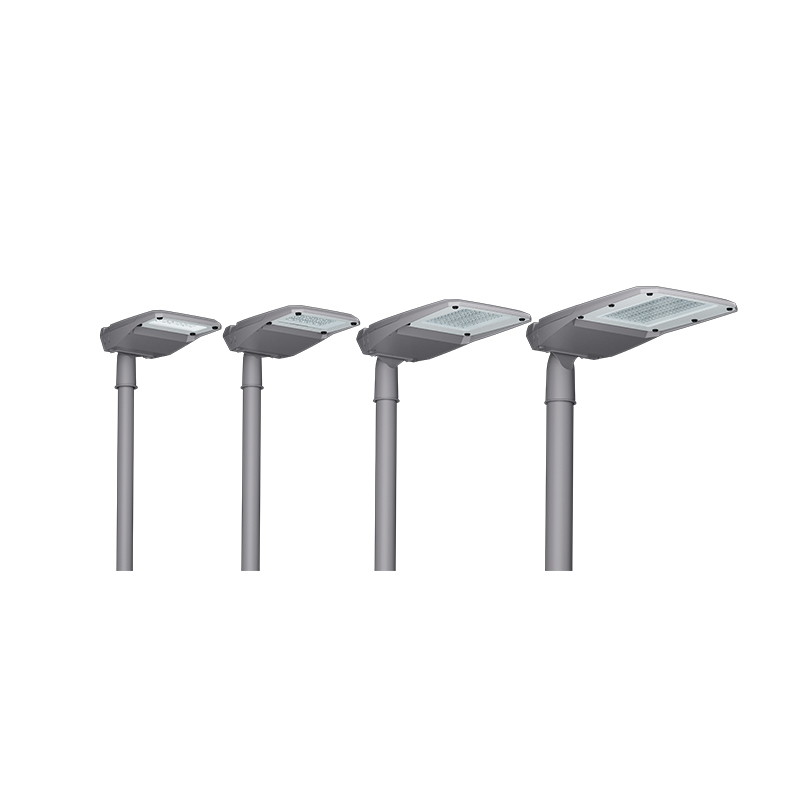
If you are currently operating fluorescent lighting and evaluating a transition to LED, there are three primary pathways to consider, each with different upfront costs, performance outcomes, and installation complexity levels.
When planning a retrofit, consider surveying all existing fixtures to determine ballast age and condition. Fixtures with ballasts older than 10 years are strong candidates for Type B bypass or full luminaire replacement rather than Type A plug-and-play, since the ballast is likely to fail soon and require a return visit regardless. Many utility companies offer free or subsidized audits that provide fixture inventory data and rebate calculations as part of commercial energy efficiency programs.
The comparison between LED lighting and fluorescent lighting is not close in 2025. While fluorescent technology represented a genuine improvement over incandescent lighting when it was introduced, and while it has served commercial and residential facilities adequately for decades, modern LED lighting is superior across virtually every performance dimension that matters to facility operators, business owners, and environmental stakeholders.
| Category | LED Lighting | Fluorescent Lighting | Winner |
|---|---|---|---|
| Energy Efficiency | 80–150+ lm/W, 95% conversion | 50–100 lm/W, lower conversion | LED |
| Lifespan | 25,000 – 50,000+ hours | 7,000 – 15,000 hours | LED |
| Upfront Cost | Higher | Lower | Fluorescent |
| Total Cost of Ownership | Lower over full lifecycle | Higher over full lifecycle | LED |
| Color Rendering (CRI) | 90+ (high quality) | 70 – 85 | LED |
| Flicker Performance | Flicker-free | Prone to flicker (aging lamps) | LED |
| Cold Temperature Performance | Unaffected | Reduced output, slow start | LED |
| Mercury Content | None | Present in all lamps | LED |
| Dimmability | Full range, all protocols | Limited, unstable at low levels | LED |
| Disposal Complexity | Standard recycling | Hazardous waste handling required | LED |
For anyone weighing the decision today: fluorescent lighting's only remaining advantage is lower initial purchase cost, and even that gap has narrowed considerably as LED manufacturing scales and prices continue to fall. In virtually every other respect — energy draw, operating lifespan, maintenance burden, light quality, environmental safety, and compatibility with modern building management systems — LED lighting is the clear and well-documented superior technology. The transition from fluorescent to LED lighting is not a speculative investment; it is a proven, data-supported operational improvement that pays for itself within two to four years in most commercial applications and continues delivering value for the following decade and beyond.

Contact Us for More Details
Contact Information
Add:
No. 8 Qingcang Road, Qiangjiao Town, 315612 Ninghai, Ningbo, China
Phone:
+86-574-83530320
Fax:
+86-574-83530330
E-mail:
Join our community and stay connected
 Custom Outdoor lighting Manufacturers

 English
 Français
 Español