2026-06-22
Content
The most efficient workplace lighting setup combines LED lighting fixtures with a color temperature between 4000K and 5000K and an illuminance level of 300 to 500 lux for general office tasks, scaling up to 750 lux for detailed work like drafting or inspection. Workplaces that switch from fluorescent tubes to LED lighting typically cut lighting energy use by 50 percent to 70 percent while extending replacement cycles from roughly 10,000 hours to 50,000 hours or more. The sections below break down how to size, layer, and maintain LED lighting across different workplace zones so the investment pays back in both energy savings and measurable gains in visual comfort.
Lighting is rarely the first line item facility teams scrutinize when planning a renovation or new build, yet it tends to be one of the largest controllable energy loads in any commercial space, often ranking second only to HVAC. A poorly planned LED lighting layout can leave a budget on the table twice over: once through wasted wattage, and again through reduced productivity, more frequent maintenance callbacks, and lower satisfaction scores in employee surveys. The goal of this guide is to walk through the practical mechanics of specifying, installing, and operating LED lighting across a real workplace, covering everything from fixture selection and lumen calculations to controls strategy, retrofit pitfalls, industry-specific benchmarks, and the financial case that makes the switch worthwhile in the first place.
Workplace lighting decisions used to come down to cost per fixture. That calculation has flipped. LED lighting now wins on total cost of ownership even where the upfront fixture price is higher than fluorescent or metal halide alternatives, because the operating savings compound year over year.
A standard 4-foot fluorescent tube draws around 32 watts and produces roughly 2,800 lumens, giving an efficacy near 87 lumens per watt once ballast losses are factored in. A comparable LED tube draws 18 to 20 watts for the same or higher lumen output, pushing efficacy past 130 lumens per watt. Across a facility running lights 10 to 12 hours a day, that difference adds up to thousands of kilowatt-hours saved annually per zone.
Beyond raw efficiency, LED lighting gives facility managers something fluorescent never could: instant-on performance with zero flicker at full brightness, no warm-up lag, and no mercury content to manage at disposal. Lamp life for commercial LED lighting commonly rates between 50,000 and 100,000 hours, compared with 10,000 to 15,000 hours for T8 fluorescent tubes, which means maintenance crews replace lamps roughly one-fifth as often.
The shift away from fluorescent and high-intensity discharge lighting also changes how facility teams plan capital expenditure. Where a fluorescent-lit warehouse might need a full re-lamping cycle every 18 to 24 months, an equivalent LED lighting installation can run five to ten years before any fixture-level maintenance is required, assuming reasonable duty cycles and ambient operating temperatures. That stretch in maintenance interval frees up labor hours that would otherwise go toward lift rentals, replacement stock, and disposal of spent fluorescent tubes, which require special handling in many regions due to mercury content.
There is also a thermal comfort angle that often gets overlooked. Fluorescent and halogen sources convert a meaningful share of input energy into heat rather than visible light, which adds load to air conditioning systems during warmer months. LED lighting runs cooler at the fixture level, and while the effect on total HVAC load is modest in any single room, it becomes measurable across a building with hundreds of fixtures operating for ten or more hours a day. Facilities reporting combined lighting and cooling savings after an LED retrofit are not unusual, since the two systems are more connected than they first appear.
Color consistency is another practical advantage. Fluorescent tubes drift in color output as they age and as different manufacturing batches are mixed on a shelf, which is why older offices often show visibly mismatched lighting from one fixture to the next. LED lighting components are binned at manufacture for tighter color consistency, and that consistency holds for most of the fixture's rated life rather than degrading noticeably within the first year or two of use.
Not every workplace zone calls for the same fixture form factor, and matching the housing style to the ceiling type and task at hand avoids both wasted light and an awkward installation.
Troffers drop into standard 2-by-2 foot or 2-by-4 foot suspended ceiling grids and remain the default choice for open offices, since they distribute light evenly without protruding below the ceiling plane. Recessed LED lighting panels, the thinner edge-lit variant, have largely replaced older troffer styles in new construction because they run cooler and use less material.
Warehouses and production floors with ceilings above 6 meters typically call for high bay LED lighting fixtures, which concentrate output downward to compensate for the mounting distance. Spaces with ceilings between 3 and 6 meters use low bay fixtures instead, which spread light over a wider angle since less throw distance is needed to reach the work plane.
Strip and wraparound LED lighting fixtures suit corridors, storage aisles, and utility rooms where a continuous run of light matters more than precise beam control. Their lower cost per linear meter also makes them practical for back-of-house areas that do not need the finished appearance of a troffer.
Retail counters, sample tables, and presentation walls inside a workplace benefit from adjustable LED lighting track heads that can be aimed and re-aimed as merchandising or layout changes, rather than fixed downlights that lock in one beam angle permanently.
Most workplace LED lighting retrofits pay for themselves through energy savings alone within two to four years, and considerably faster where utility rebates or incentive programs are available.
A simplified payback calculation starts with three inputs: the wattage difference between old and new fixtures, the number of hours lights run per year, and the local electricity rate. A facility replacing 100 fixtures that each draw 32 fewer watts after an LED lighting upgrade, running 3,000 hours a year at a rate of 0.15 per kilowatt-hour, saves roughly 1,440 dollars annually on electricity from that fixture count alone, before factoring in reduced maintenance labor or lamp replacement costs.
Maintenance savings often get left out of payback calculations even though they can rival the energy savings in facilities with difficult-to-access fixtures, such as high warehouse ceilings that require lift rental for every lamp change. Reducing relamping frequency from once every 18 months to once every 8 to 10 years removes the bulk of that recurring labor and equipment cost from the maintenance budget entirely.
Many regions also offer utility rebate programs that pay a fixed amount per fixture or per kilowatt of demand reduction for commercial LED lighting upgrades, which can shorten the payback period further. Eligibility and rebate amounts vary significantly by location and utility provider, so checking with the local utility before finalizing a fixture order is generally worthwhile, since some programs require pre-approval before installation begins.
Color temperature, measured in Kelvin, determines whether LED lighting reads as warm, neutral, or cool. Workplace zones rarely need the same setting throughout a building, and mismatched temperature is one of the most common reasons employees report eye strain even after an LED retrofit.
Illuminance, measured in lux, is a separate variable from color temperature but the two are frequently confused during specification. A space can be set to a perfectly appropriate 4000K and still feel uncomfortable if the lux level is wrong for the task being performed there. Lux measures the quantity of light landing on a surface, while Kelvin describes the visual character of that light, and a well-planned LED lighting scheme has to get both right rather than treating one as a stand-in for the other.
| Workplace Zone | Color Temperature | Illuminance (Lux) |
|---|---|---|
| General Office Desks | 4000K to 4500K | 300 to 500 |
| Conference Rooms | 3500K to 4000K | 300 to 400 |
| Warehouse Aisles | 5000K to 6000K | 150 to 300 |
| Assembly And Inspection Lines | 5000K to 6500K | 500 to 1000 |
| Break Rooms And Lounges | 2700K to 3500K | 150 to 250 |
| Reception And Lobby Areas | 3000K to 3500K | 200 to 300 |
| Server Rooms And Equipment Bays | 4500K to 5000K | 200 to 300 |
| Loading Docks And Corridors | 4500K to 5500K | 100 to 200 |
As a rule, tasks that demand sustained visual focus benefit from cooler, brighter LED lighting, while spaces meant for rest or informal conversation perform better under warmer, dimmer settings. Mixing both within sight lines of each other, such as an open office next to a lounge, works fine as long as there is a visual break between the two zones so the eye has time to adjust.
It helps to think of color temperature on a spectrum rather than a binary choice between warm and cool. Anything below 3000K reads as distinctly amber and is generally reserved for hospitality or residential-style spaces rather than working areas. The 3000K to 4000K band feels neutral-warm and suits transitional spaces like lobbies, hallways, and meeting rooms where people pass through or sit for moderate stretches. From 4000K to 5000K, LED lighting takes on a crisp, neutral white that most people associate with productivity, which is why it dominates office and retail specification sheets. Above 5000K, light starts to take on a bluish cast that some people find energizing in short bursts but fatiguing over a full shift unless paired with adequate brightness and good color rendering.
Glare control deserves equal weight alongside color temperature and lux targets. Unified Glare Rating, abbreviated UGR, is a metric architects and lighting designers use to predict how distracting direct glare from a fixture will be at a given viewing angle. Office spaces with computer monitors generally target a UGR of 19 or lower, while spaces without prolonged screen use can tolerate ratings up to UGR 22 without noticeable complaints. Selecting LED lighting fixtures with appropriate diffusers or louvers is often the deciding factor in hitting these targets, independent of the raw lumen output of the fixture itself.
A workplace that relies on a single layer of ceiling-mounted LED lighting almost always under-serves task areas while over-lighting circulation space. Layering fixes this by assigning different jobs to different fixture types.
Facilities that add a task layer instead of simply raising ambient output across the board tend to use less total wattage, since brightening an entire 200 square meter floor plate by 200 lux costs far more energy than adding focused task lighting to 30 desks.
The ratio between layers matters as much as the layers themselves. A common starting point is to set ambient LED lighting to cover roughly 70 percent of a space's total lux requirement, with task lighting filling the remaining 30 percent at the specific surfaces where it is needed. This split keeps ambient fixture counts, and therefore ambient energy draw, lower than a design that tries to hit full task-level lux from the ceiling alone. It also gives individual employees more control, since a desk lamp can be switched off or dimmed without affecting anyone else's workspace, whereas a single bank of overhead troffers usually serves an entire row of desks at once.
Accent layering is frequently treated as a cosmetic afterthought, but it carries a functional role in wayfinding. Subtle changes in brightness or color temperature along a corridor can guide foot traffic toward exits, reception desks, or department boundaries without relying solely on signage. This becomes particularly relevant in larger facilities such as distribution centers or multi-tenant office buildings, where visitors and new employees benefit from lighting cues that reinforce the physical layout.
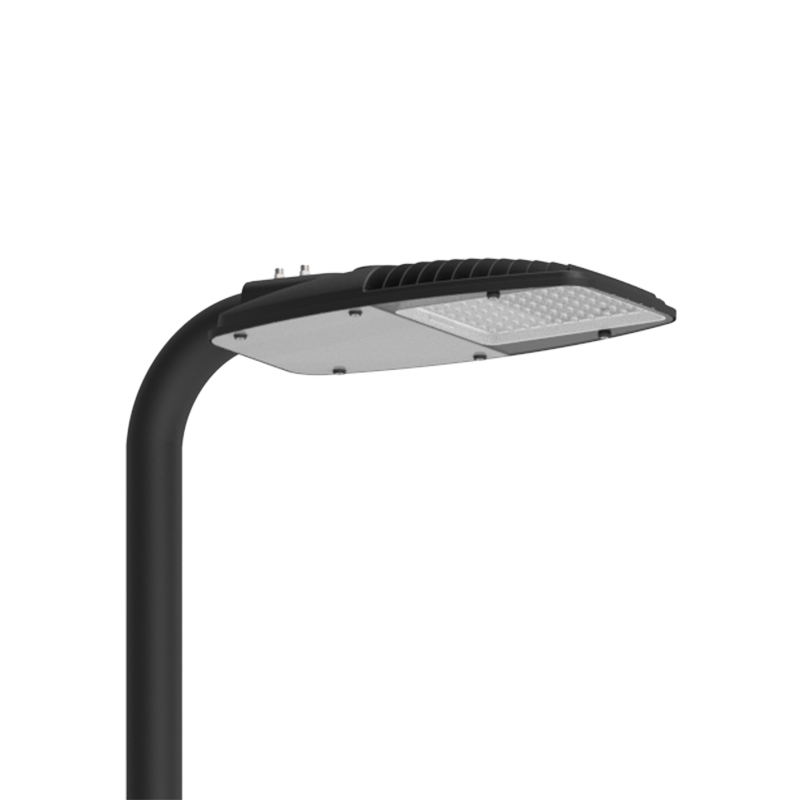
Sizing an LED lighting layout starts with the lumen method, which balances the light a space needs against the light each fixture delivers after accounting for losses.
Pull the target lux value from the task table above based on the room's primary function.
Multiply the target lux by the room's floor area in square meters. A 50 square meter office targeting 400 lux needs roughly 20,000 lumens delivered to the work plane.
Divide the result from step two by a light loss factor, typically 0.7 to 0.8 for LED lighting, to account for dirt accumulation, fixture depreciation, and room surface reflectance.
Divide the adjusted lumen total by the rated output of a single fixture. A 40-watt LED lighting panel rated at 4,800 lumens means the 50 square meter office above needs roughly six fixtures.
This method gives a defensible starting layout. Final placement should still account for furniture position, window glare, and ceiling height, since a 4-meter ceiling spreads light differently than a standard 2.7-meter drop ceiling.
Worked examples are easier to apply across multiple rooms than the formula alone, so the comparison below walks through three common workplace sizes using the same four-step method.
| Room Type | Floor Area | Target Lux | Adjusted Lumens Needed | Approx. Fixtures (4,800 lm each) |
|---|---|---|---|---|
| Small Office | 25 sq m | 400 lux | ~13,300 lm | 3 fixtures |
| Mid-Size Office | 50 sq m | 400 lux | ~26,700 lm | 6 fixtures |
| Small Warehouse Bay | 200 sq m | 250 lux | ~66,700 lm | 14 fixtures |
Fixture spacing follows its own rule of thumb once the count is known: spacing-to-mounting-height ratio. Most LED lighting troffers and panels are designed for a spacing-to-mounting-height ratio between 1.0 and 1.5, meaning fixtures mounted 3 meters above the work plane should generally sit 3 to 4.5 meters apart center to center for even coverage. Spacing fixtures further apart than this ratio recommends tends to produce visible pools of brightness directly under each fixture with noticeably dimmer zones between them, even if the room's average lux calculates correctly on paper.
Hardware selection only accounts for part of an LED lighting upgrade's performance. Controls determine whether that hardware is used efficiently across a full workday.
Vacancy sensors, which require a manual switch-on but turn lighting off automatically after a set idle period, typically save more energy than occupancy sensors in private offices and conference rooms because they avoid false triggers from hallway motion. Open work areas with constant foot traffic do better with occupancy sensors set to a longer timeout, often 15 to 20 minutes.
Photosensors near windows dim LED lighting fixtures automatically as natural daylight increases, maintaining a constant target lux without requiring manual adjustment. Perimeter zones within roughly 4.5 meters of a window wall are the strongest candidates for this control type.
Tunable LED lighting shifts color temperature across the day, typically running cooler and brighter in the morning and warmer toward the afternoon. Facilities piloting this approach in call centers and shift-based operations have reported improved alertness ratings during afternoon shifts, according to lighting research published by the Lighting Research Center at Rensselaer Polytechnic Institute.
Networked systems connect every LED lighting fixture in a building to a shared control platform, allowing facility managers to schedule, group, and monitor energy use from a single dashboard rather than adjusting wall switches room by room. Buildings with networked controls can also generate usage data that feeds into broader energy audits, making it easier to spot zones that are over-lit relative to their actual occupancy patterns.
General lux and Kelvin guidance is a useful starting point, but specific industries carry their own established benchmarks shaped by the visual demands of the work itself.
Examination rooms and nursing stations typically run LED lighting at 4000K with illuminance between 500 and 1000 lux, while operating rooms push past 1000 lux with high color rendering index sources to support accurate tissue color assessment during procedures.
Precision assembly stations, electronics manufacturing, and quality inspection lines often specify LED lighting in the 750 to 1500 lux range with a CRI of 90 or above, since color accuracy and shadow detail directly affect defect detection rates.
LED lighting is particularly well suited to cold storage environments because, unlike fluorescent tubes, output and start-up performance do not degrade in low temperatures. Facilities running at minus 20 degrees Celsius can rely on LED fixtures rated for cold environments without the dimming and flicker issues common to fluorescent alternatives in the same conditions.
Shared workspaces serving multiple tenants with different schedules benefit from zoned LED lighting circuits and tunable color temperature, since a single illumination setting rarely satisfies every occupant working at different hours under the same roof.
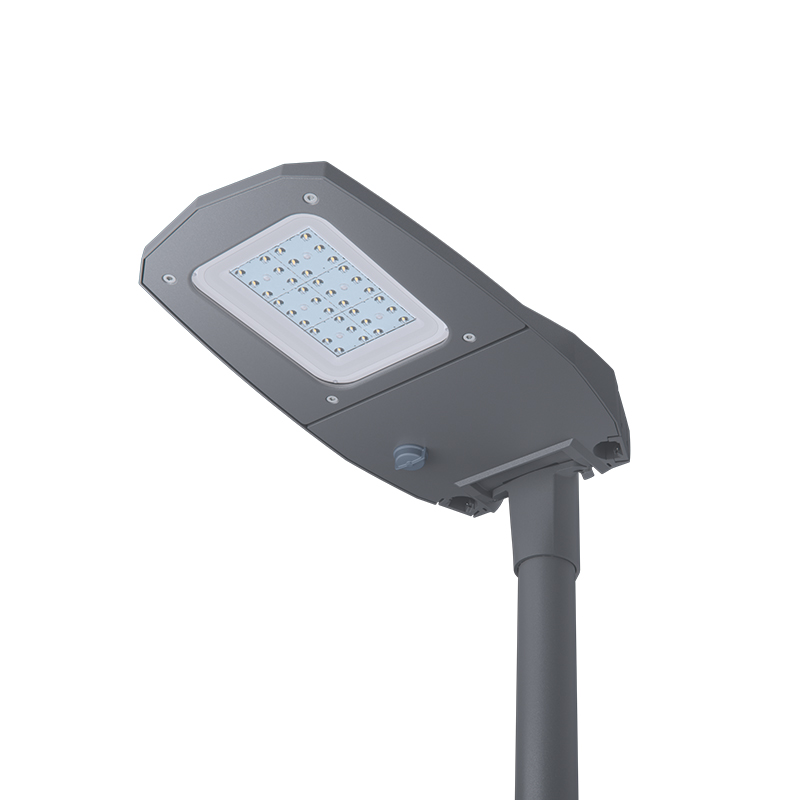
An LED lighting system delivers its full rated lifespan and efficiency only when installed and maintained correctly, and a handful of practical habits make the difference between a fixture lasting eight years versus three.
Surge protection is worth calling out separately, since LED drivers are more sensitive to voltage spikes than the magnetic ballasts used in older fluorescent fixtures. Facilities in areas with frequent grid fluctuations or that share circuits with heavy machinery often see longer fixture life after adding surge protection devices at the panel level, rather than relying on protection built into the fixture alone.
Most of these issues trace back to treating an LED lighting retrofit as a simple swap rather than a redesign opportunity. Because LED fixtures behave differently from the fluorescent or HID sources they replace in terms of beam angle, dimming response, and thermal characteristics, a like-for-like wattage match rarely produces a like-for-like visual result.
Most commercial-grade LED lighting fixtures carry an L70 rating of 50,000 hours, meaning the fixture still outputs at least 70 percent of its original brightness at that point. Many panels and tubes now reach 70,000 to 100,000 hours before reaching that threshold.
A range of 4000K to 4500K is generally considered the most balanced for sustained screen work, offering enough cool clarity for alertness without the harshness that very cool temperatures above 6000K can introduce over a full workday.
Yes, in most cases. Tube-style retrofits include either plug-and-play LEDs compatible with existing ballasts or ballast-bypass tubes that wire directly to line voltage. Troffer-style fixtures can also accept LED retrofit kits or be replaced entirely with new LED panels.
Energy savings of 50 to 70 percent against fluorescent baselines are common, with additional savings from reduced maintenance labor and fewer lamp replacements over the fixture's lifespan.
No. Exceeding recommended lux levels for a given task increases energy use without improving comfort and can introduce glare. Matching output to the task table is more effective than maximizing brightness.
No. LED lighting reaches full brightness instantly, unlike fluorescent or metal halide lighting, which can take several minutes to stabilize.
A CRI of 80 or higher suits most general office and circulation areas, while detail-oriented tasks such as quality inspection, printing, or healthcare diagnostics typically call for CRI 90 or above to render colors accurately.
Yes. Dimming an LED lighting fixture reduces power draw roughly in proportion to the dimming level, so a fixture dimmed to 50 percent output draws close to 50 percent less power, unlike some older dimmable fluorescent setups where the relationship was less linear.
An annual visual inspection covering lens cleanliness, mounting integrity, and any signs of flicker or discoloration is generally sufficient for most workplace settings, with more frequent checks recommended in dusty or high-vibration industrial environments.

Contact Us for More Details
Contact Information
Add:
No. 8 Qingcang Road, Qiangjiao Town, 315612 Ninghai, Ningbo, China
Phone:
+86-574-83530320
Fax:
+86-574-83530330
E-mail:
Join our community and stay connected
 Custom Outdoor lighting Manufacturers

 English
 Français
 Español