2026-08-17
Content
When evaluating LED luminaires for outdoor use, the IP rating is one of the first specifications a buyer should check. For most uncovered or harsh environments, IP65 is the safer choice than IP54 because it is dust-tight and protected against low-pressure water jets, while IP54 only limits dust ingress and copes with light splashing. If a fixture will be exposed to wind-driven rain, frequent washing, or dusty industrial air, IP65 reduces the risk of early failures and lowers maintenance costs over the product lifetime.
This guide explains the real difference between IP54 and IP65, how the IEC 60529 tests actually work, and where each rating makes sense for LED street lights, parking lot fixtures, sports lighting, and industrial outdoor projects. It also covers common misjudgements such as condensation and submersion, so you can specify the right enclosure with confidence. Led Lighting
The IP code is defined by standard IEC 60529 and uses two digits to describe an enclosure's resistance to solids and water. The first digit covers protection against solid objects, from 0 (no protection) to 6 (dust-tight). The second digit covers water ingress, from 0 (no protection) to 9 (high-temperature water jets). For luminaires, manufacturers test the complete housing, including the lens, gaskets, and cable inlets.
For IP54, the 5 means dust-protected, not dust-tight. Limited dust can enter, but not enough to interfere with normal operation. The 4 means the enclosure resists splashing water from any direction, similar to rain or a gentle hose spray from below a roof line. For IP65, the 6 means dust-tight, with no dust penetration at all. The 5 means it withstands low-pressure water jets from a nozzle, which is a far stronger test than simple splashing.
| Rating | First digit (solids) | Second digit (water) |
|---|---|---|
| IP54 | 5: dust-protected; limited ingress permitted | 4: water splashed against the enclosure from any direction |
| IP65 | 6: dust-tight; no ingress of dust | 5: low-pressure water jets from any direction |
The practical difference is not just one digit. Dust-tight construction means the housing uses full perimeter gaskets, sealed cable glands, and compression seals. Splash-proof IP54 fixtures may rely on labyrinth joints, foam strips, or partial gasket coverage. That structural difference raises durability in windy, sandy, or cleaning environments, where even a few particles of dust can accelerate wear on LED driver components and optical surfaces.
Buyers often ask whether the higher rating is worth the extra cost. The answer depends on the environment, but the differences are concrete:
From our production experience, the most important difference is the combination of dust-tightness and water jets. In coastal areas, industrial sites, and roadsides, dust mixes with rain or condensation to form a conductive film. IP54 housings allow enough fine dust to build up on LED modules and drivers, which can result in thermal imbalance and premature failure. IP65 prevents that because the optical chamber remains clean.
IP54 is an acceptable rating for sheltered indoor areas with low dust and minimal water exposure. Examples include indoor LED panel lights in offices, corridor lighting, display cabinets, and fixtures mounted under a deep eave or canopy where rain cannot blow directly. It is also common for control cabinets and some interior industrial luminaires where no pressure washing is performed.
However, even in these places, dust will gradually accumulate inside the optical chamber. In a warehouse or a workshop, an IP54 LED fixture often loses 10–20% of its initial lumen output within 12 months because of dust film on the lens. Cleaning that lens usually requires opening the fixture, which is not practical for most installations. If you need a fit-and-forget solution indoors, IP65 is still a better investment for dusty rooms.
For outdoor use, IP54 should be limited to covered outdoor walkways or areas that are protected from rain and never cleaned with a hose. If you cannot guarantee those conditions, the rating will be exceeded during a typical rainstorm with wind, because driving rain generates more pressure than the IPX4 splash test.
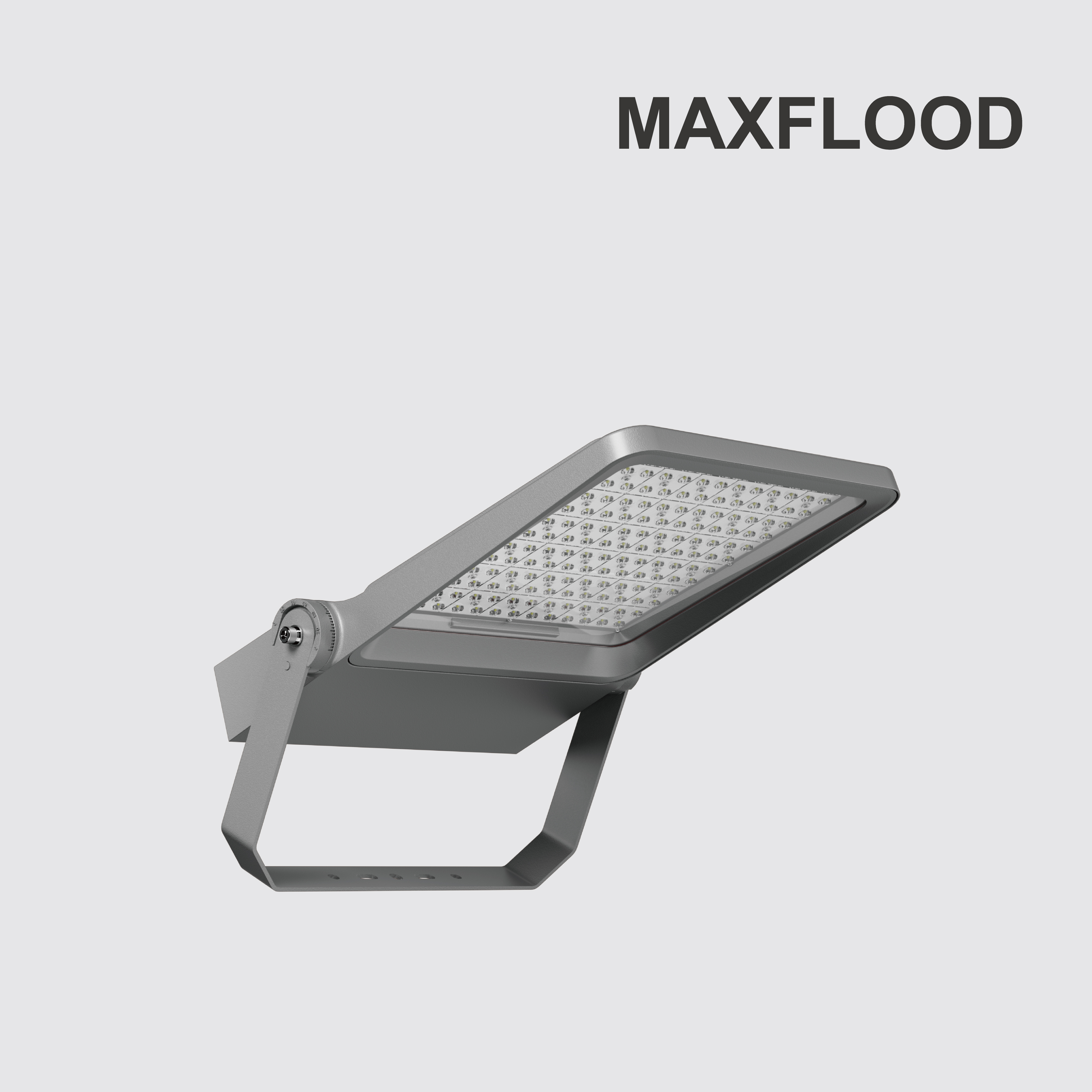
For exposed locations, IP65 is the minimum entry point for professional LED lighting. Street lighting poles, parking garages with open sides, ports, container yards, sports floodlights, and building facades all face wind-driven rain, dust, and routine washing. In those applications, the IP65 rating ensures that water jets from maintenance hoses cannot enter the housing and that dust cannot settle on the LED optics.
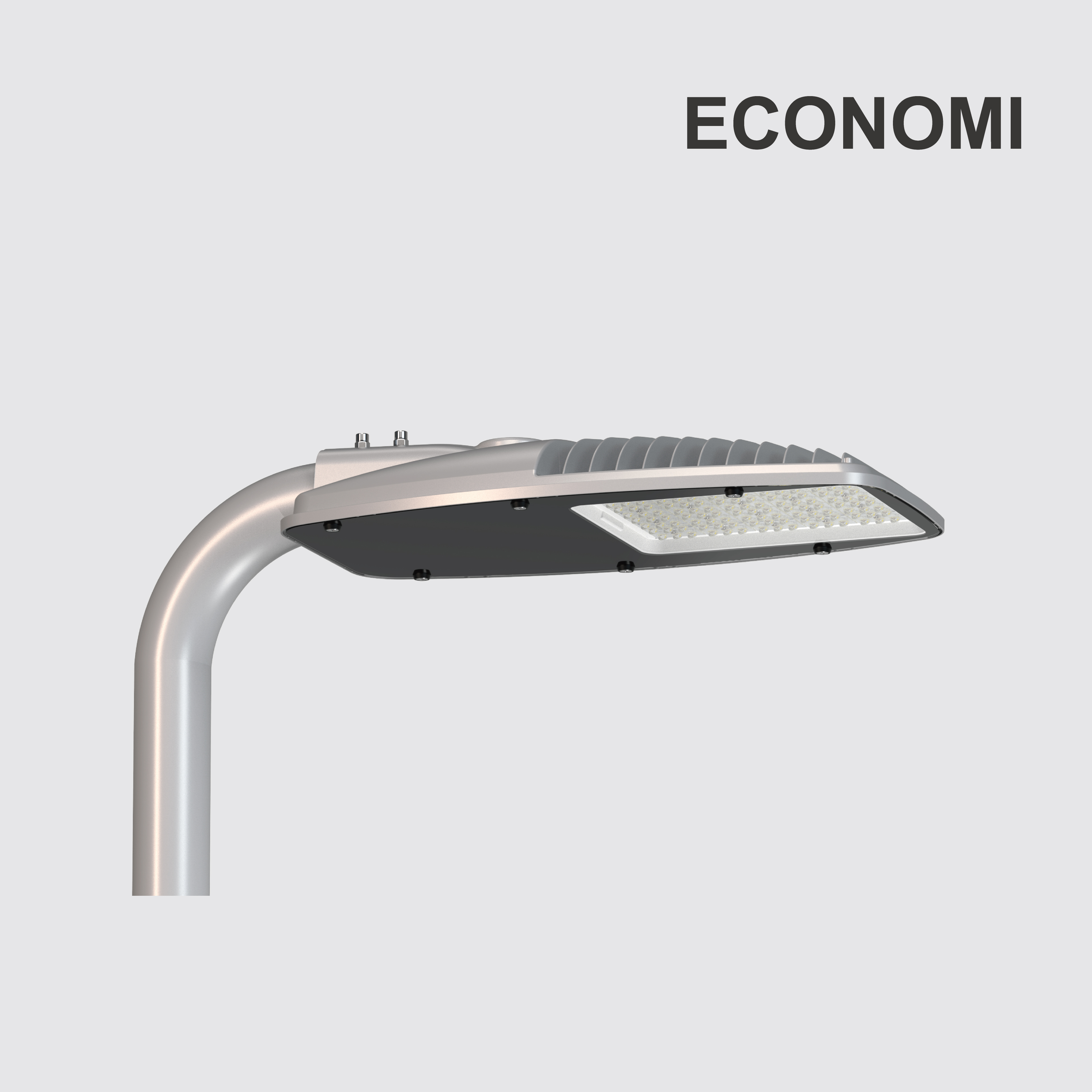
Roadside lighting is a good example. Vehicle spray contains fine dust, de-icing salts, and fuel residues. An IP54 fixture can absorb that contaminated water through splash events, and when the water dries, a corrosive film remains. Over a few years, this film attacks the silicone gasket and the aluminium housing. IP65, with its sealed cable glands and full gasket channel, keeps the assembly dry, reducing the risk of corrosion and electrical leaks.
In sports lighting, fixtures are often mounted high above the ground and cleaned with telescopic water jets. The job is much easier when the fixture is IP65, because the operator can spray directly without worrying about forcing water into the driver compartment. Similarly, dust-tight optics preserve the beam pattern and light output, so the sports lighting project can meet its lux levels even after months of exposure.
The testing standard behind these ratings is IEC 60529. The difference between IPX4 and IPX5 is not just a number; the test methods and pressures are very different. For IP54, the water test is an IPX4 splash test. The enclosure is exposed to an oscillating tube or a shower head for 10 minutes. Water is splashed against it from all directions with no significant pressure. This test simulates light rain or accidental splashing.
For IP65, the water test is an IPX5 jet test. The enclosure is sprayed with a 6.3 mm nozzle at a flow rate of 12.5 litres per minute, from a distance of 2.5 to 3 metres, for at least 3 minutes. The water pressure is around 1 bar at the nozzle, which is far stronger than any natural rain event. In practical terms, an IP65-rated LED luminaire can survive a direct hit from a maintenance hose, while an IP54-rated fixture only survives splashes.
| Parameter | IPX4 (splash) | IPX5 (water jet) |
|---|---|---|
| Water source | Oscillating tube or shower head | 6.3 mm nozzle |
| Flow rate | About 50 l/m² | 12.5 l/min |
| Duration | 10 minutes | At least 3 minutes |
| Pressure | Low, gravity-fed | Approx. 1 bar at nozzle |
| Effect | Splashing from any direction | Direct jet impact |
This explains why an IP65-rated fixture can be cleaned with a pressure washer at low to medium pressure, while an IP54 fixture cannot. If your maintenance plan includes hose-down cleaning, choose IP65. The test also verifies the sealing around hinges, handles, and drain holes, if present.
An IP rating is a protection rating, not a statement of overall water resistance. IP65 does not mean the luminaire can be submerged. For continuous immersion, you need IP67 or IP68. In outdoor LED lighting, the more subtle issue is condensation. When a dust-tight fixture is mounted in the sun, internal air expands and escapes around the gasket or through breathable vents. When it cools, moist air is drawn in. If the enclosure has no breather, pressure changes create a vacuum that can pull in water through the smallest path, even if the rating is IP65.
Condensation is a common cause of lens fogging in LED street lights, even with IP65 enclosures. Good luminaire designs use a breathable vent or an internal coating to handle temperature cycles. You should ask the supplier for condensation test results, not just the IP certificate. The IP rating also depends on correct installation. A failed cable gland, a crushed O-ring, or an unsealed mounting point can compromise a brand-new IP65 fixture.
Chemical resistance is another limit. IP ratings do not cover salt spray, acidic rain, or gaseous corrosion. In coastal or industrial environments, the gasket material and housing finish matter as much as the IP number. EPDM and silicone gaskets hold up well outdoors, while some cheaper rubber compounds degrade in UV and ozone, causing seal failure after a few years.
Use the following checklist as a practical filter when specifying LED luminaires:
In our own projects, upgrading a typical die-cast LED street light housing from IP54 to IP65 adds about 8% to the housing cost. The failure rate in coastal and dusty sites drops by more than half when the fixture is IP65. That is a strong return when the alternative is a full replacement within two to three years.
For LED lighting specifically, there is another advantage of IP65: thermal management. Dust-tight housings can be equipped with external heat sinks and sealed optics that keep the LED junction temperature low. IP54 housings, because they allow some air movement, often use less robust heat sink design, but that opens the door to contamination of the driver compartment. The result is a trade-off between cooling and contamination. IP65 solves this by using a fully sealed driver compartment and a large external heat sink, which is why many high-lumen outdoor luminaires now come only in IP65 or higher.
Yes, but only in a sheltered position with no direct exposure to wind-driven rain and no pressure washing. Under an eave or a canopy, IP54 can survive light rain and occasional splashes. In an open area, driving rain will quickly exceed the IPX4 splash condition, so IP65 is the safer recommendation.
No. IP65 is water-resistant to low-pressure jets, but it is not suitable for submersion. It handles heavy rain and hose cleaning, but if the fixture may be underwater, you need IP67 or IP68. Always confirm the actual rating with the manufacturer.
For comparable LED luminaires, the premium is typically 5–15% depending on housing material, gasket type, and cable gland quality. In our made-to-order production, upgrading a die-cast aluminium housing from IP54 to IP65 adds around 8% to the housing cost. That is a small price for a large improvement in reliability.
Usually not. The IP rating is verified on the complete assembly, including the mechanical frame, gasket groove, cable entry, and lens seal. Adding a thicker gasket to an IP54 housing may not fix all leakage paths. You should choose a fixture designed and tested for IP65 from the start.
Not by itself. Condensation is a temperature and humidity issue. A well-designed IP65 fixture uses a breathable membrane or drain plan to equalise pressure and manage moisture. Ask the supplier for condensation test data, especially for street lights that experience large day-night temperature swings.
Choose IP65 for any fixture that will live outdoors, get hosed down, or work in a dusty environment. Choose IP54 only when the location is clearly sheltered and dust levels are low. The extra cost of IP65 is modest, but the reduction in failures, maintenance visits, and light output loss is significant. When in doubt, IP65 is the recommended entry point for professional outdoor LED lighting.

Contact Us for More Details
Contact Information
Add:
No. 8 Qingcang Road, Qiangjiao Town, 315612 Ninghai, Ningbo, China
Phone:
+86-574-83530320
Fax:
+86-574-83530330
E-mail:
Join our community and stay connected
 Custom Outdoor lighting Manufacturers

 English
 Français
 Español