2026-05-04
Content
Dusk to dawn lights work by using a built-in photocell sensor — also called a photoelectric sensor or photoresistor — that continuously monitors the level of ambient natural light in the surrounding environment. When daylight fades below a preset threshold at sunset, the sensor triggers the fixture to switch on automatically. When morning light returns and brightness climbs back above that threshold, the sensor signals the light to turn off. No timers. No manual switches. No guesswork. The entire process runs on its own, every single night, without any input from the homeowner or facility manager.
This is the core operating principle shared across virtually all dusk to dawn outdoor fixtures — from simple wall-pack units to sophisticated Outdoor LED Lighting systems used in commercial parking lots, street installations, and large residential properties. Understanding exactly how that sensor works, and what can affect its performance, makes it much easier to choose, install, and maintain these lights properly.
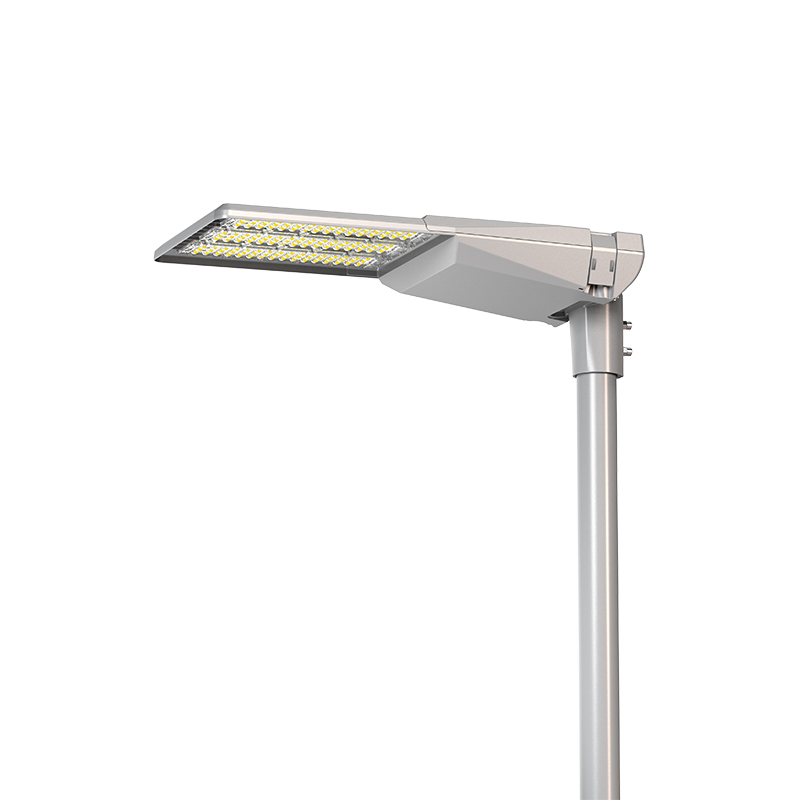
The photocell is the single most important component in any dusk to dawn fixture. It is a semiconductor device made from light-sensitive materials — typically cadmium sulfide or silicon — that changes its electrical resistance depending on how much light hits its surface. In bright conditions, the resistance drops significantly. In darkness, resistance rises sharply. This change in resistance is what the control circuit reads to decide whether to power the light on or off.
Inside the sensor assembly, there are two key components working together:
When these two components work in tandem, the result is a reliable, self-regulating outdoor light that operates entirely based on real-world light conditions rather than a fixed schedule. This means the light naturally adjusts as the seasons change — switching on earlier in winter when days are shorter, and later in summer when daylight extends well into the evening.
Many modern dusk to dawn fixtures — particularly commercial-grade outdoor LED lighting — allow the photocell sensitivity to be adjusted. This means you can set the exact light level at which the fixture activates. For a property in a bright urban area with significant light pollution, you might want the sensor to wait until ambient light drops lower before activating. For a remote rural installation, the sensor might be set to trigger at a higher light level to account for naturally darker surroundings.
Walking through the full operational cycle helps clarify exactly what the fixture is doing at each stage of the night:
This cycle repeats every day with no user intervention. Over the course of a year, a well-installed dusk to dawn outdoor LED lighting fixture in a mid-latitude location like the continental United States might operate anywhere from 4,000 to 4,500 hours — every single one of those hours happening automatically.
Not all dusk to dawn setups are identical. The technology appears in several distinct configurations, each suited to different applications and installation contexts.
The most common type — the photocell is built directly into the fixture housing. You install the fixture, wire it to a standard power supply, and it operates automatically. This is the typical configuration for wall-pack lights, post-top lights, barn lights, and most residential outdoor LED lighting products. No additional components are needed.
These are small external sensor units that screw into a standard light socket or plug into an outlet, converting a conventional fixture into a dusk to dawn unit. They are popular for retrofitting existing outdoor fixtures without replacing the entire unit. Sensitivity is usually fixed rather than adjustable.
In commercial outdoor LED lighting installations — such as streetlights, area lights, and parking lot poles — the photocell is often a separate, externally mounted component that plugs into a twist-lock receptacle (called a NEMA socket) on top of the fixture. This design makes it easy to replace just the sensor without disturbing the rest of the lighting system.
A newer generation of fixtures combines photocell sensors with wireless connectivity, allowing the light's activation threshold, dimming level, and operating schedule to be adjusted remotely via a smartphone app or building management system. Some smart outdoor LED lighting platforms use GPS-based astronomical clocks instead of (or in addition to) photocells, calculating sunrise and sunset times based on geographic location and date — eliminating the sensor entirely and avoiding issues with local light interference.
| System Type | Sensor Location | Adjustable | Best For |
|---|---|---|---|
| Integrated Photocell | Built into fixture | Sometimes | Residential, small commercial |
| Plug-in Adapter | Adaptor screws in | No | Retrofitting existing fixtures |
| Remote NEMA Photocell | External twist-lock | Yes | Streetlights, parking lots |
| Smart / Astronomical | GPS + optional photocell | Yes (app-controlled) | Large commercial, smart buildings |
Earlier generations of dusk to dawn fixtures relied on high-pressure sodium (HPS), metal halide, or incandescent lamps. These all had significant drawbacks when paired with photocell automation: they required warm-up periods of up to 5 minutes before reaching full brightness, generated substantial heat, and burned out relatively quickly under full-night operation cycles.
The widespread adoption of outdoor LED lighting transformed the category. LEDs reach full brightness instantly — critical for a photocell-triggered system where the switch-on moment needs to be immediate. They also run much cooler, generate less stress on internal components, and last dramatically longer. A quality LED fixture rated at 50,000 hours of operation would, running the full dusk-to-dawn cycle every night (~12 hours per night on average), theoretically last over 11 years before needing replacement.
Beyond lifespan, outdoor LED lighting consumes 50–75% less energy than equivalent HPS or metal halide alternatives, which makes the combination of LED technology and dusk-to-dawn automation one of the most cost-effective outdoor lighting strategies available today. A 150-watt HPS streetlight replaced by a 60-watt LED equivalent running on a dusk-to-dawn schedule could save a municipality or commercial property manager hundreds of dollars per fixture per year in electricity costs alone.
Modern dusk to dawn outdoor LED lighting also offers a wide range of color temperatures, typically measured in Kelvin (K). Options generally fall into three main ranges:
Photocell sensors are robust and reliable, but they are not entirely immune to error. Several environmental and installation factors can cause a dusk to dawn light to behave unexpectedly — staying on during the day, flickering at night, or failing to activate at the right time.
One of the most common installation mistakes is positioning a dusk to dawn fixture so that the sensor can detect light from the fixture itself. When the light turns on and illuminates the area, the photocell reads that artificial light as ambient brightness and triggers a shutdown — causing a frustrating on-off-on cycle. Always ensure the sensor is positioned away from the direct beam of the light it is controlling. Many quality outdoor LED lighting fixtures include built-in shielding around the sensor to prevent this exact problem.
Street lamps, neon signage, bright vehicle headlights, or neighboring property lights can all register on a sensitive photocell. If the sensor is positioned to pick up these sources, the light may not activate correctly or may cycle on and off when traffic passes. Proper sensor placement — ideally facing skyward or in a direction that prioritizes natural light — minimizes this risk.
The light-sensitive surface of a photocell must remain clean to function accurately. Dust accumulation, spider webs, bird droppings, or paint overspray on the sensor lens can reduce its sensitivity and cause incorrect readings. A quick wipe-down during seasonal fixture maintenance is usually sufficient to prevent this issue.
Heavy fog, dense cloud cover, or smoke from nearby fires can reduce ambient light significantly, potentially triggering the sensor during daytime hours. Conversely, highly reflective snow cover can fool a sensor into reading daytime levels even in overcast low-light conditions. High-quality photocell sensors often include delay circuits — typically a 10–30 second response lag — to ignore brief fluctuations and only respond to sustained changes in light level.
A sensor that faces east or west rather than upward toward the open sky will measure light differently than the true ambient conditions. An eastward-facing sensor activates later in the evening and deactivates too early in the morning because it catches direct sunlight earlier. Ideally, external photocell sensors on outdoor LED lighting installations should be oriented toward the northern sky (in the northern hemisphere) to read diffuse ambient light rather than direct solar exposure.
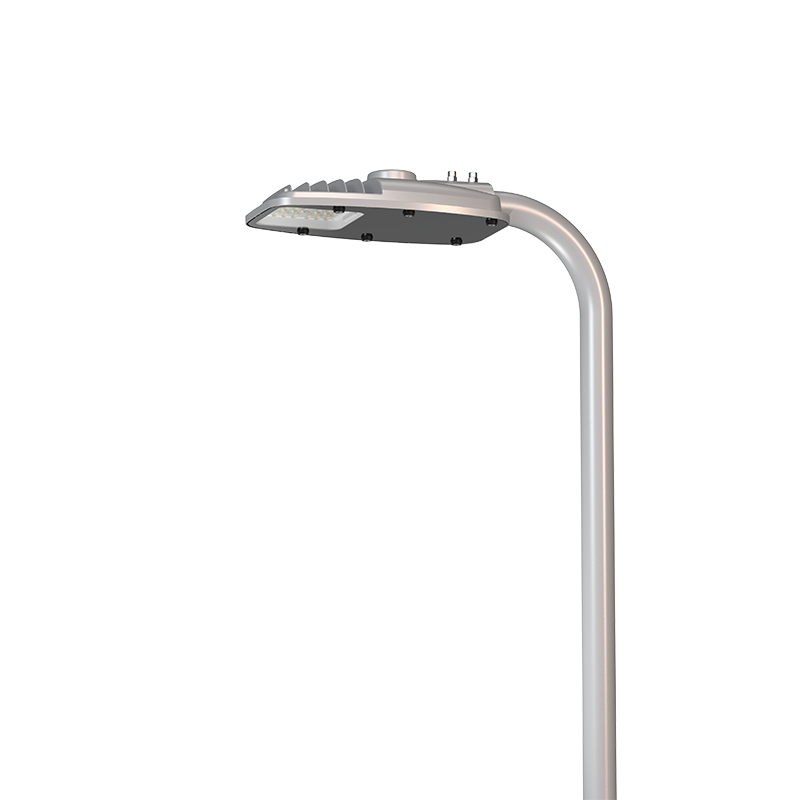
One of the strongest arguments for dusk to dawn outdoor LED lighting is the measurable financial return. Unlike lights left on a simple on/off switch (which many homeowners leave burning 24 hours a day out of habit or forgetfulness), dusk to dawn fixtures operate only during genuine dark hours.
Consider a basic example: a 100-watt conventional outdoor fixture left on 24 hours a day consumes 876 kWh per year. The same fixture replaced with a 40-watt LED on a dusk-to-dawn schedule (operating roughly 12 hours per night, ~4,380 hours per year) uses approximately 175 kWh per year. At an average U.S. residential electricity rate of around $0.16 per kWh, that is a reduction from roughly $140 per year down to about $28 per year — a saving of over $110 annually per fixture. Multiply that across an entire commercial property with dozens of outdoor fixtures, and the numbers become very compelling very quickly.
Beyond electricity cost, the reduced operating hours also extend bulb lifespan. An LED rated for 50,000 hours running 12 hours per night will last approximately 11.4 years. The same LED running 24 hours per day would need replacement after about 5.7 years. The dusk-to-dawn schedule effectively doubles the practical service life of the fixture without any loss of illumination quality.
The photocell technology inside dusk to dawn fixtures is application-agnostic — it works the same way whether the fixture is a small decorative garden lantern or a large commercial flood unit. But the type of fixture chosen should match the specific lighting task.
Wall-mount lanterns, porch lights, and barn lights with integrated photocells are among the most popular dusk to dawn products for homeowners. They keep entry points visible all night, deter opportunistic trespassers, and eliminate the need to remember to switch lights on before going to bed. Security research consistently shows that well-lit exteriors reduce the likelihood of property crimes — a Harvard Kennedy School study noted that improved street lighting in high-crime areas was associated with a 36% reduction in outdoor nighttime crime.
Large commercial outdoor LED lighting installations in parking areas, shopping centers, warehouses, and industrial facilities almost universally use dusk to dawn photocell control — often with NEMA-socket remote sensors on each pole. The automation reduces labor costs (no staff needed to switch lights on and off) and ensures consistent compliance with local lighting ordinances that mandate minimum illumination levels for public-access outdoor areas after dark.
Municipal streetlight networks were among the earliest large-scale adopters of photocell-controlled outdoor lighting, beginning in the mid-20th century. Today, most new streetlight installations use LED technology with integrated or remote photocell sensors, often supplemented by dimming controls that reduce output by 30–50% during low-traffic late-night hours to save additional energy.
Low-voltage pathway lights and garden fixtures with built-in dusk to dawn sensors provide safe, attractive illumination of walkways, steps, driveways, and landscaping features throughout the night. Many solar-powered variants include both a photovoltaic charging panel and a photocell sensor — the panel charges an internal battery during daylight hours while the photocell determines when to draw on that stored energy for nighttime illumination.
Farm buildings, barns, equipment storage areas, and rural access roads frequently rely on dusk to dawn outdoor LED lighting because these locations often lack the human oversight needed to manage manual switching. A single photocell-equipped barn light running through the night on an automated schedule keeps yards safe for late-night livestock checks without requiring anyone to think about the switch.
Dusk to dawn photocell control is one of three main automatic outdoor lighting strategies. Understanding the differences helps in selecting the right approach — or the right combination — for a specific property.
| Control Method | Trigger | Energy Use | Best Use Case | Main Limitation |
|---|---|---|---|---|
| Dusk to Dawn | Ambient light level | Medium (on all night) | Continuous nighttime visibility | Uses power all night even if no one is present |
| Motion Sensor | Movement detection | Low (on-demand only) | Security alerts, low-traffic areas | Dark periods between activations; false triggers |
| Timer | Clock schedule | Variable | Fixed operating hours (e.g., business signage) | Needs manual seasonal adjustment; ignores weather |
Many modern outdoor LED lighting fixtures combine dusk to dawn photocell control with motion sensing — the fixture stays on at a low dim level throughout the night, then brightens to full output when motion is detected nearby. This dual-mode approach delivers continuous low-energy background illumination for safety and visibility while saving the peak energy consumption for moments when it is actually needed.
Getting dusk to dawn outdoor LED lighting to perform correctly long-term comes down to a handful of practical installation and placement decisions. Rushing these steps is the most common reason these lights underperform or behave erratically.
Lifespan depends on the type of light source and how many hours per night the fixture operates. Below is a realistic comparison across technology types:
The photocell sensor itself typically has a rated lifespan of 10–20 years of cycling under normal outdoor conditions. In most cases, the LED light source will need replacement before the sensor fails — and with NEMA-socket remote sensors on commercial fixtures, replacing either component independently is straightforward and cost-effective.

Technically yes, but it is rarely useful. Indoor light levels are generally stable and controlled by interior fixtures rather than natural light. A dusk to dawn bulb in an interior socket would activate whenever the room is dark — including when lights in the room are simply switched off. These sensors are specifically designed for outdoor applications where the ambient light source is the sun.
This is almost always a sensor placement issue. The photocell is likely in shadow, blocked by an overhang, or facing away from natural light — causing it to read daytime conditions as nighttime darkness. Check the sensor orientation, clear any obstructions, and clean the sensor surface. If the problem persists, the photocell component itself may have failed and needs replacement.
Yes — and they are a natural pairing. Solar-powered outdoor LED lighting units typically use the solar panel to charge a battery during the day and a photocell sensor to trigger drawing from that battery at night. In some simpler solar designs, the absence of current from the solar panel (indicating darkness) itself serves as the activation trigger, eliminating the need for a separate photocell altogether.
Most fixtures can be manually overridden. Some include an override switch that bypasses the photocell and keeps the light on continuously. Others can be forced into manual mode by switching the power off and back on quickly (double-tap), depending on the manufacturer's design. Smart dusk to dawn outdoor LED lighting systems typically offer full override functionality through their companion apps.
This is one of the genuine advantages of photocell-based control over timer-based systems. Because dusk to dawn sensors respond to actual light levels rather than clock schedules, they automatically adjust when Daylight Saving Time begins or ends. The light activates when it actually gets dark — regardless of what the clock says — with no manual intervention required.

Contact Us for More Details
Contact Information
Add:
No. 8 Qingcang Road, Qiangjiao Town, 315612 Ninghai, Ningbo, China
Phone:
+86-574-83530320
Fax:
+86-574-83530330
E-mail:
Join our community and stay connected
 Custom Outdoor lighting Manufacturers

 English
 Français
 Español